

Copa Libertadores final shows Brazil’s regional dominance
Advertisement
Read this article for free:
or
Already have an account? Log in here »
To continue reading, please subscribe:

Digital Subscription
One year of digital access for only $205*
- Enjoy unlimited reading on winnipegfreepress.com
- Read the E-Edition, our digital replica newspaper
- Access News Break, our award-winning app
- Play interactive puzzles
*First annual payment billed as $205.00 + GST for one year. This annual subscription will automatically renew at $233.00 + GST every 52 weeks (10% off the regular annual price of $259.35). Offer available to new and qualified returning subscribers only. Cancel any time.
To continue reading, please subscribe:
Add Free Press access to your Brandon Sun subscription for only an additional
$1 for the first 4 weeks*
- Enjoy unlimited reading on winnipegfreepress.com
- Read the E-Edition, our digital replica newspaper
- Access News Break, our award-winning app
- Play interactive puzzles
*Your next Brandon Sun subscription payment will increase by $1.00 and you will be charged $17.95 plus GST for four weeks. After four weeks, your payment will increase to $24.95 plus GST every four weeks.
Read unlimited articles for free today:
or
Already have an account? Log in here »
Hey there, time traveller!
This article was published 25/11/2021 (1760 days ago), so information in it may no longer be current.
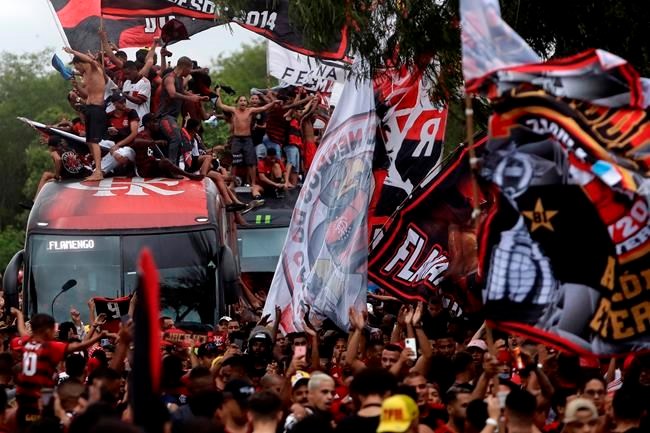
SAO PAULO (AP) — Brazilian soccer clubs are dominating South American soccer and Saturday’s Copa Libertadores final between Flamengo and Palmeiras at the Centenario Stadium in Montevideo only underscores that fact.
A Brazilian team will win the South American crown for the third consecutive time, the seventh in the latest 10. Flamengo won the trophy in 2019 in a 2-1 thriller against Argentina’s River Plate. Palmeiras is the defending champion thanks to a 1-0 victory against local rival Santos. Both finalists will seek their third title in South America’s most prestigious club tournament.
Whoever wins will put Brazil closer to Argentina in the tally of Copa Libertadores champions; 21 against Argentina’s 25, with many Argentinian titles being lifted early in the tournament’s history at a time Brazilian clubs did not prioritize the South American competition.
The dominance of Brazilian clubs also includes the two finalists of this season’s Copa Sudamericana, lifted by Athletico. This year marks the first time that all four finalists of the region’s club tournaments have come from the same country.
Brazil’s advantage has also appeared in major signings. Players who could still be in Europe decided to come back home, including Atletico Mineiro strikers Diego Costa and Hulk, Flamengo defender David Luiz and Corinthians winger Willian.
Many Brazilian clubs, including some with competitive teams, are in debt and struggling to pay their bills. But money has never stopped pouring in for soccer despite the country’s economic crisis. Marketing company Sports Value said in August that Brazil’s soccer market revenues neared $1.5 billion in 2019, before the pandemic. Chilean clubs made $200 million and Argentine clubs, due to the fluctuation in the country’s exchange rate, even less.
“Brazil has bigger TV contracts, transfers, sponsorship deals, revenue from official supporters. The economic difference is very big between Brazil and the rest of Latin America these days,” analyst Amir Somoggi said.
Also based on 2019 figures, Sports Value counts Flamengo’s revenues at more than $230 million that year, while Argentina’s Boca Juniors made less than $100 million.
The gap could widen next year. Brazilian media has reported several other big names could return home next year; defender Thiago Silva, left-back Marcelo, midfielders Paulinho and Oscar. Colombia midfielder James Rodriguez is also among targets.
Most commentators say Flamengo is the favorite to win the Copa Libertadores on Saturday. The Rio-based giants have two players who have frequently played for Brazil and could well be in the next World Cup in Qatar — midfielder Everton Ribeiro and striker Gabriel Barbosa, the top goal scorer of the tournament with 10 goals. The team also has Uruguay midfielder Giorgian de Arrascaeta.

Flamengo could become unbeaten champions; they won nine matches and drew three.
Palmeiras goalkeeper Weverton is also among coach Tite’s favorites, though a step behind Premier League-based Alisson and Ederson. The defending champions won eight matches, drew three and lost one. Its top goal scorer is striker Rony, with six goals. But the team’s fortress is its defense and Portuguese coach Abel Ferreira, the first European to reach the South American final twice.
Ferreira and his Flamengo counterpart Renato Portaluppi can win their second title in the tournament, but both arrive under fire for their teams’ performances in the Brazilian championship. Both are far behind Atletico Mineiro, which could become champions next week.
___
More AP soccer: https://apnews.com/hub/soccer and https://twitter.com/AP_Sports
Related Articles
MATCHDAY: Chelsea hosts slumping Man U, Madrid vs Sevilla








Advertisement Advertise With Us
Advertisement Advertise With Us