Vaccine alliance chief: Omicron could trigger ‘Inequity 2.0’

Advertisement

Advertise with us

CHAVANNES-DE-BOGIS, Switzerland (AP) — The head of vaccine alliance Gavi, which is leading a U.N.-backed push to get COVID-19 vaccines to developing countries, said that he’s seen early signs that rich countries are beginning to withhold donations out of fears about the omicron coronavirus variant — warning any new hoarding could lead to “Inequity 2.0.”

Read this article for free:


By clicking the button above, an account will be created and you will begin to receive some of our recommended newsletters. You may opt out of any newsletter by visiting your Email and Communication Preferences page or by clicking "unsubscribe" at the bottom of any email.

or

Already have an account? Log in here »

To continue reading, please subscribe:

Digital Subscription

One year of digital access for only $1.44 a week*

  • Enjoy unlimited reading on winnipegfreepress.com
  • Read the E-Edition, our digital replica newspaper
  • Access News Break, our award-winning app
  • Play interactive puzzles

*Billed as $5.77 plus GST every four weeks. After 52 weeks, price increases to the regular rate of $19.95 plus GST every four weeks. Offer available to new and qualified returning subscribers only. Cancel any time.

To continue reading, please subscribe:

Add Free Press access to your Brandon Sun subscription for only an additional

$1 for the first 4 weeks*

  • Enjoy unlimited reading on winnipegfreepress.com
  • Read the E-Edition, our digital replica newspaper
  • Access News Break, our award-winning app
  • Play interactive puzzles
Start now

*Your next Brandon Sun subscription payment will increase by $1.00 and you will be charged $17.95 plus GST for four weeks. After four weeks, your payment will increase to $24.95 plus GST every four weeks.

Hey there, time traveller!
This article was published 15/12/2021 (1772 days ago), so information in it may no longer be current.

CHAVANNES-DE-BOGIS, Switzerland (AP) — The head of vaccine alliance Gavi, which is leading a U.N.-backed push to get COVID-19 vaccines to developing countries, said that he’s seen early signs that rich countries are beginning to withhold donations out of fears about the omicron coronavirus variant — warning any new hoarding could lead to “Inequity 2.0.”

Gavi chief executive Dr. Seth Berkley took stock of the nearly two-year fight against the pandemic as the alliance released the latest update to its supply forecast for COVID-19 vaccines that it has repeatedly downscaled, largely because of export bans and vaccine hoarding by some producer countries that critics say it should have foreseen.

“With the omicron variant, what we’ve seen is panic in many countries that has led acceleration of boosters both to the numbers of people getting them, but also the timeline for getting them,” Berkley told The Associated Press in an interview late Tuesday at his home outside Geneva.
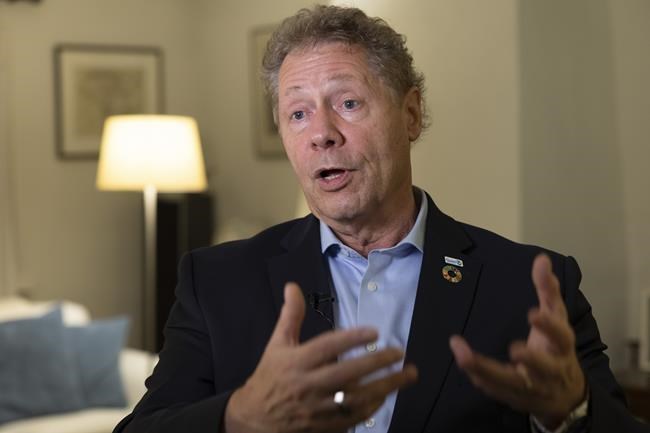
Dr. Seth Berkley, CEO of the vaccine alliance GAVI, gestures as he speaks to the Associated Press during an interview, in Chavannes-de-Bogis, Switzerland, Tuesday, Dec. 14, 2021. Berkley, the head of vaccine alliance Gavi, which is leading a U.N.-backed push to get COVID-19 vaccines to developing countries, said in the interview he's seen early signs that rich countries are beginning to withhold donations out of fears about the omicron variant, warning any new hoarding could lead to
Dr. Seth Berkley, CEO of the vaccine alliance GAVI, gestures as he speaks to the Associated Press during an interview, in Chavannes-de-Bogis, Switzerland, Tuesday, Dec. 14, 2021. Berkley, the head of vaccine alliance Gavi, which is leading a U.N.-backed push to get COVID-19 vaccines to developing countries, said in the interview he's seen early signs that rich countries are beginning to withhold donations out of fears about the omicron variant, warning any new hoarding could lead to "Inequity 2.0." (Salvatore Di Nolfi, Keystone via AP)

He was referring to extra doses given in rich countries to a broad swath of people — not just those at highest risk of contracting severe COVID-19.

The Geneva-based public-private partnership has been the lead manager of the U.N.-backed COVAX program that initially sought to get coronavirus vaccines to all countries but was pivoted after wealthier countries, and even some poorer ones, started striking their own deals to get jabs.

That locked down much of tight supplies and prompted vast inequality in access to jabs. Of the roughly 10 billion doses that have been delivered worldwide, the vast majority have gone to rich countries. COVAX has delivered just over 700 million.

“We also are beginning to see donors not wanting to donate their doses as fast as they might have because of the uncertainty now of where we are,” Berkley said, declining to specify. “Of course, our long-term concern is, if it turns out that new variant vaccines are required, that there may be an ‘Inequity 2.0’ where we see wealthy countries hoard those vaccines once again, like we saw at the beginning of the pandemic.”

While omicron’s transmissibility, severity and resistance to vaccines aren’t yet fully clear, the new variant could require revisions to existing vaccines or even production of new ones. Berkley says a COVID-19 vaccine from Novavax, which relies on a common technology in flu vaccines and has shown efficacy against variants, could be set to win emergency-use approval within “days” from the World Health Organization.

In recent weeks, global production of COVID-19 vaccines has taken off and supply is less of a problem than it once was. Now, a challenge is making sure countries can take in vaccines that sometimes require storage in very cold temperatures or are delivered in batches that need to be used at the same time once opened.

Wastage is a risk. Berkley said some is inevitable and insisted less than 1% of COVAX vaccines have gone to waste.

While he said it’s understandable, if potentially short-sighted, that politicians would want to serve their own people first with vaccines, one leading critic of Gavi’s handling of COVAX says a lot of the trouble can be pinned on wealthy-country governments who didn’t ensure steady sharing of vaccines. Now, an influx of vaccines in some developing countries could present problems.
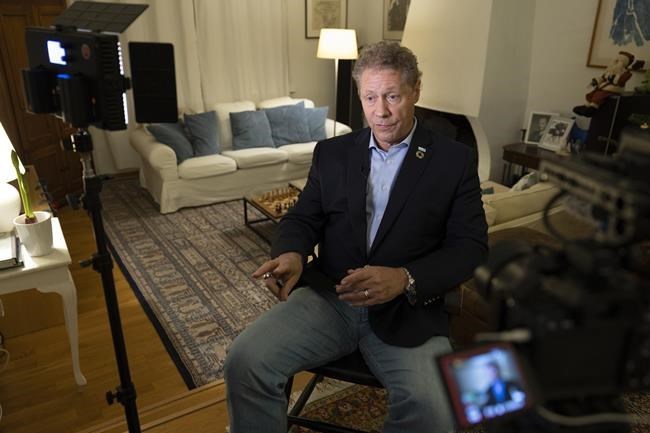
Dr. Seth Berkley, CEO of the vaccine alliance GAVI, speaks to the Associated Press during an interview, in Chavannes-de-Bogis, Switzerland, Tuesday, Dec. 14, 2021. Berkley, the head of vaccine alliance Gavi, which is leading a U.N.-backed push to get COVID-19 vaccines to developing countries, said in the interview he's seen early signs that rich countries are beginning to withhold donations out of fears about the omicron variant, warning any new hoarding could lead to
Dr. Seth Berkley, CEO of the vaccine alliance GAVI, speaks to the Associated Press during an interview, in Chavannes-de-Bogis, Switzerland, Tuesday, Dec. 14, 2021. Berkley, the head of vaccine alliance Gavi, which is leading a U.N.-backed push to get COVID-19 vaccines to developing countries, said in the interview he's seen early signs that rich countries are beginning to withhold donations out of fears about the omicron variant, warning any new hoarding could lead to "Inequity 2.0." (Salvatore Di Nolfi, Keystone via AP)

“Since high-income country governments hoarded vaccine and didn’t allow … distribution … to be paced, now we’re at this end-of-year dump, basically, and lo and behold, surprise, surprise, fragile health systems — some of them are having real difficultly accommodating it,” said Kate Elder, senior vaccines policy adviser at Médecins Sans Frontières, or Doctors Without Borders, which provides medical care around the world.

Gavi manages COVAX along with the Center for Epidemic Preparedness Innovations and U.N. health agency WHO, while UNICEF handles distribution of shots into arms.

Berkley said Gavi expects to have delivered between 800 million and 1 billion doses by the end of this year to the poorest developing countries, which he says was in line with targets. Where the alliance faced slippage in deliveries was with wealthier “self-financing countries” that were originally expected to get jabs through COVAX but didn’t use it as foreseen – many opting for direct deals with manufacturers.

Gavi expects to have 1.4 billion doses available by the end of his year. It had originally set a goal to deliver 2 billion doses by the end of 2021.

Berkley said Gavi expects another 800 million doses in the first quarter of next year, but not all of those are confirmed. Questions remain about supplies from manufacturers, regulatory approvals, and dose donations that are “somewhat more unpredictable.” Places like the United States and the European Union have been key donors.

As it has been forced to adapt and revise its strategies, donations from countries like “Team Europe” have grown increasingly important to COVAX — which was never planned to be a donation mechanism.

“In fact, we didn’t even have donations in the original framework and way of working,” Berkley said. “That only occurred because of the vaccine hoarding that was occurring in wealthy countries and because of the fact that we had export bans.”
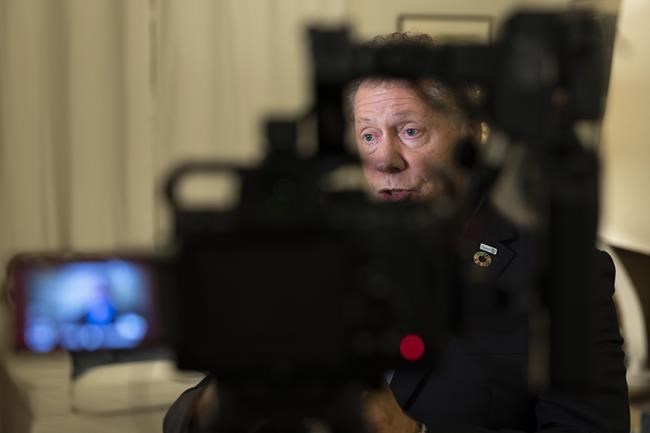
Dr. Seth Berkley, CEO of the vaccine alliance GAVI speaks to the Associated Press during an interview, in Chavannes-de-Bogis, Switzerland, Tuesday, Dec. 14, 2021. Berkley, the head of vaccine alliance Gavi, which is leading a U.N.-backed push to get COVID-19 vaccines to developing countries, said in the interview he's seen early signs that rich countries are beginning to withhold donations out of fears about the omicron variant, warning any new hoarding could lead to
Dr. Seth Berkley, CEO of the vaccine alliance GAVI speaks to the Associated Press during an interview, in Chavannes-de-Bogis, Switzerland, Tuesday, Dec. 14, 2021. Berkley, the head of vaccine alliance Gavi, which is leading a U.N.-backed push to get COVID-19 vaccines to developing countries, said in the interview he's seen early signs that rich countries are beginning to withhold donations out of fears about the omicron variant, warning any new hoarding could lead to "Inequity 2.0." (Salvatore Di Nolfi, Keystone via AP)

Critics say Gavi misjudged national self-interest and wrongly bet on trying to supply the whole world through a vast new program whose long-term impact is questionable. They say focus should have been on strengthening existing vaccine distribution systems, like one through WHO’s Americas regional body PAHO (Pan American Health Organization).

“Hindsight is 20/20 but there have been a tremendous number of shortcomings in the COVAX facility, probably many of them which could have been anticipated (by) understanding the environment and how countries with means were going to respond to this pandemic,” said MSF’s Elder.

___

Follow AP’s pandemic coverage at https://apnews.com/hub/coronavirus-pandemic

Report Error Submit a Tip

More Stories

Can’t have our cake and eat it, too

Mel Marginet 6 minute read Preview

Can’t have our cake and eat it, too

Mel Marginet 6 minute read 2:00 AM CDT

Last month, the City of Winnipeg said it would soon begin to study ways to improve pedestrian and cyclist safety along Osborne Street, which runs between two of the city’s densest neighbourhoods, where residents walk and bike for many of their daily activities. As someone who lives in South Osborne and who has frequented the shops and restaurants of the Village since my university days over 20 years ago, these changes can’t come soon enough.

Imagine my frustration when I read that this study of the street between Broadway and the St. Vital Bridge will take place “over the next year” to find “quick” solutions. We’ve all been through the COVID-19 pandemic, during which cities around the world found rapid solutions to improve safety and encourage more walking, biking and transit. Entire manuals have been published on easy things our city could try, literally this weekend, to improve the safety of Osborne Street.

Perhaps the reason this project is going to take a year can be found in this quote from David Patman, the city’s manager of transportation: “Osborne Street is currently serving multiple, competing functions … It exists in a dense, pedestrian-oriented development area that is close to rapid transit, which is at odds with the high flow of motor vehicles that travel daily along the corridor.”

Mr. Patman has correctly identified Osborne Street as a “stroad”. A stroad is a dangerous, inefficient combination of a street and a road. Stroads try to be the best of both worlds, and they fail at both. Charles Marohn, author of Strong Towns, offers the best analogy — a stroad is like a futon, which is both a terrible couch and an uncomfortable bed. You try to save money on two functions, but neither is right.

Read
2:00 AM CDT

Police HQ report ‘outrageous’: Kinew

Joyanne Pursaga 6 minute read Preview

Police HQ report ‘outrageous’: Kinew

Joyanne Pursaga 6 minute read Tuesday, Oct. 20, 2026

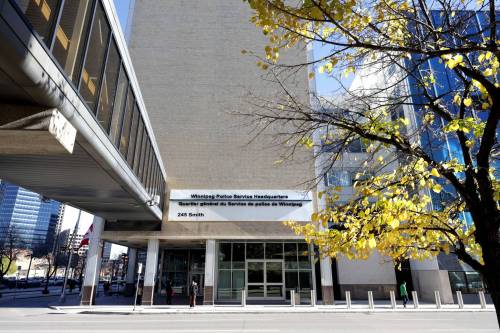
Premier Wab Kinew says public inquiry findings that taxpayers were overcharged more than $40 million for the Winnipeg Police Service headquarters project and two city leaders broke the public trust are “outrageous.”

Inquiry commissioner Garth Smorang’s report, which was released Monday, concluded former mayor Sam Katz “violated the public trust” and council code of conduct, while the city’s former chief administrative officer Phil Sheegl suffered from a “complete lack of a moral compass.”

Smorang also found the city was overcharged $43.3 million for the project, with $42 million of that going to key contractor Caspian Projects.

“It’s outrageous that people who were elected betrayed the public here in the city. It’s outrageous that there were people in business who ripped you off, ripped me off — I was paying property taxes in Winnipeg at the time — and ripped all of us off to the tune of $43.3 million. That’s crazy,” said Kinew.

Read
Tuesday, Oct. 20, 2026

Researchers: lights at Henderson crossing ‘long overdue’

Maggie Macintosh 6 minute read Preview

Researchers: lights at Henderson crossing ‘long overdue’

Maggie Macintosh 6 minute read 2:00 AM CDT

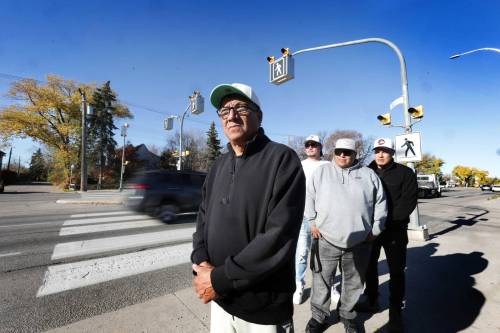
Six months after a fatal collision at a crosswalk on Henderson Highway, two traffic safety researchers question why the intersection remains an outlier that is missing key flashing lights.

The City of Winnipeg is being urged to install “backflashers” to better protect road users moving in all directions at the intersection where a 32-year-old father died in the spring.

“It’s these little, mundane, non-sexy engineering problems that can cause everything right up to fatality,” said Curt Pankratz, an associate professor at the University of Winnipeg who studies traffic engineering and policymaking.

On April 19, shortly before sunrise, Gabe Beardy was struck when he was crossing the six-lane thoroughfare at Neil Avenue.

Read
2:00 AM CDT

Brandon senior hockey player files suit against opponent, league, Hockey Manitoba over serious injuries, lost income

Morgan Modjeski 3 minute read Preview

Brandon senior hockey player files suit against opponent, league, Hockey Manitoba over serious injuries, lost income

Morgan Modjeski 3 minute read Yesterday at 2:01 AM CDT

A Brandon man is taking a fellow hockey player and two sport organizations to court after he was seriously injured on the ice, alleging it caused him hardship and lost income.

In 2024, Devon Leblanc played for the Virden Oil Kings, a senior amateur team in the Tiger Hills Hockey League, which is a member of the Hockey Manitoba association.

Leblanc’s age is not made clear in the court filing, but an online roster suggests he’s 38.

Leblanc alleges Bryce Enns, a member of the Killarney Shamrocks, bodychecked and assaulted him during a game between the two teams on Nov. 28, 2024.

Read
Yesterday at 2:01 AM CDT

Manitoba First Nation taking federal government, department to court over damage to sturgeon population

Morgan Modjeski 5 minute read Preview

Manitoba First Nation taking federal government, department to court over damage to sturgeon population

Morgan Modjeski 5 minute read Yesterday at 11:27 AM CDT

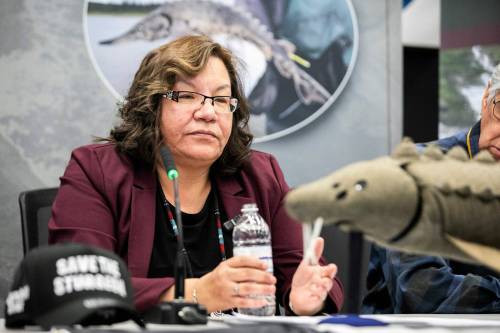
A remote Manitoba First Nation is taking the federal government to court over claims a Manitoba Hydro project is hurting the sturgeon population in the lower Churchill River.

In an Oct. 15 statement of claim filed in Manitoba’s Court of King’s Bench, Tataskweyak Cree Nation said the Churchill River diversion operated by Manitoba Hydro has had widespread ecological effects and damaged sturgeon populations in the area.

The lawsuit alleges Ottawa has breached its treaty obligations to protect the community’s right to harvest the fish.

The lawsuit names both His Majesty the King in Right of Canada, the minister of fisheries and Oceans Canada as defendants.

Read
Yesterday at 11:27 AM CDT

Winnipeg-shot biopic as daring as its subject

Randall King 4 minute read Preview

Winnipeg-shot biopic as daring as its subject

Randall King 4 minute read 2:01 AM CDT

Simultaneously huge in its biographical breadth and intimate in its scale, Patrick Wang’s film A. Rimbaud is a portrait of the 19th-century poet Arthur Rimbaud, a grand, 175-minute biopic that eschews the genre’s convention with the adventurous spirit Rimbaud applied to the written word.

For example, while we follow Rimbaud travelling the globe, the film was shot entirely on a Winnipeg soundstage.

Also, Rimbaud (portrayed by charismatic Australian actor Blake Draper) is always alone on camera. The voices of other characters are filled in by a series of musical instruments, inevitably recalling how the same technique was employed by Bill Melendez in Peanuts cartoons, wherein adult voices were portrayed by a muted trombone.

The film ended up being shot in Winnipeg thanks largely to producer Evan Johnson, a filmmaker in his own right with shared directing credits on various films with his brother Galen Johnson and Guy Maddin, including The Green Fog (2017) and Rumours (2024).

Read
2:01 AM CDT