‘Everything is just on fast-forward’ How Halifax became a Canadian tech hub
Advertisement
Read this article for free:
or
Already have an account? Log in here »
To continue reading, please subscribe:

Digital Subscription
One year of digital access for only $205*
- Enjoy unlimited reading on winnipegfreepress.com
- Read the E-Edition, our digital replica newspaper
- Access News Break, our award-winning app
- Play interactive puzzles
*First annual payment billed as $205.00 + GST for one year. This annual subscription will automatically renew at $233.00 + GST every 52 weeks (10% off the regular annual price of $259.35). Offer available to new and qualified returning subscribers only. Cancel any time.
To continue reading, please subscribe:
Add Free Press access to your Brandon Sun subscription for only an additional
$1 for the first 4 weeks*
- Enjoy unlimited reading on winnipegfreepress.com
- Read the E-Edition, our digital replica newspaper
- Access News Break, our award-winning app
- Play interactive puzzles
*Your next Brandon Sun subscription payment will increase by $1.00 and you will be charged $17.95 plus GST for four weeks. After four weeks, your payment will increase to $24.95 plus GST every four weeks.
Read unlimited articles for free today:
or
Already have an account? Log in here »
Hey there, time traveller!
This article was published 19/12/2021 (1732 days ago), so information in it may no longer be current.
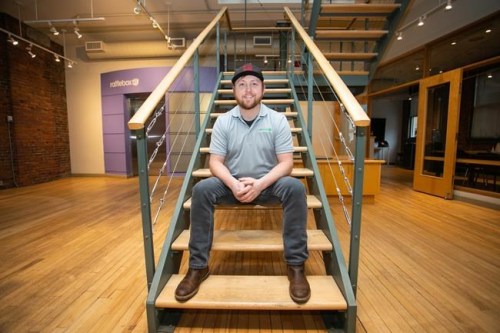
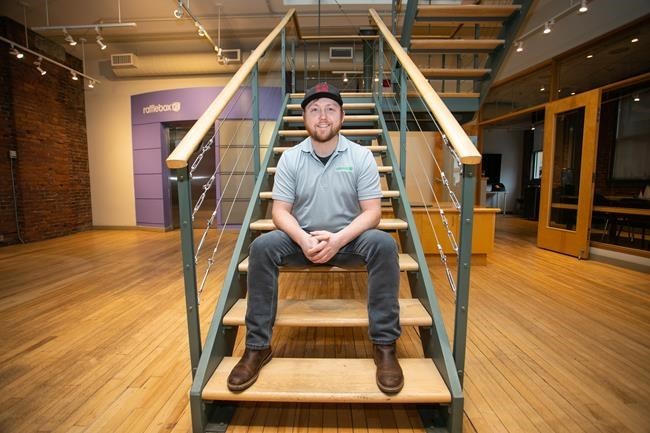
HALIFAX – In early 2021 Simon Cusack sold his house out west and moved to the East Coast with his wife, son and one of Canada’s most promising tech startups.
The co-founder of Rafflebox, which runs online raffles and fundraisers, came in search of the ocean, a better work-life balance and Halifax’s booming technology community.
“We were very attracted to the startup scene here,” said Cusack, who quit his job with Dell Technologies early in the pandemic to focus on Rafflebox full time as chief operations officers. “The support for startups is incredible. Doors started opening for us as soon as we arrived.”
Nova Scotia — once known for its traditional resource industries, aging population and westward migration of workers — is changing.
Today, the province is home to hundreds of fledgling tech startups and companies, an ambitious training plan and a growing population.
Experts say Halifax’s growing tech ecosystem is at the epicentre of the digital shift turning the province into one of the Canada’s hottest tech hubs.
They say a growing network of startups, mentorship organizations, venture capital, training programs and government support is encouraging digital innovation, creating jobs and buoying the economy.
“A strong support network is key to innovation,” said Ellen Farrell, a management professor in the Sobey School of Business at Saint Mary’s University in Halifax. “Isolation is a real problem for startups.”
It didn’t happen overnight.
Halifax’s tech workforce has steadily grown by 24 per cent in the last five years, according to global brokerage house CBRE.
It ranked the city seventh on a list of 25 emerging tech markets in Canada and the U.S., just after Albany, N.Y., and ahead of Providence, R.I., CBRE’s 2021 Scoring Tech Talent report said.
Across the province there are now more than 26,000 people working in Nova Scotia’s $2.5-billion tech sector, according to the industry association Digital Nova Scotia.
The burgeoning tech community has helped attract big players.
Toronto-based digital entertainment company Wattpad announced plans in late 2019 to open a second headquarters in Halifax.
The company, which is in line to receive payroll rebates from the province, now has 30 employees in the Halifax area and has plans to increase that to 100 people within five years.
“The talent in Halifax is amazing across multiple disciplines,” said Allen Lau, co-Founder and CEO of Wattpad. “The talent pool is also very deep, it’s not just recent graduates.”
But the problem is ensuring there are enough workers to meet future demand.
Take Halifax-based Redspace. The software company, a full-service digital studio specializing in video solutions, saw demand soar during the pandemic.
“Two years of the entire globe stuck at home binge-watching video accelerated the transformation of the industry we’ve been serving,” said Mike Johnston, president and CEO of Redspace.
“Demand has never been more … strong,” he said. “We have been growing and recruiting at a mad pace.”
The company has hired 105 people so far this year, bringing the total workforce to about 300. But it’s still short 30 to 50 people.
“We are constantly short-staffed,” Johnston said. “The salaries have gone up pretty dramatically … everything is just on fast-forward.”
Wayne Sumarah, the CEO of Digital Nova Scotia, said the pace of growth is expected to remain elevated.
“We don’t see it slowing down,” he said. “Our industry’s largest challenge currently is labour.”
The solution appears to be twofold: Expanding both the population at large and the tech workforce in particular.
The first is well underway. The province announced last week that Nova Scotia’s population hit a milestone of a million people following record growth during the pandemic.
Much of the growth was due to interprovincial migration, with many new residents hailing from Ontario and Alberta — a reversal of a decades-long trend of people moving away for work.
“After years of a declining population, the world is learning how special Nova Scotia is,” Premier Tim Houston said in a statement. “We have momentum and are growing.”
To boost the province’s tech workforce, the Nova Scotia government stepped up with a solution last spring. It announced $16.8 million in funding to bolster computer science programs at four Nova Scotia universities.
Dalhousie University — which received $13.3 million — launched a campaign called Here We Code last month.
The Halifax school said it would double its computer science faculty and researchers and expand its computer science enrolment to more than 2,500 students as part of the campaign.
“Nova Scotia’s tech community has been growing for years but COVID has been like jamming the foot down on the accelerator,” said Andrew Rau-Chaplin, dean of the computer science faculty at Dalhousie University.
“It’s not going to stop,” he said. “People are giddy with the opportunities.”
The issue is meeting the increasing demand for talent to ensure the tech sector can continue to expand here.

“Every single one of our undergraduate co-op students and 100 per cent of our graduate students with internships as part of their program are placed,” Rau-Chaplin said.
“My sense is if we had twice as many students they would all be placed as well.”
Rafflebox co-founder Cusack said the skilled workforce emerging from Dalhousie and other post-secondary institutions in Nova Scotia was one of the driving factors to relocate operations to Halifax.
“We really wanted to open up our office here,” Cusack said, noting that 13 of the startup’s 20 employees are now based in Nova Scotia. “We’re hiring another six here in January.”
This report by The Canadian Press was first published Dec. 19, 2021.