Takin’ care of business
Fred Turner on getting ‘in with the right bunch of fellows,’ where life is taking him next
Advertisement
Read this article for free:
or
Already have an account? Log in here »
To continue reading, please subscribe:

Digital Subscription
One year of digital access for only $205*
- Enjoy unlimited reading on winnipegfreepress.com
- Read the E-Edition, our digital replica newspaper
- Access News Break, our award-winning app
- Play interactive puzzles
*First annual payment billed as $205.00 + GST for one year. This annual subscription will automatically renew at $233.00 + GST every 52 weeks (10% off the regular annual price of $259.35). Offer available to new and qualified returning subscribers only. Cancel any time.
To continue reading, please subscribe:
Add Free Press access to your Brandon Sun subscription for only an additional
$1 for the first 4 weeks*
- Enjoy unlimited reading on winnipegfreepress.com
- Read the E-Edition, our digital replica newspaper
- Access News Break, our award-winning app
- Play interactive puzzles
*Your next Brandon Sun subscription payment will increase by $1.00 and you will be charged $17.95 plus GST for four weeks. After four weeks, your payment will increase to $24.95 plus GST every four weeks.
Read unlimited articles for free today:
or
Already have an account? Log in here »
Hey there, time traveller!
This article was published 28/12/2021 (1753 days ago), so information in it may no longer be current.
When one thinks of classic rock hits such as Taking Care of Business, Let it Ride, You Ain’t Seen Nothing Yet, Not Fragile and the emotive Flat Broke Love, it’s hard to imagine Bachman-Turner Overdrive’s frontman starting as a polka musician, playing House of the Rising Son for the Hells Angels, or that the band’s work would later enjoy great success as theme music for corporate TV commercials. It seems everyone in the corporate world is Taking Care of Business, or wants you to join them.
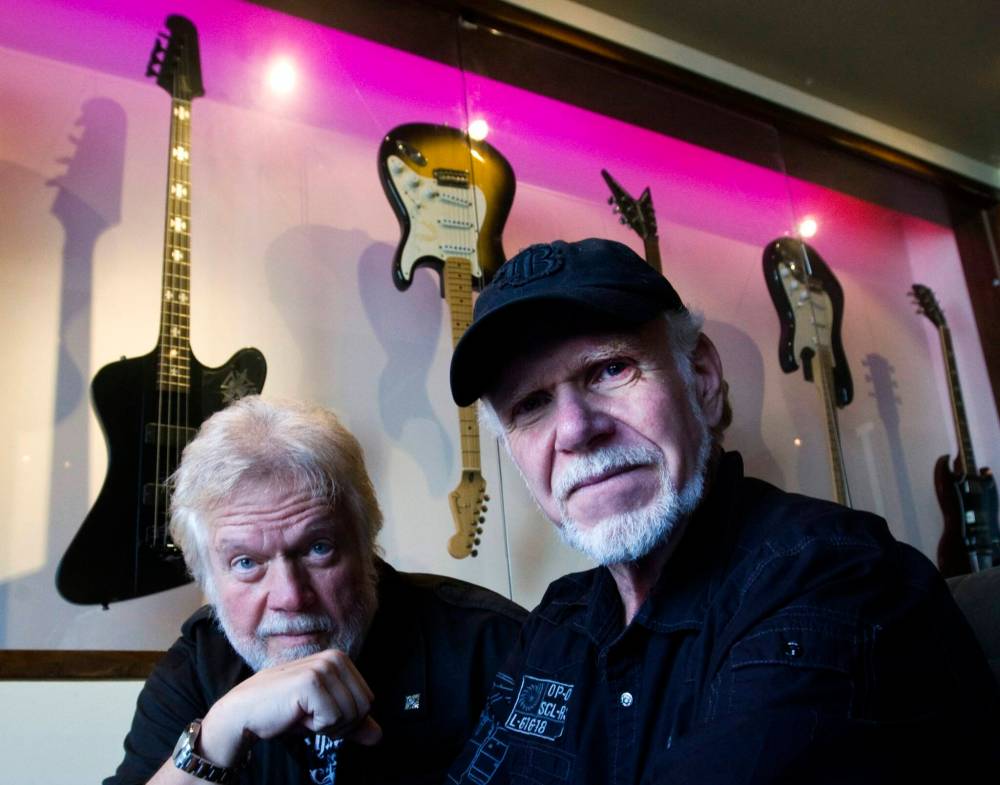
BTO’s bassist and lead vocalist Fred Turner provides perspective about his lifelong experience as one of Winnipeg’s most successful rock musicians.
GETTING STARTED
Q: Who were your early influences: who inspired you the most to take up music and persevere, to pursue it professionally?
FT: Back in 1956, like a lot of other musicians, I saw Elvis on Ed Sullivan and that started the need to play guitar. Later, I picked up on the Ventures and the Shadows and we put together a guitar instrumental band.
Q. Were there any friends or family who were musicians? What was it about them that influenced you or steeled your determination?
FT: My mother played a little banjo uke when she was young, but other than that it was neighbourhood friends who were all interested in starting bands. At that time there were about 100 bands in Winnipeg where I grew up.
Q: At what point did you know that you would not need a second job, and be able to work full time as a musician? Before or after Brave Belt?
FT: I started playing when I was 14, out playing jobs when I was 15. When I left school, I was playing bars six nights a week, working a full-time job and rehearsing on Sundays. It wasn’t until I was 28 when I hit a band that was paid enough to allow me to quit my day jobs. It was a polka/pop band; R&R didn’t pay enough money in my hometown.
Q: Had you not pursued music professionally, what occupation would have interested you the most?
FT: Maybe computer programmer, but I had so many jobs and didn’t really have an interest in any of them so I hoped music had something to offer me.
Q: Playing in Winnipeg, what did you envision as a career/success? Did you originally envision going as far as you did, or was the success of BTO somewhat unexpected, given how unpredictable the music industry is?
FT: I was always hoping that I’d somehow be able to make a living doing music but I was never really confident that it would happen. I’m one of the lucky ones that had it actually happen.
PERFORMING
Q: Do you have any estimate of the approximate number of shows you have performed, in your lifetime or for BTO?
FT: In my 56 years of playing I have no idea how many shows I did. Couldn’t even start to count them. Even the 40 years on and off with Randy (Bachman) and versions of BTO, I have no idea. I still play if Randy calls and wants me to come out and do a few tunes.
Q: Some musicians describe playing Madison Square Garden as a point at which they had arrived. At what point did you feel that you had arrived? Was it a venue or event? What was the apex of your career?

FT: When we finally had success with BTO, we had released two albums as Brave Belt and had been hired under that name in Canada. Canada didn’t know us as BTO. We were touring the USA as BTO and Canada as Brave Belt. When we finally booked a show in Vancouver, B.C., which was our hometown at the time, we sold out the Colosseum and the crowd was shocked to find out we were a hometown band. They were under the assumption we were American. It also didn’t hurt that Charlie Daniels and Bob Seger opened for us. It was as exciting as playing any of the big arenas.
Q: How did you handle the pressure to replicate past successes?
FT: I never worried about it. I kind of just take things as they come and try not to get stressed out. I was living the dream, as people like to say.
Q: One unusual experience you described was how the Hells Angels requested that you play House of the Rising Sun. You replied “When the Hells Angels asked you to play House of the Rising Sun, you do.” What was the most unusual experience while onstage?
FT: Well, the two Hells Angels security guards on the stage said that Eric Burdon was on in the afternoon and didn’t sing The House and it was their favourite song, so they asked if we knew it, we said we had done before and played it for them. We knew that it guaranteed our ride home.
Q: BTO played for a prison audience in 1988. What were your thoughts, before and during the show? What prompted doing this performance?
FT: It was just another gig. It was a maximum-security jail in Prince Albert, Sask.
Q: You played Heartaches before a national audience, on American Bandstand with Dick Clark. How did it feel, knowing at that moment that you were presenting the song to such a large audience?
FT: It was great just to meet Dick Clark. Playing Heartaches was like playing any other tune; the good part was a good buddy of mine, Jim Vallance, was onstage playing with us. That was at the time he was writing songs with Bryan Adams.
Q: As a person who often switched from guitar to bass and back, what challenges did you encounter?
FT: Playing bass as opposed to guitar is a challenge because you have to change your mindset playing bass. Your job is to hold down the feel, tempo and speed of the song with the drummer and let the others move through the melody lines. After playing bass for years the guitar started to feel foreign to me and so I don’t pick it up much anymore.
Q: In recent years, you and Mick Dalla-Vee were both playing bass guitar while performing live. What are the advantages of having two bass guitars, in a live performance?
FT: Basically, it was just to make the bottom end more solid.
MUSIC

Q: Each BTO song has its unique strengths. For example: the crescendo of the rhythm guitars in Flat Broke Love and the freight train-like rhythm and searing dual lead guitars of Not Fragile. Do you have a personal favorite BTO song — one that rises above all others?
FT: I have a soft spot for Blue Collar, but I really liked playing Roll On and Gimme Your Money, those kinds of tunes.
Q: BTO has done a number of covers that were as good if not much better than the originals: The Letter, House of the Rising Sun, Mississippi Queen, Wooly Bully, etc. Was there ever a vision of packaging a set of BTO’s versions, or was the intent to simply appeal to a wider audience and show BTO’s versatility?
FT: It was fun to break away from our own music; I wish we had done more of that.
Q: Years ago, we discussed “singing with heart.” You stated that was the only way to perform your songs. How do you tap into the emotions behind the lyrics, to convey the feelings, from when it was first written, years ago?
FT: It was always playing for the audience that would set the tone for the emotion and feel. They were the spark.
Q: When you composed a song, did you have an idea as to how every instrument should sound (drums, guitar, bass, etc.) or is the instrumentation a collaborative effort?
FT: It depended on who wrote the song. Mostly it was how it finally ended up on the last take with the producer’s input.
Q: Do you have any regrets about veering from the hard-driving rock that was BTO’s original style? What advice would you share?
FT: I do wish we had stayed with the driving side of rock but things change for whatever reasons and when BTO did their last CD in Denmark in’ 96, there was a moment the hard edge showed up again but it didn’t gain any momentum. A band has to play what they feel honestly or it doesn’t come off as being real.
LIFESTYLE
Q: We discussed the fatigue of travel. How did you adapt to life on the road, over the decades?
FT: I never did adapt. I wasn’t a good traveller. Even though I really enjoyed playing the shows, the airlines and hotels wore me down.
Q: What are the personal challenges of being in a rock group?

FT: I guess my feelings on being in any group is to not forget to be open to all the members thoughts and not race off on unilateral rants that leave everyone with sour taste in their mouths. If a person wants to run things to their own liking… go be a solo artist.
Q: What learning experiences would you pass onto to a younger Fred Turner, as he embarked on his career?
FT: Don’t stay in an area that doesn’t have the opportunities to grow and be involved in the field you want to excel at. You can’t grow on your own without the experience of your peers around you.
Q: As you look back at an incredible career, what thought or experience stands out the most?
FT: I often reflect on how lucky I was to find music and still love to sit down, pick up an instrument and play now as I did then.
Q: You mentioned calorie counting as your tool to keeping in shape, and your dramatic weight loss, a number of years ago. Are there any other tips you would like to share, for staying healthy?

FT: I’m the last person to give advice about staying healthy. I’m like a ping-pong ball — I’m constantly fighting the battle.
Q: What does being 77 years old mean to you? How are your retirement years different from what you expected?
FT: Please, you’re aging me — I’m only 76. I’m not retired, just turned another direction. I’m back to learning again as did when I was a teenager and enjoying the fruits of pushing myself again. The sun’s still shining.
Q: What do you look forward to the most?
FT: A great walk, listening to music on a warm sunny day.