

A year of improvement
What now? 2021 was for markets, but its Omicron ending has set up a year ahead offering a mix of hope, uncertainty and trepidation for investors
Advertisement
Read this article for free:
or
Already have an account? Log in here »
To continue reading, please subscribe:

Digital Subscription
One year of digital access for only $205*
- Enjoy unlimited reading on winnipegfreepress.com
- Read the E-Edition, our digital replica newspaper
- Access News Break, our award-winning app
- Play interactive puzzles
*First annual payment billed as $205.00 + GST for one year. This annual subscription will automatically renew at $233.00 + GST every 52 weeks (10% off the regular annual price of $259.35). Offer available to new and qualified returning subscribers only. Cancel any time.
To continue reading, please subscribe:
Add Free Press access to your Brandon Sun subscription for only an additional
$1 for the first 4 weeks*
- Enjoy unlimited reading on winnipegfreepress.com
- Read the E-Edition, our digital replica newspaper
- Access News Break, our award-winning app
- Play interactive puzzles
*Your next Brandon Sun subscription payment will increase by $1.00 and you will be charged $17.95 plus GST for four weeks. After four weeks, your payment will increase to $24.95 plus GST every four weeks.
Read unlimited articles for free today:
or
Already have an account? Log in here »
Hey there, time traveller!
This article was published 08/01/2022 (1725 days ago), so information in it may no longer be current.
The past year was an improvement over 2020 in many respects.
The knock is, 2021 didn’t fulfil its promise many had hoped for this time last year, when it was largely assumed vaccines would lead us out of the pandemic by year’s end.
For investors, though, 2021 was a really good year.
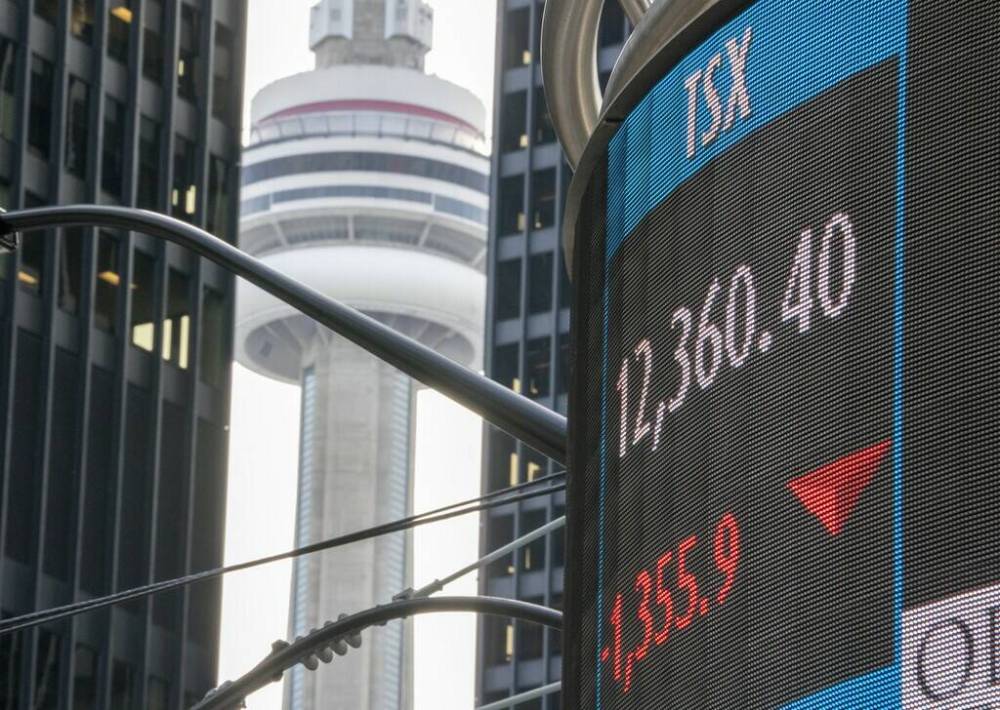
The TSX Composite Index finished up about 22 per cent. The Dow Jones Industrial Index rose about 19 per cent; the NASDAQ grew by 21 per cent, and the S&P 500 topped them all at 27 per cent.
What’s in store this year is anyone’s guess, of course, but many experts see challenges to repeating 2021’s strong market returns.
“We’re likely to see an economic transition from the rapid reopen of 2021 to a normalized economic environment,” says Philip Petursson, chief investment strategist with IG Wealth Management.
“In turn, stock market returns are likely going to moderate and be much closer to average.”
That translates into expectations of high-single-digit percentage increases for all those aforementioned stock market indices.
It’s certainly not bad news considering the challenges facing the world.
Omicron continues to set record highs for daily cases. In turn, public health measures are not going away any time soon. Additionally climate change is likely to bring even more forest fires, storms, drought and flooding which inevitably cause economic upheaval.
“Yet likely one of the biggest things this coming year on the mind of investors is inflation,” Ken O’Kennedy, chief investment officer at Dixon Mitchell in Vancouver.
Inflation exceeded four per cent toward the end of 2021, the highest level in decades, and about double what the Bank of Canada and other central banks target.
Inflation can be challenging for everyone, given it reduces households’ buying power.
It is not that problematic for stock markets because share prices often rise too.
For borrowers and bondholders (i.e. lenders), high inflation does present problems because it often leads central banks, like the Bank of Canada, to hike their overnight interest rate, which generally guides the cost of borrowing consumers and businesses.
Higher interest rates inevitably increase the cost of borrowing, which often slows down economic growth—hopefully just enough to cool demand for goods and services to dampen price growth of those assets, and wages of workers.
Barring a complete reversal in inflation’s direction, we can expect three interest rate increases starting in the spring from the Bank of Canada, and the U.S. Federal Reserve, says Nathan Janzen, economist with RBC Economics.
“We kind of know the direction of interest rates, but we just don’t know exactly when and how fast they could rise,” he cautions.
Still many expect the Bank of Canada will increase the rate by 25 basis points (0.25 per cent) in the spring and then hike rates twice more—25 basis points apiece—by year’s end, which would bring the overnight borrowing rate to one per cent.
Even with the hikes, the interest rate would be very low compared with historical norms, Janzen adds.
All the same, these hikes will pose challenges for conservative investors who may have 50 per cent or more of their portfolios invested in bonds. The reason being bond values tend to fall in rising rate environments.
One solution is to look to “alternative sources for fixed income to enhance returns,” Petursson says.
Options here include private debt. These are essentially bonds, but they are not traded on public markets and, therefore, are less affected by interest rate increases.
One challenge, though, is that private debt investments are often available only to more affluent investors. That said, some mutual funds offer exposure. Other options include holding near-cash investments (i.e. high-interest savings accounts, and short-term GICs). They may not provide returns that keep pace with inflation, but their values are largely unaffected by rising rates.
Another strategy is investing more in dividend stocks with yields more likely to outpace inflation.
“Dividends can be very attractive sources of income,” Petursson adds.
Yes, dividend stocks still fall in value in a bear market, he adds.
But dividend companies can “enhance current income for the portfolio” as interest rates rise, helping offset reduced returns from bond holdings, he says.
Likely the best strategy to deal with the current challenges, including inflation, is having a diversified portfolio, O’Kennedy says.
“Make sure your equity portfolio is diversified with different types of drivers,” he says.
Over the last two years, many investors have focused heavily on technology stocks, which until recently have provided great returns. Big tech companies are likely to remain good investments in the future.
“Amazon, for example, is a fantastic company, and it was a big pandemic beneficiary,” he adds.
“But you want to make sure you have appropriate exposure to companies benefiting” from a return to normalcy too—whenever that occurs.

One benefit of a diversified portfolio is you end up holding companies likely to benefit from rising prices, like Visa Inc.
“As prices rise, Visa automatically earns more on each transaction,” O’Kennedy explains, noting the company charges fees on transactions and other services it provides for businesses.
“So there is really a built-in inflation hedge.”
Despite the challenges, Canada’s economy is expected to grow four per cent in 2022, “a strong economic backdrop,” Janzen says.
While lots of uncertainty remains—especially regarding the pandemic—“we’ve seen this playbook before,” Petursson says. “So I really don’t think the pandemic is going to be the impediment to economic growth.”