

Critics blast licensing of silica sand processing site

Advertisement
Read this article for free:
or
Already have an account? Log in here »
To continue reading, please subscribe:

Digital Subscription
One year of digital access for only $205*
- Enjoy unlimited reading on winnipegfreepress.com
- Read the E-Edition, our digital replica newspaper
- Access News Break, our award-winning app
- Play interactive puzzles
*First annual payment billed as $205.00 + GST for one year. This annual subscription will automatically renew at $233.00 + GST every 52 weeks (10% off the regular annual price of $259.35). Offer available to new and qualified returning subscribers only. Cancel any time.
To continue reading, please subscribe:
Add Free Press access to your Brandon Sun subscription for only an additional
$1 for the first 4 weeks*
- Enjoy unlimited reading on winnipegfreepress.com
- Read the E-Edition, our digital replica newspaper
- Access News Break, our award-winning app
- Play interactive puzzles
*Your next Brandon Sun subscription payment will increase by $1.00 and you will be charged $17.95 plus GST for four weeks. After four weeks, your payment will increase to $24.95 plus GST every four weeks.
Read unlimited articles for free today:
or
Already have an account? Log in here »
Hey there, time traveller!
This article was published 14/01/2022 (1716 days ago), so information in it may no longer be current.
THE province has approved a licence for a sand processing plant ahead of reviewing the more worrisome part of the project opponents say threatens the water source for thousands.
Manitoba Conservation and Climate issued the licence to CanWhite Sands Corp. on Dec. 16, for the construction and operation of a silica sand processing facility in the Rural Municipality of Springfield.
Opponents have until Saturday to appeal it.
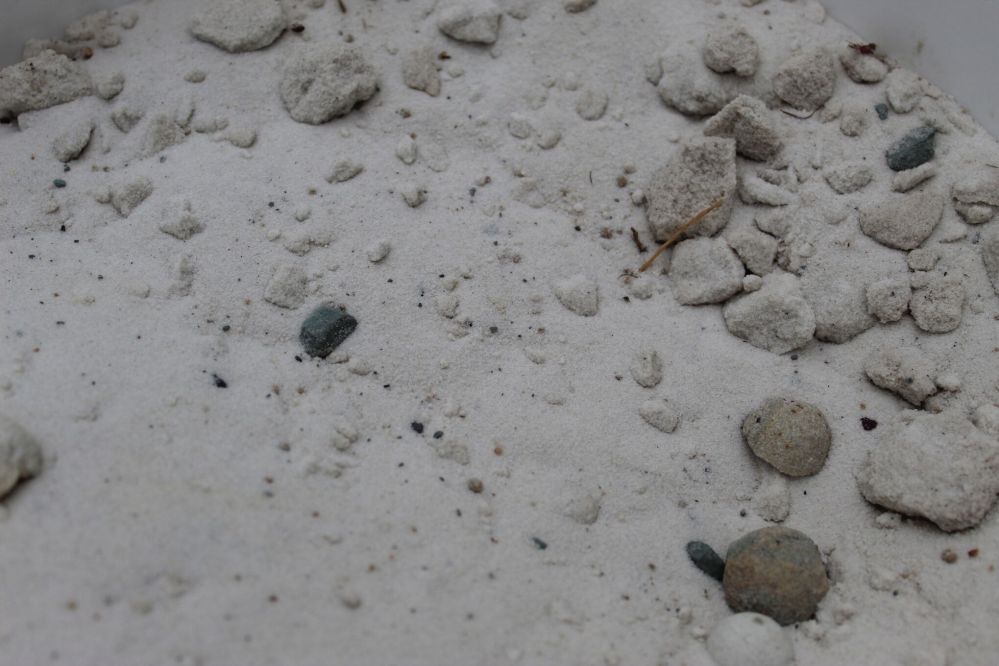
A statement from the department said issuance of the licence for the processing facility in no way guarantees licensing of a proposed underground extraction project.
However, by approving the above-ground plant before it reviews the underground extraction process, the province is “putting the cart before the horse,” says Don Sullivan, spokesman for environmental advocacy group What the Frack Manitoba.
“If you do grant a licence to a company for a processing facility, you can’t really deny them access to the resource that the processing facility requires,” Sullivan said Thursday.
The Calgary-based company wants to mine 1.3 million tonnes of silica sand from the Vivian area annually for the next 24 years.
The processing plant would require drilling wells and piping up sand mixed with groundwater. The water would be separated from the sand, treated with an ultraviolet light and allowed to flow back into its formation.
Silica sand is used in cellphone screens, electronics, fibre optics and in the fracking (hydraulic fracturing) process to extract oil or gas.
CanWhite — which calls itself online “the world’s most environmentally friendly silica mine and supplier” — has said its project will be on land designated for aggregate and industrial activities, and plans to transport the sand by rail.
The facility would employ 40 to 50 people.
The mine would put the Sandilands aquifer — the source of drinking water for thousands of Manitobans — at risk, say opponents of the project.
Another licence is required to extract the sand. It will have to go through the Clean Environment Commission public hearing process before any decision is made, the government said.
The plan to extract the sand may be rejected even if the processing plant gets approved and built, said Climate Minister Sarah Guillemard’s press secretary.
“The plant could be used to process sand that is brought in from elsewhere,” Ross Romaniuk said in a statement.
The whole point of locating the processing plant in Springfield, though, was its proximity to the resource, said Sullivan.

Silica sand processors (most of which are in Wisconsin) locate their plants close to the resource to avoid the high costs of transportation, he said. “The cost of transporting it to market is where the big, big expense is for the buyers.”
The entire operation should have undergone one licensing process for both, Sullivan said.
The “most egregious part” — the method of extracting sand from below the aquifer — was left for last, Sullivan said.
In its letter to CanWhite, the province said before the processing plant is built, it must also comply with all applicable federal, provincial and municipal regulations and bylaws and have a conditional use agreement with the RM of Springfield.
carol.sanders@freepress.mb.ca
Carol Sanders
Legislature reporter
Carol Sanders is a reporter at the Free Press legislature bureau. The former general assignment reporter and copy editor joined the paper in 1997. Read more about Carol.
Every piece of reporting Carol produces is reviewed by an editing team before it is posted online or published in print — part of the Free Press‘s tradition, since 1872, of producing reliable independent journalism. Read more about Free Press’s history and mandate, and learn how our newsroom operates.
Our newsroom depends on a growing audience of readers to power our journalism. If you are not a paid reader, please consider becoming a subscriber.
Our newsroom depends on its audience of readers to power our journalism. Thank you for your support.
Carol Sanders
Legislature reporter
Carol Sanders is a reporter at the Free Press legislature bureau. The former general assignment reporter and copy editor joined the paper in 1997. Read more about Carol.
Every piece of reporting Carol produces is reviewed by an editing team before it is posted online or published in print — part of the Free Press‘s tradition, since 1872, of producing reliable independent journalism. Read more about Free Press’s history and mandate, and learn how our newsroom operates.
Our newsroom depends on a growing audience of readers to power our journalism. If you are not a paid reader, please consider becoming a subscriber.
Our newsroom depends on its audience of readers to power our journalism. Thank you for your support.
Related Articles
Impact concerns remain as silica plan pivots from fracking to solar power
Advertisement Advertise With Us
Advertisement Advertise With Us