Climate change makes the future of Nordic skiing uncertain
Advertisement
Read this article for free:
or
Already have an account? Log in here »
To continue reading, please subscribe:

Digital Subscription
One year of digital access for only $205*
- Enjoy unlimited reading on winnipegfreepress.com
- Read the E-Edition, our digital replica newspaper
- Access News Break, our award-winning app
- Play interactive puzzles
*First annual payment billed as $205.00 + GST for one year. This annual subscription will automatically renew at $233.00 + GST every 52 weeks (10% off the regular annual price of $259.35). Offer available to new and qualified returning subscribers only. Cancel any time.
To continue reading, please subscribe:
Add Free Press access to your Brandon Sun subscription for only an additional
$1 for the first 4 weeks*
- Enjoy unlimited reading on winnipegfreepress.com
- Read the E-Edition, our digital replica newspaper
- Access News Break, our award-winning app
- Play interactive puzzles
*Your next Brandon Sun subscription payment will increase by $1.00 and you will be charged $17.95 plus GST for four weeks. After four weeks, your payment will increase to $24.95 plus GST every four weeks.
Read unlimited articles for free today:
or
Already have an account? Log in here »
Hey there, time traveller!
This article was published 18/01/2022 (1728 days ago), so information in it may no longer be current.
WINTHROP, Wash. (AP) — For the first time in 32 years, organizers of the Rendezvous Cross Country Ski Festival in West Yellowstone, Montana, had to cancel November’s traditional start-of-the-ski-season event due to a lack of snow.
Some 300 miles away, Soldier Hollow Nordic Center in Utah offered skiing in November by building an elaborate snow-making system while a small operation in Vermont was able to double its ski days after laying new pipe to feed the water-hungry snow-blowers. That wouldn’t work at Methow Trails in northern Washington, which can’t possibly cover its 200 kilometers (124 miles) of ski tracks with artificial snow; instead, they do snow dances and work on plans to move trails to higher elevation if needed.
The snow hasn’t stopped falling but it is certainly not piling up as much or as far as it used to amid climate change and it is hitting a sport that saw wild growth when COVID-19 hit in the winter of 2020. Many escaped cabin fever by hitting cross country ski trails for the exercise, the fresh air and the serenity.
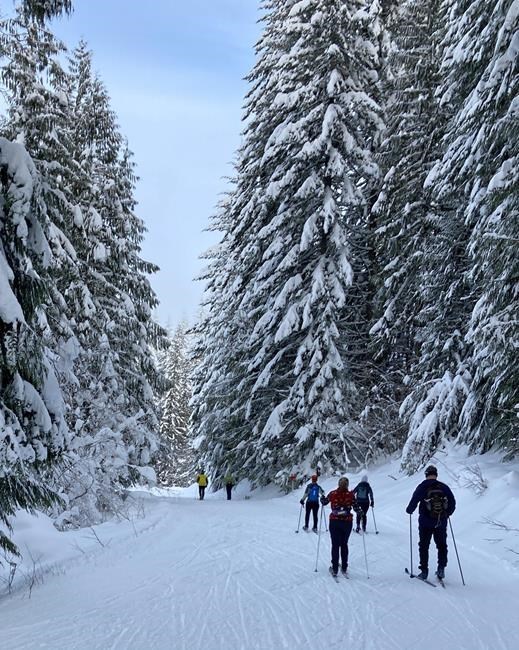
Nordic skis quickly became the new toilet paper – they were hard to find and sold out in stores.
“What COVID did was push people outside,” said Reese Brown, executive director of the Vermont-based Cross Country Ski Areas Association. “It brought a huge number of new people to cross country skiing because it’s the perfect winter sport.”
Still, climate change makes the future of all skiing uncertain, from the elite World Cup circuits and sprawling resorts to the mom-and-pop operations that bustle on weekends with recreational skiers. For cross country centers, warmer temperatures mean more precipitation is falling in the form of rain instead of snow, forcing them to look to snow-making equipment to cover their trails.
The scarcity of water and costs make that option impossible for some, especially in the American West. A new study predicts that mountain states will be in a “low-to-no snow” predicament within 35 to 60 years if greenhouse gas emissions continue at current levels.
The problems have already affected top athletes who spend more time on snow than most. A lack of snow made early-season training difficult for many top cross country ski racers and biathletes as they prepared for the Winter Olympics in Beijing next month. A group of U.S. Ski Team members went to Germany in the fall to train in a ski tunnel.
“In cross country skiing, we see the impact of climate change in the towns that we go through,” said Olympic gold medalist Jessie Diggins of Afton, Minnesota. “There are years where they only have manmade snow and 2 kilometers of skiing on a tiny little hamster loop.”
When the team trained in a small town in northern Finland that traditionally is guaranteed snow in mid-November, the tracks were limited.
“We were skiing on a ribbon of dirty, manmade snow and there was green moss and little purple flowers blooming on the side of the trail,” Diggins said. “It looks wrong and feels wrong.”
Tim Burke, a retired U.S. biathlete who has competed in four Winter Games, said he has seen the impact of climate change throughout his career. Places like West Yellowstone used to have reliable snow for early season training “but that’s just not true anymore.”
Marine Dusser Bjornsen is a former member of the French biathlon team who now lives in Winthrop, Washington, where she runs a ski shop with her husband, retired U.S. ski team member Erik Bjornsen. She watched Nordic skiing explode after COVID-19 hit, but she’s also seen how climate change depletes the snowpack.
“When I was 15, 16, we would go to glacier to ski and it was groomed,” she said. “Now those glaciers don’t exist anymore. It’s just rock.”
Nordic skiers and biathletes are made in the summer, the saying goes, but climate change has cut into offseason training.
Brian Halligan, biathlon training director at Auburn Ski Club Training Center in Truckee, California, said smoke from the wildfires that hit the Lake Tahoe area in September killed their fall season.
“We’re actually thinking of implementing some training camp trips to the East Coast or maybe down in the Bay Area to basically avoid the smoke so we can continue training,” he said.
West Coast wildfires even impacted training in the east, according to Olympic biathlete Susan Dunklee, who lives in Vermont.
“I could taste the smoke in the air,” Dunklee said. “The change in the air quality puts a stress on your lungs.”
Methow Trails, on the east side of the Cascade mountains, boasts of being the largest cross country trail system in North America, with those 124 miles of groomed track that run between the towns of Winthrop and Mazama thanks to agreements with more than 200 state, federal and private landowners.
The operation is a significant contributor to the region’s economy to the tune of more than $12 million per season, said James DeSalvo, the trail system’s executive director.
“There would be drastic consequences if the snow melted,” he said.
Methow’s operators have spent years developing contingencies for a low-snow or no-snow winter, but those plans don’t include snowmaking. The trail system is just too big.
“And then there’s the environmental piece — water,” DeSalvo said. “There’s already a moratorium on drilling wells in the county.”
One option is to move the trails to higher elevations, he said, taking advantage of old logging roads.
“This is one of our strategic priorities and has been for over a decade,” he said. “We are very worried about it.”
While not an option everywhere, snowmaking has breathed new life into some cross country ski areas that saw the snow disappear.
“If you look at the Alpine ski industry 30 or 40 years ago, they were where we are now with cross country,” Brown said. “You had some alpine areas that had some snowmaking and others that didn’t have any and it was a struggle. Now virtually every alpine ski area has 50 to 100% snowmaking capacity.”
Some smaller Nordic centers in Vermont were able to get set up with snow-making systems for $65,000 to $80,000, Brown said. These involve blowing snow into a pile and using front-end loaders to move the snow around the trails.

Riker Nordic Center in Ripton, Vermont, made a bigger investment and went from 70 days of skiing to 140 thanks to HKD snowmaking equipment. The initial cost topped $850,000 and it’s about $40,000 every season to maintain the system, which includes labor and electricity, Brown said.
Luke Bodensteiner, general manager of the Soldier Hollow center where cross country skiing and biathlon races took place during the 2002 Salt Lake City Olympics, said climate change has reduced the snow they see each year.
“The natural winters are definitely getting shorter. No question about it,” he said. “We’ve probably lost two to three weeks early season skiing on natural snow on both the front end and the back end of the year since this place was established.”
Utah is hoping to host the Winter Olympics in 2030 or 2034. Soldier Hollow has invested in state-of-the-art snow-making equipment to make that work. It helps that they sit at an elevation of 5,900 feet (1,798 meters) with colder temperatures. Still, the changing climate has made an impact.
“We’ve been able to kind of keep pace with our historical opening days but we do it far less often on natural snow and far more often on manmade snow,” Bodensteiner said.