Political killings skilfully chronicled

Advertisement

Advertise with us

William Shakespeare got it wrong. One of his shortest and most frequently quoted lines really was a fiction.

Read this article for free:


or

Already have an account? Log in here »

To continue reading, please subscribe:

Subscribe and receive a limited-edition Free Press branded hat or tote.

Digital Subscription

One year of digital access for only $205*

  • Enjoy unlimited reading on winnipegfreepress.com
  • Read the E-Edition, our digital replica newspaper
  • Access News Break, our award-winning app
  • Play interactive puzzles

*First annual payment billed as $205.00 + GST for one year. This annual subscription will automatically renew at $233.00 + GST every 52 weeks (10% off the regular annual price of $259.35). Offer available to new and qualified returning subscribers only. Cancel any time.

To continue reading, please subscribe:

Add Free Press access to your Brandon Sun subscription for only an additional

$1 for the first 4 weeks*

  • Enjoy unlimited reading on winnipegfreepress.com
  • Read the E-Edition, our digital replica newspaper
  • Access News Break, our award-winning app
  • Play interactive puzzles
Start now

*Your next Brandon Sun subscription payment will increase by $1.00 and you will be charged $17.95 plus GST for four weeks. After four weeks, your payment will increase to $24.95 plus GST every four weeks.

Hey there, time traveller!
This article was published 05/02/2022 (1677 days ago), so information in it may no longer be current.

William Shakespeare got it wrong. One of his shortest and most frequently quoted lines really was a fiction.

The Bard wrote that when Julius Caesar saw his friend pull out a knife to kill him, he called out in Latin “Et tu Brute,” (You, too, Brutus).

What Caesar’s actual last words were that March afternoon in 44 BC were “Kai su, teknons,” (“You, too, child,” in Greek), which makes sense given that Marcus Brutus was the son of Caesar’s mistress.
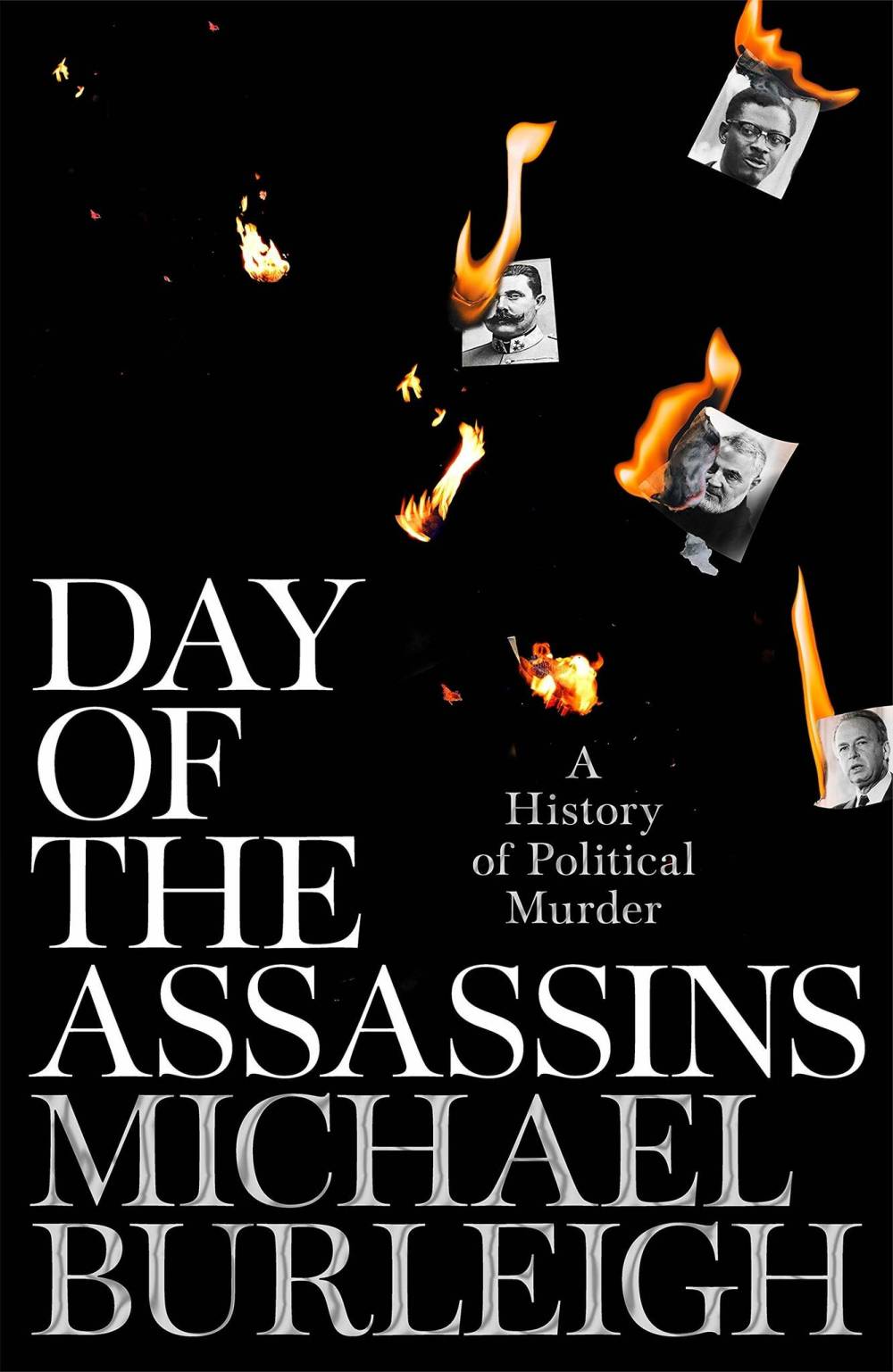
Day of the Assassins

We know Shakespeare got it wrong, award-winning British historian Michael Burleigh tells us in Day of The Assassins, because Caesar’s murder was a public spectacle.

In addition to Brutus, there were 20 more knife-wielding hackers and slashers present that day in the Senate. They managed to stab Caesar about 30 times, but also stabbed each other in the hands and legs during the mêlée. Cheering them on were about 60 unarmed co-conspirators and hundreds of senators there to hear Caesar speak, but who instead watched him die.

Well, Burleigh found, they all had a helluva story to tell, which they did in “astonishing detail.”

Those words perfectly capture what Burleigh delivers in this macabre page-turner — it is, front to back, a compendium of “astonishing detail,” told with verve and droll asides.

Shakespeare’s rewrite is but a tiny part of Burleigh’s brief but authoritative account of Rome at the time of Caesar’s death, the motives for murder and fates of the murderers. But it’s a detail you can’t forget and it acts as a kind of mnemonic for remembering the bigger picture.

The archduke Franz Ferdinand, for example, was a repellent anti-Semite who would have been happily forgotten had his murder in Sarajevo in 1914 not become the pretext for the start of the First World War, “one of the greatest cataclysms of modern times.” He had no redeeming qualities beyond a love for his wife and children. His “main passion was game shooting, with 274,889 meticulously recorded kills.” So obsessive was his urge to kill that hours before being shot dead, he stopped his limousine, stepped out and shot a house cat he spotted in a field.

Hard to forget that.

Also hard to forget are so many other grim details, like the bloody aftermaths of the more recent assassinations of Lebanese prime minister Rafik Hariri in 2005 and Iranian Gen. Qassem Soleimani in 2020. Hariri was killed to stop him from trying to kick Syria out of Lebanon. Solemani was killed in part because then-U.S. president Donald Trump was “riled” about insults Iranian leaders had posted on Twitter.

Hariri was vaporized by 540 kilograms of TNT packed into a roadside car bomb. Soleimani was blown to bits in Baghdad by a U.S. Hellfire missile fired from an unmanned drone, the latest and in many ways most troubling development in the evolution of assassination.

Hariri was confirmed dead on the strength of manicured fingernails found in the gore and a bit of a tie an aide had given him earlier that day. Solemani was identified by the large garnet in a silver ring that he habitually wore on his left hand.

And so it goes for each of the assassination accounts here, divided into trends like religious wars or Vladimir Putin’s Russia. Burleigh sets out the political, social and historical forces at play for each, but does it with great flair and storytelling, pure and simple.

Former Free Press comment editor Gerald Flood wanted to write that Day of The Assassins is Burleigh’s 12th book but couldn’t find a way to work it into the review.

Report Error Submit a Tip

More Stories

Senior assaulted at bus stop

1 minute read Yesterday at 12:47 PM CDT

An 18-year-old man has been charged after a 67-year-old woman was randomly attacked at a bus stop on Portage Avenue last month.

The senior was sitting on a bench at a bus stop at Portage and Craig Street on Aug. 10 when a man lay down beside her, the Winnipeg Police Service said in a news release Tuesday.

The woman was “minding her own business” when the man began to kick and punch her, police said. The suspect followed her onto a city bus, but was kicked off shortly after for causing a disturbance.

The victim sustained injuries to her upper body but did not require medical attention.

Why our democracy depends on your vote

Erna Buffie 5 minute read 2:00 AM CDT

Some years ago, I did some pretty in-depth research on ancient Athens and its democratic system of government as part of a documentary film I was pitching. It was actually a lot of fun, because I was looking at ways their democratic beliefs and practices were both similar to and different from ours.

Some of the differences were quite striking, such as the fact that only Athenian-born males 18 years of age and over could participate. Or the fact their executive branch was selected by a totally random lottery system — a system one expert described as akin to picking names out of a phone book.

Then there was the practice of ostracism, a procedure I found particularly attractive. Essentially, every year the citizens of Athens chose a political figure who was becoming too powerful or pushing for a more authoritarian regime and voted to banish him from the city for 10 years.

Needless to say, I can think of quite a few politicians I’d like to see subjected to that procedure.

Winkler-based internet provider delivering high-speed service to 30 rural and First Nations Manitoba communities

Nicole Buffie 3 minute read Preview

Winkler-based internet provider delivering high-speed service to 30 rural and First Nations Manitoba communities

Nicole Buffie 3 minute read Yesterday at 7:12 PM CDT

Valley Fiber says it is undertaking one of its largest fibre optic projects and is building infrastructure that will deliver internet to 10,000 homes and businesses in rural and First Nations communities across Manitoba.

“These communities will now have access to the fastest internet network in Manitoba, and it will power their lives and their business,” Ryan Klassen, chief executive officer of the Winkler-based internet provider, said Tuesday from Fisher River Cree Nation.

The province has granted Valley Fiber use of two of its underused cables on the existing Manitoba Hydro fibre optic network for up to 20 years as part of the project, which will connect nearly 30 communities — including Buffalo Point, Hollow Water, Black River and Peguis First Nations, along with Fisher River and Fox Lake Cree Nations — to high-speed internet.

Construction should be finished by 2027.

Read
Yesterday at 7:12 PM CDT

‘It blew my mind that four lives were taken’

Chris Kitching 8 minute read Preview

‘It blew my mind that four lives were taken’

Chris Kitching 8 minute read Updated: Yesterday at 6:34 PM CDT

A two-vehicle crash that killed four teenage friends in the Interlake Sunday night prompted outpourings of grief in several communities and calls for safety improvements at the intersection, which was also the site of a death in July.

Recent high school graduates Maya Borsa and Chloe Vermette, both 18, were identified by their families as victims of the collision at Highway 8 and Provincial Road 229, just west of Winnipeg Beach.

“(Chloe) was a very bubbly, loving personality. Always giving, always caring. Her friends meant the world to her,” said her mother, Veronique Vermette, who struggled to comprehend the tragedy when she went to the scene Monday. “We sat in the rain for hours, and it blew my mind that four lives were taken.”

The teens’ parents are waiting for RCMP to provide more information about the cause of the crash. Chloe, who graduated from Windsor Park Collegiate in Winnipeg in July, was driving one of the vehicles, her mother said.

Read
Updated: Yesterday at 6:34 PM CDT

Pointing fingers at Tories three years after election tiresome, accomplishes nothing

Tom Brodbeck 5 minute read Preview

Pointing fingers at Tories three years after election tiresome, accomplishes nothing

Tom Brodbeck 5 minute read Yesterday at 1:08 PM CDT

There is a point in every government’s life when blaming the previous government stops being an explanation and starts becoming an excuse.

For Manitoba’s NDP government, that point has arrived.

Justice Minister Matt Wiebe was asked last week about a grievance filed by Crown attorneys over excessive workloads and a government attempt to keep a report documenting those workloads out of an upcoming arbitration hearing.

Wiebe said he couldn’t discuss the arbitration case.

Read
Yesterday at 1:08 PM CDT

Climate: ‘No good outcomes’

Gwynne Dyer 5 minute read 2:00 AM CDT

‘EL NIÑO is being supersized before our eyes,’ United Nations Secretary-General António Guterres said last week.

“The science leaves no room for doubt: the planet is in uncharted waters, and those waters are heating up. The world is in the danger zone of extreme weather.”

He’s right — we are in even deeper trouble than we thought on the climate front.

Zeke Hausfather, a leading American climate scientist, warns that 2027 is almost certain to be the hottest year. It will be, he said, “a climate time-machine, temporarily driving global average temperatures to levels not normally expected until the late 2030s.” (Note the “temporarily.” We’ll get back to that.)