A dark legacy
Chronicle of Sophia Burthen’s struggles highlights Canada’s troublesome slave-trade history
Advertisement
Read this article for free:
or
Already have an account? Log in here »
To continue reading, please subscribe:
Digital Subscription
One year of digital access for only $1.44 a week*
- Enjoy unlimited reading on winnipegfreepress.com
- Read the E-Edition, our digital replica newspaper
- Access News Break, our award-winning app
- Play interactive puzzles
*Billed as $5.77 plus GST every four weeks. After 52 weeks, price increases to the regular rate of $19.95 plus GST every four weeks. Offer available to new and qualified returning subscribers only. Cancel any time.
To continue reading, please subscribe:
Add Free Press access to your Brandon Sun subscription for only an additional
$1 for the first 4 weeks*
- Enjoy unlimited reading on winnipegfreepress.com
- Read the E-Edition, our digital replica newspaper
- Access News Break, our award-winning app
- Play interactive puzzles
*Your next Brandon Sun subscription payment will increase by $1.00 and you will be charged $17.95 plus GST for four weeks. After four weeks, your payment will increase to $24.95 plus GST every four weeks.
Read unlimited articles for free today:
or
Already have an account? Log in here »
Hey there, time traveller!
This article was published 05/02/2022 (1719 days ago), so information in it may no longer be current.
‘I was stolen from my parents when I was seven years old, and brought to Canada… My master’s sons-in-law… came into the garden where my sister and I were playing among the current bushes, tied their handkerchiefs over our mouths, carried us to a vessel, put us in the hold and sailed up the river. I know not how far nor how long — it was dark there all the time.”
Nearly 250 years ago, Sophia Burthen’s life was changed forever, her story preserved through the words written down by a white man near the end of her life. Her story shows that for far too long, Canadians have denied the truth of the nation’s involvement, support and continuation of the international slave trade.
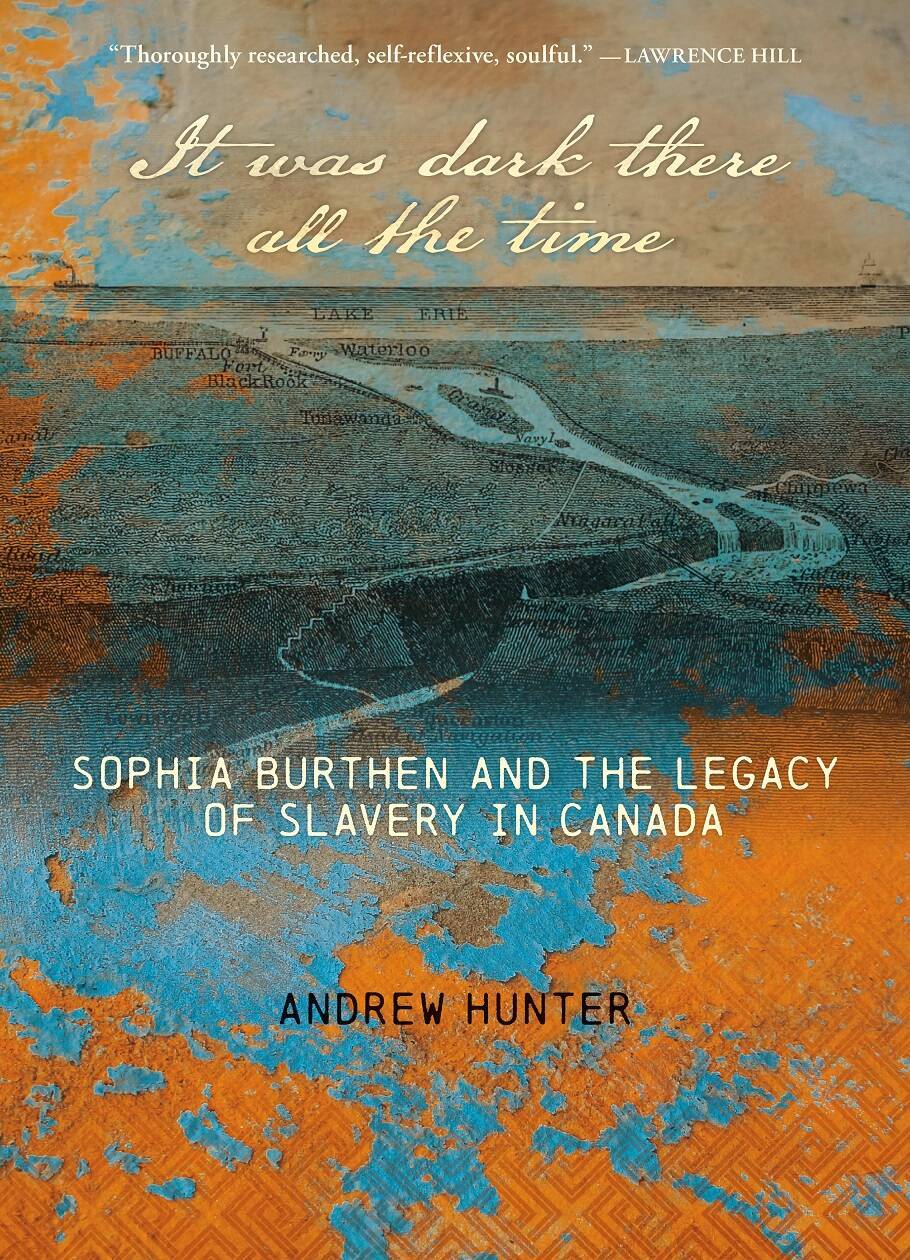
In It Was Dark in There All the Time, Hamilton curator, researcher, author and artist Andrew Hunter takes Burthen’s story and brings this truth back to light, reframing the narrative of slavery in Canada.
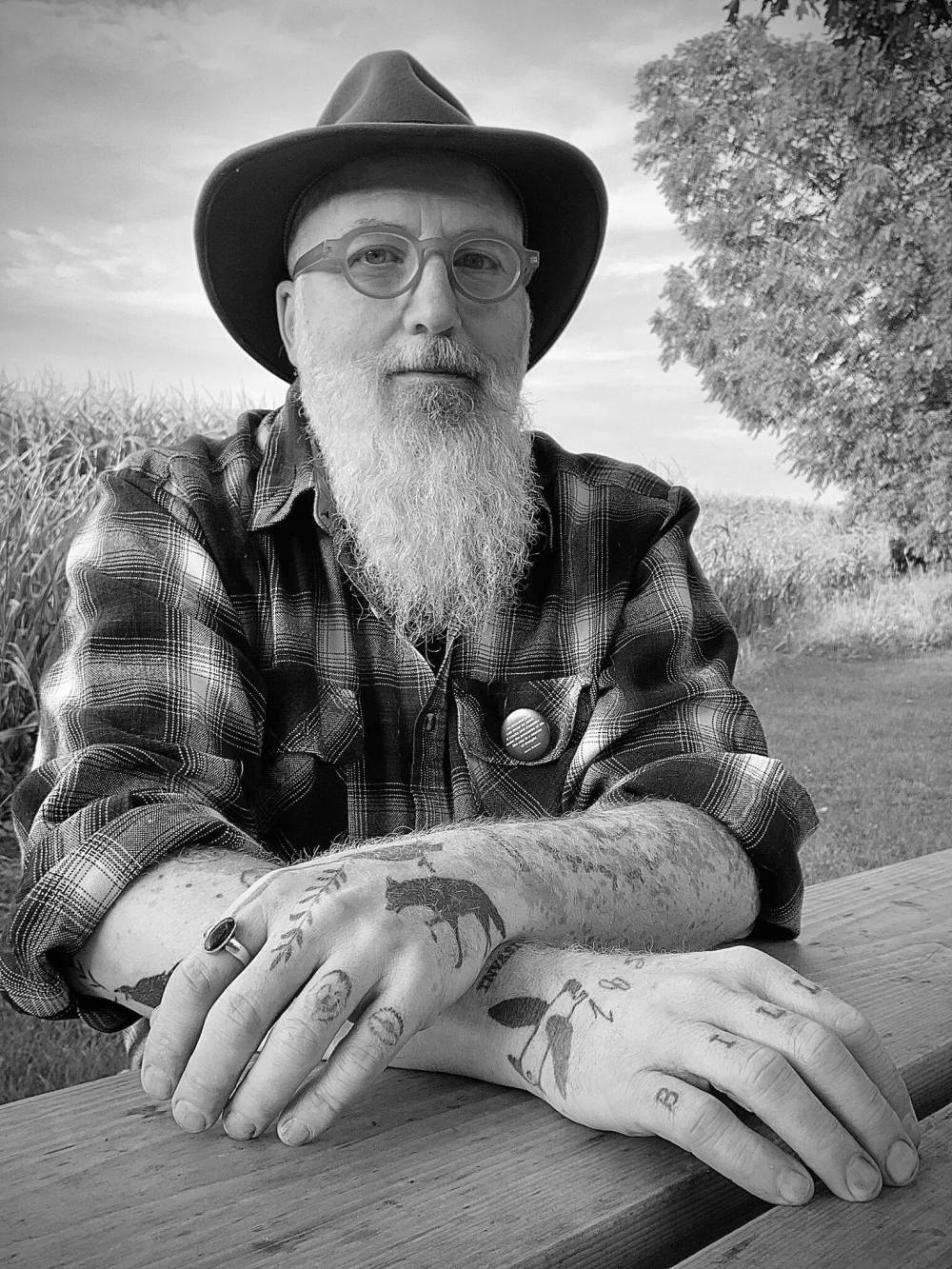
His in-depth research highlights the misconceptions and limitations of the stories we teach about liberalism and multiculturalism in this country, and the simplistic inaccuracies we perpetuate as we look at our nation’s history.
For every story of a slave that reached Canada as part of the Underground Railroad, there are hundreds more of slaves brought against their will to continue to serve their United Empire Loyalist masters, of free Black Canadians facing harsh intolerance, prejudice and discrimination, and of thriving Black communities slowly falling apart under the pressures of systemic racism.
“The stories we tell in Canada obscure and erase, are virulent and toxic. Too often Black history emerges as a blank page, a clean white sheet,” Hunter writes, also noting that “…Canada has been very selective about the history it honours, the stories it continues to invest in telling.”
Foremost in Hunter’s mind is Sophia Burthen’s story. She was initially sold to the Kanyen’kehà:ka (Mohawk) leader Thayendanegea/Joseph Brant, then to a white man before she ran away and gained her freedom. She married a Black man who left her for a white woman, and was interviewed by abolitionist Benjamin Drew when she lived at the Queen’s Bush settlement in 1851, when she said she was more than 90 years old.
Throughout the book, Hunter uses quotes from Burthen’s interview with Drew, printing them in a different font. He also writes directly to Sophia, trying to reach her, sharing stories about himself and asking questions about how she felt or why she had moved to certain places, to try and better understand her life and how her story fits into the larger social, cultural and racial context of the time.
Both of these approaches successfully serve to bring Burthen more to life, encouraging a sense of curiosity and a deeper empathy to her life and the hardships she must have been traumatized by for decades.
Hunter also takes various parts of Burthen’s story and deconstructs it, using her words as a starting point for chapters on the inaccuracies in histories of Thayendanegea/Joseph Brant, the overt racism of United Empire Loyalist monuments and the incompleteness of Canadian history available to the public.
A curator himself, Hunter repeatedly questions why certain information is kept and other information expunged from “official” historical timelines and exhibitions, particularly about Black and Indigenous individuals and communities. He notes this tailoring of the historical record highlights the achievements and actions of white historical figures, without mention of their roles in the subjugation of others. This does not only do a disservice to not only Black, Indigenous and Persons of Colour (BIPOC) communities, but also to the construction of our national identity.
It Was Dark There All the Time is a book to read slowly, to think about and to learn from, to be read carefully more than once. Hunter brings a critical eye to the research and the emotional and mental work needed to share these stories.
He fully acknowledges that he is white, and that BIPOC people may struggle reading the book of a white man that relies upon BIPOC voices to shape its narrative. But he also uses this book to share a strong message with white Canadians — that there is more to do.
“To white people, particularly Canadians: you need to read this book or any book that discomforts us in trying to get beyond the feel-good narratives of our history; we are implicated; we cannot continue in innocence or feigned ignorance of a damaged legacy that we continue to benefit from and defines our place in the world.”
Julie Kentner is a Winnipeg writer.
***
Reviewer’s Note
When reading this book, I was also looking at my own family tree. I was stunned to realize my six-times great-grandfather and his family lived a mere 20 kilometres from where Sophia Burthen was kidnapped, and that she would have floated right past their home as she was taken to Canada. He was from the same ethnic community and even shared the same last name as the person believed to be Sophia’s “master,” meaning they could easily have been related in some way.
For many years, I have taken pride in my family’s farming background, the hard work they did and the chances they took in coming to Canada. But for the first time, I realized the full extent of the privilege and advantages they had over so many others — likely in part because they, too, owned slaves.
Reviewing It Was Dark There All the Time has fundamentally changed my perception of not only our nation’s historical narrative, but also the personal narrative of my family’s own history. Hunter says that white Canadians all need to do more to flag stories that have been buried under the “weight of whiteness,” leave room for others to mark space and consider all points of view and perspectives.
Today, I flag Sophia Burthen’s story. While I know there is much more for me to do, I hope to be a person my ancestors could learn from if I met them, and a person my nieces and nephew can learn from today.