EXPLAINER: Competing for ‘another’ country is nothing new
Advertisement
Read this article for free:
or
Already have an account? Log in here »
To continue reading, please subscribe:

Digital Subscription
One year of digital access for only $205*
- Enjoy unlimited reading on winnipegfreepress.com
- Read the E-Edition, our digital replica newspaper
- Access News Break, our award-winning app
- Play interactive puzzles
*First annual payment billed as $205.00 + GST for one year. This annual subscription will automatically renew at $233.00 + GST every 52 weeks (10% off the regular annual price of $259.35). Offer available to new and qualified returning subscribers only. Cancel any time.
To continue reading, please subscribe:
Add Free Press access to your Brandon Sun subscription for only an additional
$1 for the first 4 weeks*
- Enjoy unlimited reading on winnipegfreepress.com
- Read the E-Edition, our digital replica newspaper
- Access News Break, our award-winning app
- Play interactive puzzles
*Your next Brandon Sun subscription payment will increase by $1.00 and you will be charged $17.95 plus GST for four weeks. After four weeks, your payment will increase to $24.95 plus GST every four weeks.
Read unlimited articles for free today:
or
Already have an account? Log in here »
Hey there, time traveller!
This article was published 14/02/2022 (1704 days ago), so information in it may no longer be current.
BEIJING (AP) — U.S.-born athletes have taken center stage at the Winter Olympics in Beijing — for the host country, that is, generating scrutiny of nationality-switching.
Eileen Gu, the prodigious — and, depending on who you ask, prodigal — freestyle skier who chose to compete for her mother’s native China over her native U.S., has drawn critical coverage that has at times veered into plain racism and misogyny.
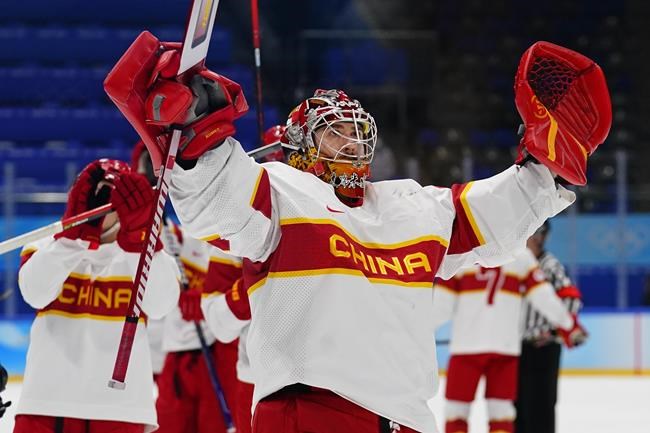
But the likes of Gu and Jieruimi Shimisi — the Team China hockey goaltender (with no known Chinese heritage) formerly known as Jeremy Smith — are not the first to don the colors of a country where they were not born. Mutable nationality has a long history at the Olympics and, more generally, in the field of sports.
In an increasingly globalized society, is it any wonder that identity and nationality are fluid? Sports, after all, can be a great unifier of national identity — but also an expansive instrument for welcoming or attaining belonging.
Here’s a look at the nuts and bolts of competing for “another” country:
DO YOU HAVE TO BE A CITIZEN TO COMPETE FOR A COUNTRY?
Under the current Olympic Charter, yes. National Olympic Committees are responsible for entering competitors, and those competitors must be “a national” of that NOC’s country.
DOESN’T THAT MEAN YOU HAVE TO BE BORN IN A COUNTRY TO COMPETE FOR IT?
Birthright citizenship isn’t a universal concept. The U.S. is one of the most prominent practitioners of jus soli, conferring citizenship on anyone born on U.S. soil.
— Many countries use jus sanguinis — blood ties — in their citizenship criteria. If you are born in France, say, but your parents aren’t French, you can’t attain citizenship until your teenage years.
— Naturalization is another path to citizenship. Two common ways of attaining naturalization are jus domicilii (fulfilling residency requirements) and jus matrimonii (marriage to a citizen). Tim Koleto, a U.S.-born ice dancer representing Japan, is married to his Japanese skating partner, for instance.
—If you’re wealthy enough, you can also buy citizenship or at least a visa with a fast track to citizenship in some cases. Countries sometimes actively recruit, too — like China with its hockey team, though the details of that are a mystery.
With each country having dramatically different citizenship requirements — some as loose as having a single grandparent born on its soil — it would not be out of the question for a would-be competitor to have five passports.
SO WHAT IS THE CALCULUS BEHIND CHOOSING YOUR COUNTRY?
It’s a matter of opportunity and philosophy. If you’re a star player in a team sport, you would likely opt for the country that has the best chance of winning. But if your main goal is to just make it to the Olympics, you might find a clearer path through a country that’s not a powerhouse.
There are also sponsorship deals and sentiment to consider. Gu is the star of Team China, whereas she would have been among a field of telegenic, charismatic figures like Chloe Kim if she had competed for the U.S. And she has deep ties to China — she spent significant time here growing up, was raised by a Chinese mother and speaks Mandarin fluently.
In some cases, the choice doesn’t feel much like one: Bobsled star Kaillie Humphries left Team Canada, saying she was subjected to abuse and harassment from its officials. She became a U.S. citizen barely two months before these Games began.
ONCE YOU CHOOSE A COUNTRY, DO YOU HAVE TO STICK WITH IT?
No. However, if you’ve represented one country on the international stage, you do have to wait three years before you can represent another at the Olympics. This waiting period can be reduced or eliminated if all the involved National Olympic Committees and the relevant international sporting federation are in agreement, though.
Freestyle skier Gus Kenworthy shot to fame at the 2014 Winter Olympics, where he won a silver medal as part of the U.S. team. This time around, he’s competing for Great Britain where he was born and his mother hails from (his dad is American and Kenworthy was raised in the U.S.).
WHAT ABOUT THE PEOPLE WHO SEEM TO HAVE NO TIES TO THE COUNTRY FOR WHICH THEY’RE COMPETING?
I see you’ve been taking in the ice dancing. The discipline is rife with pairs where at least one half has tenuous, if any, ties to the country for which they compete (though none of the medalist pairs this year had naturalized members). Ice dancing has historically been dominated by a handful of countries — namely Russia (or its historical antecedents), with strong showings by Canada, France, the U.S. and Great Britain. That means if you want to make it to the premier rink, it might behoove you to acquire a new nationality.
Furthermore, many ice dancers train together in Michigan or Canada, so pairs often comprise people with differing nationalities of origin. The ice dancers Nikolaj Sørensen and Laurence Fournier Beaudry used to compete for Sørensen’s native Denmark, but Fournier Beaudry couldn’t acquire citizenship in time so they switched to representing her native Canada.
Simon Proulx-Sénécal used to compete for his native Canada, but switched to Armenia after pairing with Tina Garabedian, an Armenian-Canadian. Armenia grants citizenship “ without any requirement to persons who have provided exceptional service” to the country — augmenting a stable of high-profile talent seems to count.
WHAT HAPPENS WHEN COUNTRIES CEASE TO EXIST?
The dissolution of the Soviet Union happened just before the 1992 Winter Olympics (back when the Winter and Summer Olympics took place in the same year). The successor states didn’t have NOCs in place, so athletes competed as the Unified Team.
The Olympic Charter makes a special provision for instances of independence, border changes and mergers, offering athletes a one-time choice between representing the original entity or the new one.
WHAT DO CRITICS SAY ABOUT NATIONALITY SWITCHING?
While the Olympics profess to eschew politics, almost every facet of them is inherently political.
Athletes who switch nationalities risk being branded traitors by their spurned countries. In 2017, track’s international governing body froze nationality switches and its president, Sebastian Coe, said the switches were “bordering on trafficking if you’re not careful.” The comment was sparked by nations like Qatar recruiting athletes with no ties to compete, but denying them full citizenship rights.
Even former IOC President Jacques Rogge expressed concern about financially motivated decisions to switch nationalities in 2012.
HOW ARE THESE ATHLETES RECEIVED BY THEIR ‘NEW’ COUNTRIES?
It kind of depends how they perform. We’ve seen the divergent reactions in China to gold medalist Gu and her fellow Team China member Zhu Yi, a figure skater who won a U.S. national novice title as Beverly Zhi but flamed out at these Olympics.
This is a theme seen throughout the sporting world: Soccer fans can be brutally racist or xenophobic toward certain players on national teams. German-born Mesut Özil helped Germany to a World Cup victory in 2014, but — in the wake of contention surrounding his association with Turkish President Recep Tayyip Erdoğan — became the focus of ire when the Germans crashed out unexpectedly early in 2018.
“I am German when we win, but I am an immigrant when we lose,” he wrote upon resigning from the national team.
___
New York-based Associated Press journalist Mallika Sen is on assignment at the Beijing Olympics. Follow her on Twitter at http://twitter.com/mallikavsen
Related Articles
GLIMPSES: Olympic skiing on filaments of gold



Advertisement Advertise With Us
Advertisement Advertise With Us