

Violent incidents drive ‘internal conversations’ on shelter safety

Advertisement
Read this article for free:
or
Already have an account? Log in here »
To continue reading, please subscribe:

Digital Subscription
One year of digital access for only $205*
- Enjoy unlimited reading on winnipegfreepress.com
- Read the E-Edition, our digital replica newspaper
- Access News Break, our award-winning app
- Play interactive puzzles
*First annual payment billed as $205.00 + GST for one year. This annual subscription will automatically renew at $233.00 + GST every 52 weeks (10% off the regular annual price of $259.35). Offer available to new and qualified returning subscribers only. Cancel any time.
To continue reading, please subscribe:
Add Free Press access to your Brandon Sun subscription for only an additional
$1 for the first 4 weeks*
- Enjoy unlimited reading on winnipegfreepress.com
- Read the E-Edition, our digital replica newspaper
- Access News Break, our award-winning app
- Play interactive puzzles
*Your next Brandon Sun subscription payment will increase by $1.00 and you will be charged $17.95 plus GST for four weeks. After four weeks, your payment will increase to $24.95 plus GST every four weeks.
Read unlimited articles for free today:
or
Already have an account? Log in here »
Hey there, time traveller!
This article was published 28/02/2022 (1660 days ago), so information in it may no longer be current.
Two arrests at South Point Douglas shelters hours apart Sunday speak to a rise in violent incidents at spaces that serve vulnerable Winnipeggers, experts say.
A man was reportedly threatening people with a knife, attempted to stab an employee and was restrained by staff at around 8 p.m. before he was arrested. Police, who did not name either shelter Monday, said the suspect had been attempting to use drugs and became violent when asked to leave.
Nathaniel Sean Capay, 23, was charged with assault and weapons charges and failure to comply with the conditions of an undertaking.
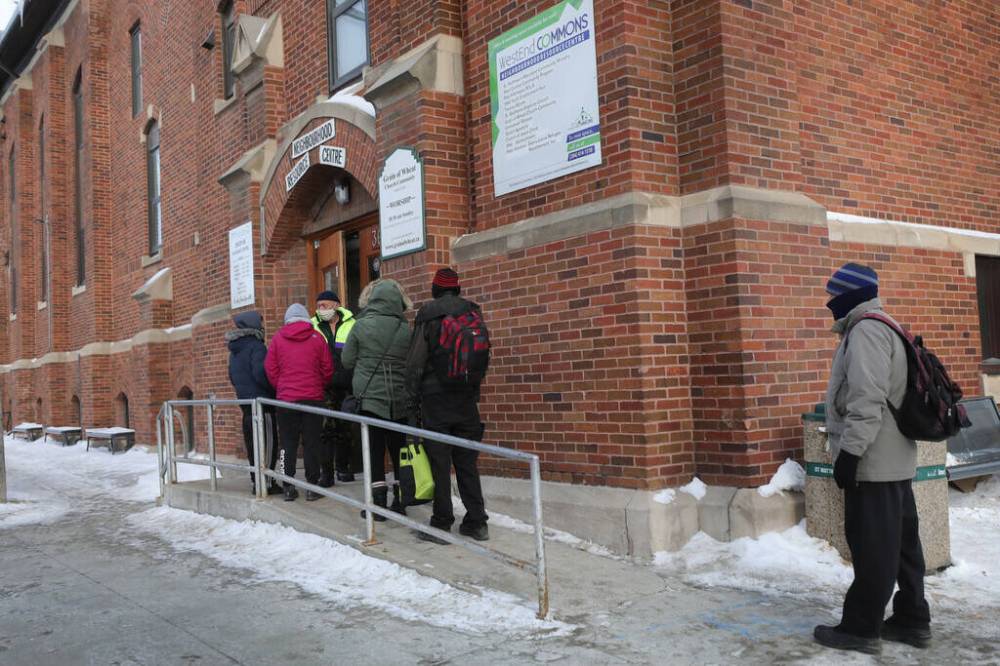
An hour later, police received reports of an armed man suffering psychosis at a second neighbourhood shelter. Officers used a taser on the man, who was carrying bear spray and a substance believed to be methamphetamine, police said.
A 26-year-old man was charged with possession of a weapon and drugs, along with failure to comply with a probation order.
“Unfortunately, we’ve seen a number of incidents over the past year, violent incidents, that have occurred at these shelters, and the Winnipeg Police Service is prepared to respond,” Const. Jay Murray said at a news conference Monday.
These recent incidents didn’t take place at Siloam Mission, communications manager Luke Thiessen said, but said such situations are becoming more common in shelter spaces.
“We’ve definitely seen an increase in violent incidents over the last two years, so it’s really top of mind for us, how can we address this,” he said Monday. “It’s something we’ve been having a lot of internal conversations about.”
Thiessen suggested the timeline matches with the onset of the COVID-19 pandemic, correlating with an increase in problematic drug use within the community experiencing homelessness.
Siloam Mission has increased its security in recent months but it was put in place to help keep up COVID-19 regulations, Thiessen said. There are no plans in place to ramp up security further.
“The general tone, the atmosphere, in our drop-in and shelter has been a little more tense, and it’s tough to know what to do about it.”
In his four years as Salvation Army Centre of Hope’s executive director, Maj. Gordon Taylor said he’s seen violence at the Christian charity’s shelter spaces rise — largely a result of “a combined issue of drug use and mental health issues” in a minority of visitors.
“The big shift we’ve seen is kind of the randomness of it, if that’s the right word,” he said.
“Whereas it used to be the most likely scenario for violence would be a dispute between two people over a drug deal or something like that, now people are victims of violence who just happen to be passing by.”
In December, Taylor himself was physically assaulted within the building by someone who wasn’t legally allowed to be there (a client staying at the shelter had a restraining order against the individual).
“It’s just a small number of people (amid) the majority of people we’re serving,” he said.

Murray said the South Point Douglas area is a “busier area” for police, considering the shelters stationed in the neighbourhood.
However, in the brief time when situations can get intense, it’s still often hard to get backup, Taylor said.
“We’re not going to physically try to remove someone, that’s too dangerous for everyone involved, but police are busy and can’t get here within two minutes when you call them,” he said.
End Homelessness Winnipeg communications and community relations manager Kristiana Clemens said the organization receives reports of similar incidents in shelters across the city.

“The acuity and the frequency of scary things happening, it’s so common for all the shelters,” she said.
The cases of violence are symptomatic of a wider issue in which there aren’t enough housing options available, she said — both in terms of low-barrier shelters in Winnipeg and pathways to housing.
Many people choosing to stay on the streets are doing so to avoid violent incidents like those reported Monday, Clemens added — and a heavy-handed response from police or city leadership isn’t the answer.
“As long as we have significant numbers of people choosing to stay unsheltered in streets and bus shelters because they believe that is safer… and as long as we continue to really strain the capacity of the providers of low-barrier shelters in our community to the point where it’s difficult to maintain collective safety… I think the traditional response to these kinds of incidents may be one that’s going to be punitive or harmful to the people who are most vulnerable to being victims,” Clemens said.
malak.abas@freepress.mb.ca
Malak Abas is a city reporter at the Free Press. Born and raised in Winnipeg’s North End, she led the campus paper at the University of Manitoba before joining the Free Press in 2020. Read more about Malak.
Every piece of reporting Malak produces is reviewed by an editing team before it is posted online or published in print — part of the Free Press‘s tradition, since 1872, of producing reliable independent journalism. Read more about Free Press’s history and mandate, and learn how our newsroom operates.
Our newsroom depends on a growing audience of readers to power our journalism. If you are not a paid reader, please consider becoming a subscriber.
Our newsroom depends on its audience of readers to power our journalism. Thank you for your support.
Malak Abas is a city reporter at the Free Press. Born and raised in Winnipeg’s North End, she led the campus paper at the University of Manitoba before joining the Free Press in 2020. Read more about Malak.
Every piece of reporting Malak produces is reviewed by an editing team before it is posted online or published in print — part of the Free Press‘s tradition, since 1872, of producing reliable independent journalism. Read more about Free Press’s history and mandate, and learn how our newsroom operates.
Our newsroom depends on a growing audience of readers to power our journalism. If you are not a paid reader, please consider becoming a subscriber.
Our newsroom depends on its audience of readers to power our journalism. Thank you for your support.
Advertisement Advertise With Us
Advertisement Advertise With Us