Splice of life
Synthetic biology’s past, present and future explored in timely new account
Advertisement
Read this article for free:
or
Already have an account? Log in here »
To continue reading, please subscribe:

Digital Subscription
One year of digital access for only $205*
- Enjoy unlimited reading on winnipegfreepress.com
- Read the E-Edition, our digital replica newspaper
- Access News Break, our award-winning app
- Play interactive puzzles
*First annual payment billed as $205.00 + GST for one year. This annual subscription will automatically renew at $233.00 + GST every 52 weeks (10% off the regular annual price of $259.35). Offer available to new and qualified returning subscribers only. Cancel any time.
To continue reading, please subscribe:
Add Free Press access to your Brandon Sun subscription for only an additional
$1 for the first 4 weeks*
- Enjoy unlimited reading on winnipegfreepress.com
- Read the E-Edition, our digital replica newspaper
- Access News Break, our award-winning app
- Play interactive puzzles
*Your next Brandon Sun subscription payment will increase by $1.00 and you will be charged $17.95 plus GST for four weeks. After four weeks, your payment will increase to $24.95 plus GST every four weeks.
Read unlimited articles for free today:
or
Already have an account? Log in here »
Hey there, time traveller!
This article was published 02/04/2022 (1631 days ago), so information in it may no longer be current.
A woman whose body keeps rejecting her fetus after a few months of pregnancy. A man who, certain at 18 that he needs a vasectomy, suddenly finds in his late 40s that he wants children, but his vasectomy reversal fails. Thus opens The Genesis Machine, with the stories of its two authors.
It’s an enticing opening to a fascinating book by quantitative futurist Amy Webb and microbiologist Andrew Hessel, but also a bit of a red herring. Hessel and his wife solved their problem through in vitro fertilization, Webb and her husband theirs through genetic testing and ovulation induction agents. Neither author needed synthetic biology, the field that has sprung up around CRISPR, the DNA-editing machine.
Nevertheless, Webb and Hessel skilfully detail the history, endless possibilities and many upsides of synthetic biology. Via in vitro gametogenesis, same-sex couples will soon be able to have babies bearing their own genetic material, without requiring donors. Wheat DNA has already been edited to produce more fibre, tomatoes to require less water and sunlight. Using stem cells, biologists are already developing protein that is, at a molecular level, actual beef. No cows necessary. No cattle blowing their greenhouse gases into the atmosphere.

Synthetic biology has recently had signal success in Moderna’s development of mRNA COVID-19 vaccines. Despite anti-vaxxer conspiracy theories, these vaccines are even less dangerous than conventional vaccines.
When the pandemic first hit, Dr. Zhang Yongzhen’s team in Shanghai decoded the COVID-19 genome in 40 hours and, thankfully, published it to GenBank shortly thereafter, paving the road to several vaccines. Nowadays you can buy a sequencing machine for the price of an iPhone. Pharmaceutical companies are developing mRNA vaccines for malaria and other diseases. At the same time, university researchers are working on editing the genetic structure of the mouths of malaria-carrying mosquitos to make them incapable of biting and, thus, of laying their eggs.
Other advances, such as plastic trees whose leaves sequester far more C02 than real trees do, may be far less beneficial than claimed, because Webb and Hessel ignore the exorbitant cost of materials and production.
Older stories of synthetic insulin lead into the contemporary adventures of synthetic biology entrepreneur Craig Venter. Particularly interesting is the account of He Jiankui who, without getting Chinese governmental permission, edited a pair of human twin embryos (hoping to make them immune to AIDS), leading to live births. In 2019, he was sentenced to three years in prison.
● ● ●

Despite how the authors’ baby quests rig the deck emotionally in favour of synthetic biology, the late-arriving Nine Risks chapter offers readers a choice of nightmares. Worried about deepfakes worming their way into the public record and falsifying it? How about augmented viruses leaving the lab and worming their way into your body?
Or how about a near future in which the Haves all have enough genetic enhancements to make the Have-nots nostalgic for their present poverty? Upgrade your children before birth! Certainly, it makes sense to edit out sickle-cell anemia, but it would take a very self-controlled genie not to agree to splice superior looks, athletic ability and intelligence into a customer’s children’s DNA. China’s BGI group is already touting IQ boosts.

The EU and a number of countries have legislated against germline engineering, but that was before CRISPR, and that number doesn’t include the synthetic biology leaders: China and the U.S. Harvard’s George Church, who wants to create a “mostly” woolly mammoth by splicing preserved mammoth DNA with Asian elephants, has also declared an interest in splicing Neanderthal DNA into contemporary humans, and perhaps cloning a Neanderthal. But we really have no idea what will happen when genetically engineered organisms “outcross” with other organisms in the “wild,” also known as the world.
Towards the end of The Genesis Machine, Webb and Hessel present some futuristic scenarios: for example, the pamphlet “Creating Your Child with Wellspring.” Such flourishes might work well for business visioning retreats, but the results in print are weak. Webb and Hessel would be better off staying with the science and leaving fictionalizations of synthetic biology to Richard Powers’ Generosity (2009) or Margaret Atwood’s MaddAddam trilogy (2003-13).
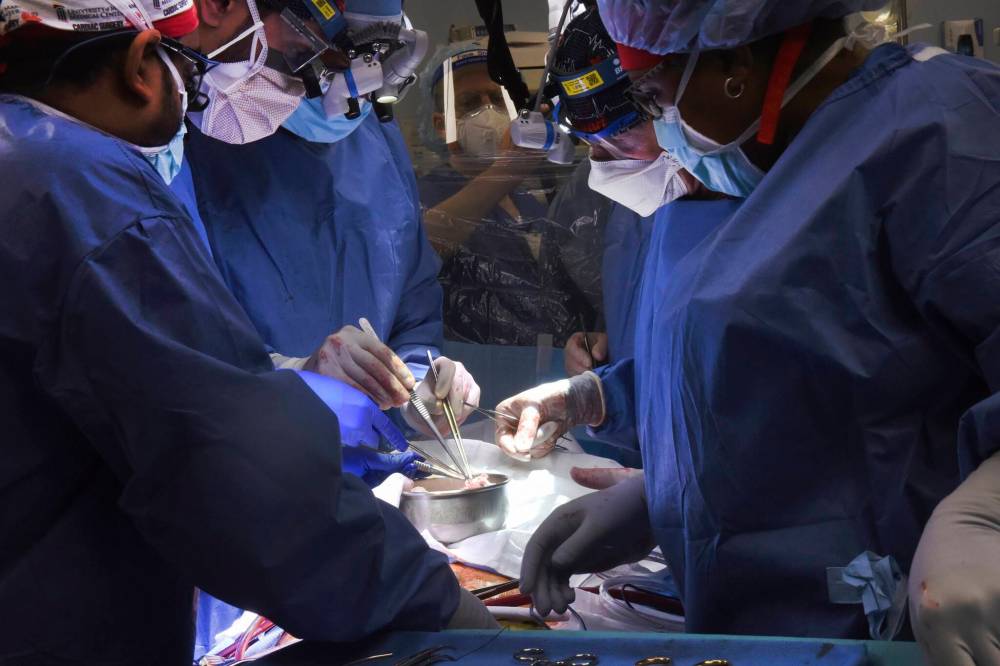
Too recent to have made it into The Genesis Machine is the attempt at the University of Maryland Medical Center to implant a gene-edited pig heart into a human, but Webb and Hessel do mention that Chinese scientists are developing “super-pigs” that are more virus-resistant, stronger and quicker to mature than the present models. Are we closing in on Atwood’s 2003 fictional pigoons — pigs spliced with human neocortical tissue?

Life is becoming programmable, say Webb and Hessel. Imagine a synthetic biology app store…
Reinhold Kramer is a Brandon University English professor. His most recent book is Are We Postmodern Yet? And Were We Ever?