

More work needed to make city bike-friendly
Advertisement
Read this article for free:
or
Already have an account? Log in here »
To continue reading, please subscribe:
Monthly Digital Subscription
$1 per week for 24 weeks*
- Enjoy unlimited reading on winnipegfreepress.com
- Read the E-Edition, our digital replica newspaper
- Access News Break, our award-winning app
- Play interactive puzzles
*Billed as $4.00 plus GST every four weeks. After 24 weeks, price increases to the regular rate of $19.95 plus GST every four weeks. Offer available to new and qualified returning subscribers only. Cancel any time.
Monthly Digital Subscription
$4.99/week*
- Enjoy unlimited reading on winnipegfreepress.com
- Read the E-Edition, our digital replica newspaper
- Access News Break, our award-winning app
- Play interactive puzzles
*Billed as $19.95 plus GST every four weeks. Cancel any time.
To continue reading, please subscribe:
Add Free Press access to your Brandon Sun subscription for only an additional
$1 for the first 4 weeks*
*Your next subscription payment will increase by $1.00 and you will be charged $16.99 plus GST for four weeks. After four weeks, your payment will increase to $23.99 plus GST every four weeks.
Read unlimited articles for free today:
or
Already have an account? Log in here »
Hey there, time traveller!
This article was published 18/04/2022 (1466 days ago), so information in it may no longer be current.
Winnipeg’s active transportation network needs all the help it can get. As such, a proposal to continue the city’s “open streets” program through this summer, and beyond, is a welcome development.
The plan — renamed the “enhanced summer bike route program” after the city realized encouraging pedestrians to mingle with vehicles on roadways was in contravention of the Highway Traffic Act — has been tweaked for 2022 and is awaiting council approval.
Changes include dropping weekday speed limits to 30 km/h and limiting wholesale street closures to weekends and holidays on many routes. Residents along Wellington Avenue who opposed the street’s closure last year will be pleased to see the thoroughfare has been excluded from the program for the upcoming season. City planners concurred that a protected bike lane through the neighbourhood would be more useful.
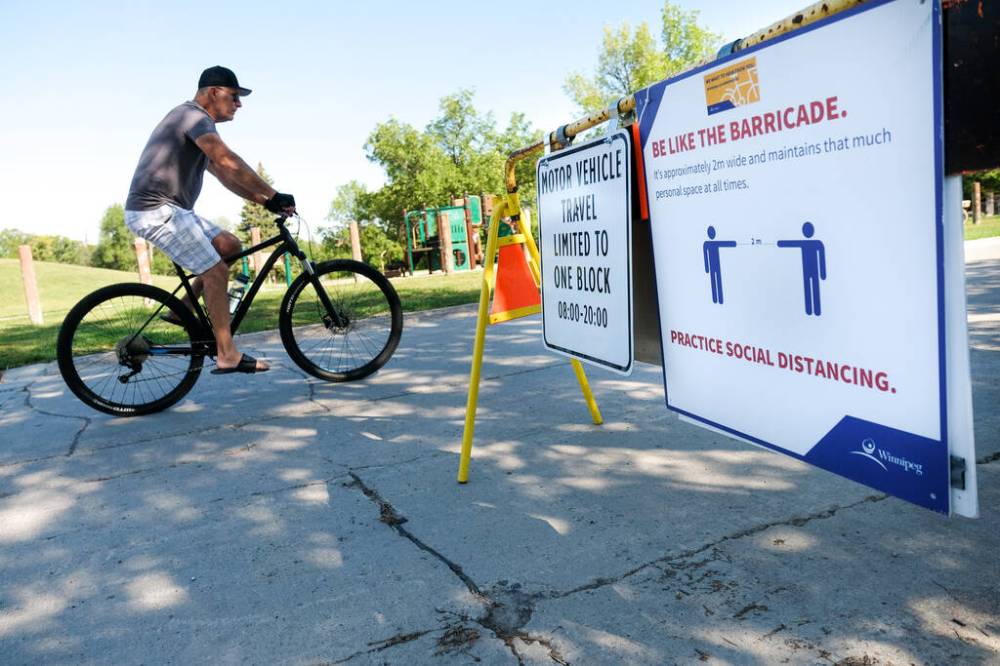
The seasonal transportation mode shift along residential roads has been celebrated (and enjoyed) by many, and the program is a rare example of the city prioritizing cyclists over drivers. At least some of the time.
Safe cycling routes are the first step to encouraging more people to hop on a bike — and Winnipeg needs a lot more people to hop on bikes if it wants to meet the objectives outlined in the city’s OurWinnipeg 2045 planning document.
The aspirational plan pushes for a sustainable transportation system that relies less on personal vehicles and more on low-carbon public and active transportation. Within the document, cycling is promoted as a cost-effective way to reduce greenhouse gas emissions and improve community health.
Unfortunately, it’s a choice that, at the moment, presents more barriers than benefits locally.
The summer bike routes are great for recreational users, since they allow cyclists to enjoy scenic areas of the city without having to duck and dodge vehicle traffic. However, many of the 14 routes proposed are mere islands of safety. Few connect directly with established bike paths and, unless you live in the neighbourhood, most require traversing busy main roads to gain access.

Churchill Drive, for example, offers pleasant views of the Red River, but visiting cyclists have to deal with bridges, train tracks, under- and over-passes before they can catch a glimpse.
Cycling advocates have long called on officials to create a connected network of bike lanes that allows people to move through all areas of the city safely and with ease. Yet for many Winnipeggers, cycling still isn’t a viable way to get to work, go grocery shopping or pick the kids up from school. The system is too fractured, and most commutes, depending on where you live, require riders to mix with cars or pedestrians for at least part of the journey.
Progress has been made in recent years, with protected paths cropping up throughout the city, but Winnipeg has a long way to go before it can claim to be bicycle-friendly — or even bicycle-tolerant.
Recreational biking can be a gateway to commuter cycling. The enhanced summer bike route program was born out of the pandemic, but has proven it has permanent appeal. Based on uptake (many routes saw hundreds of cyclists daily), it also has the potential to get more people thinking about their bikes as an everyday mode of transportation.
It’s clear Winnipeggers want to cycle. It’s up to the city to create a clear path forward.
History
Updated on Tuesday, April 19, 2022 10:10 AM CDT: Changes to Avenue from Crescent