Cultural casualties
In Ukraine, museums, art galleries, historic buildings and monuments are being targeted by Russian forces

Advertisement
Read this article for free:
or
Already have an account? Log in here »
To continue reading, please subscribe:

Digital Subscription
One year of digital access for only $205*
- Enjoy unlimited reading on winnipegfreepress.com
- Read the E-Edition, our digital replica newspaper
- Access News Break, our award-winning app
- Play interactive puzzles
*First annual payment billed as $205.00 + GST for one year. This annual subscription will automatically renew at $233.00 + GST every 52 weeks (10% off the regular annual price of $259.35). Offer available to new and qualified returning subscribers only. Cancel any time.
To continue reading, please subscribe:
Add Free Press access to your Brandon Sun subscription for only an additional
$1 for the first 4 weeks*
- Enjoy unlimited reading on winnipegfreepress.com
- Read the E-Edition, our digital replica newspaper
- Access News Break, our award-winning app
- Play interactive puzzles
*Your next Brandon Sun subscription payment will increase by $1.00 and you will be charged $17.95 plus GST for four weeks. After four weeks, your payment will increase to $24.95 plus GST every four weeks.
Read unlimited articles for free today:
or
Already have an account? Log in here »
Hey there, time traveller!
This article was published 03/05/2022 (1605 days ago), so information in it may no longer be current.
The world has seen the horrifying images from Ukraine of people fleeing their homes after cities and towns are bombed mercilessly by Russian forces.
While it appears on our television screens the missile and rocket attacks are random, people who work at museums in the besieged country say there is one underlying target of the invasion launched by Russian President Vladimir Putin: Ukrainian culture.
That includes many of the country’s historic buildings, sacred spaces, memorials and public art installations, many of which have been erected since Ukraine gained its independence in 1991.
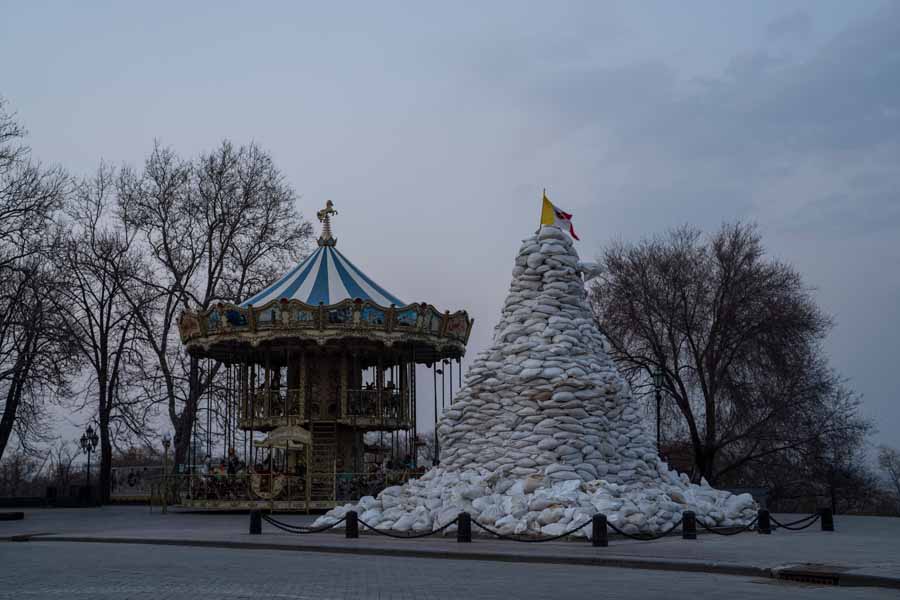
“Putin wants to deny our existence, the existence of Ukraine, Ukraine as a country, as a culture,” says Tamara Ivanochko-Havey, administrator of the Ontario branch of the Ukrainian Museum of Canada, one of several Canadian museums that are lending support to their Ukrainian counterparts.
“The museums are scrambling to either hide their stuff away or protect it best they can. There’s photographs from Kyiv and Lviv and some of the other big cities where there are sandbags all the way up monuments to protect them from damage,” she says.
Perhaps the most recognizable of these attacks is the March 1 bombing of the Babyn Yar memorial near Kyiv. The park commemorates the murder of Jews by Nazis during the Holocaust and is the site of one of the largest mass graves discovered in Europe in the waning days of the Second World War.
“From the first days of the war, we understood that there (are) no rules,” Kateryna Chuyeva, deputy minister of culture and information policy for Ukraine, said during a recent Zoom webinar hosted by the Canadian Museum for Human Rights. “(There are) no rules concerning cultural heritage and human rights in this war.”
Chuyeva said Russian troops have looted museums in the eastern Ukrainian cities of Mariupol and Melitopol; the spoils will either will be taken to Russia or could be sold online.
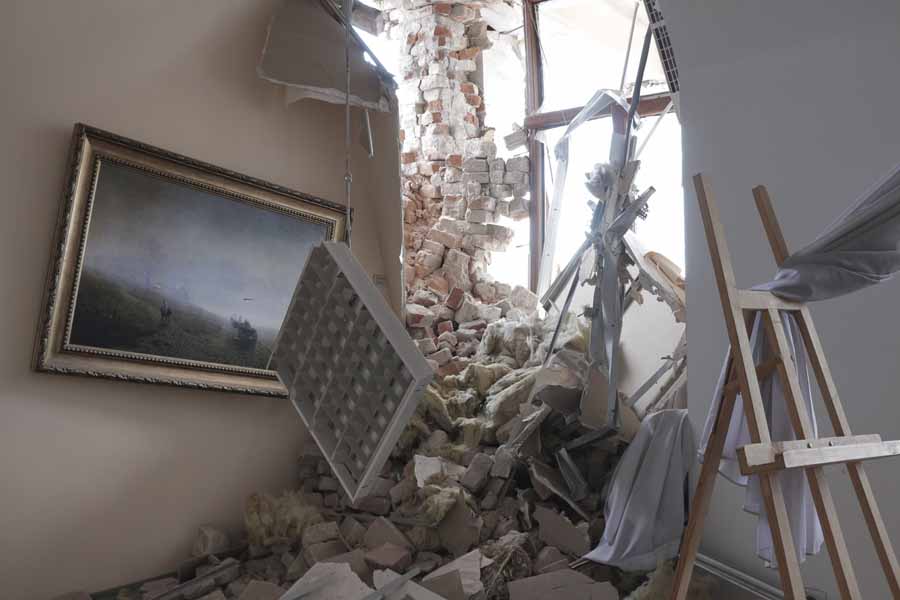
“It’s part of a long process which started at least 300 years ago when the first Ukrainian attempts to be an independent state started,” she said, adding more than 250 cultural institutions or objects have been damaged in the attacks.
The attacks go deeper and are more insidious than just the destruction of buildings and the threat to artifacts and artworks housed in museums.
● ● ●
In 1942, Winnipeg staged If Day, a simulation of what life could be like if Nazi Germany invaded and occupied the city. The event included a military parade, mock bombings, the staged imprisonment of politicians and book burnings, and the issuing of fake German currency, all designed to raise awareness of Canada’s efforts in the war; the day-long demonstration raised more than $3 million in war bonds and brought worldwide attention to the city.
Imagine another military incursion 80 years later, again with Winnipeg as the target. If Day 2022 could mean the levelling of the Manitoba legislature, the destruction of Portage and Main, and damage to the Red River Floodway, mirroring the colossal damage Ukraine is undergoing.
But behind the scenes, hackers would strike, threatening government archives, museum computers and digitized history such as photographs, birth certificates and other vital documents — all vanishing at the press of a button.
It’s difficult to imagine this nightmare happening here, but that’s the situation facing Ukrainian officials this very instant, with museum workers on a virtual front line protecting data the rest of the world so easily takes for granted.
“We also have reports of databases being targeted,” Christophe Rivet, president of ICOMOS Canada, the International Council of Monuments and Sites, says in an interview. “Those databases include thousands of hours of storytelling and songs that are now erased permanently. There is a group out there led by specialists at Stanford (University), and Canadians as well, that are quickly copying as many databases they can to maintain that heritage.”

The council does a portion of its work in conflict zones, and Rivet says the Paris-based organization has helped repair sixth-century Buddhist statues in Afghanistan that were damaged by the Taliban, and spearheaded the rebuilding of a 16th-century bridge in Mostar, Bosnia-Herzegovina, that was destroyed in 1993 during the Bosnian war.
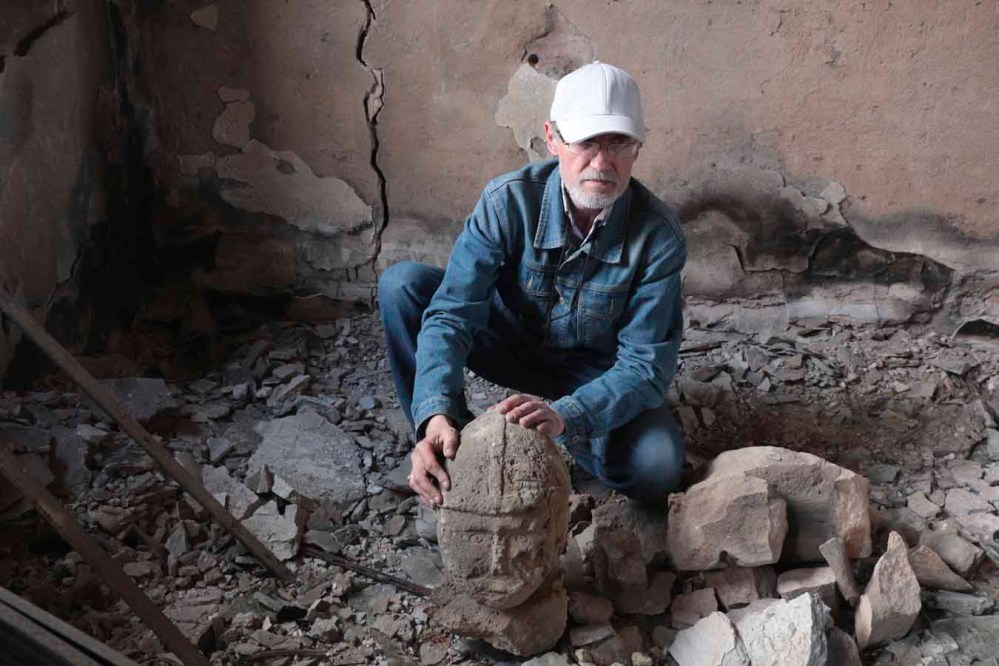
It’s also organizing a coalition of museums and organizations in Canada and around the world to preserve now and rebuild later.
“It’s one thing for these casualties to be collateral damage. It’s another when they are specifically targeted,” Rivet says. “Ideology, a certain view of the world, will lead those forces to target cultural heritage to make a statement and to affect the opposing people’s stability.”
alan.small@winnipegfreepress.com
Alan Small
Reporter
Alan Small was a journalist at the Free Press for more than 22 years in a variety of roles, the last being a reporter in the Arts and Life section.
Our newsroom depends on a growing audience of readers to power our journalism. If you are not a paid reader, please consider becoming a subscriber.
Our newsroom depends on its audience of readers to power our journalism. Thank you for your support.
Alan Small
Reporter
Alan Small was a journalist at the Free Press for more than 22 years in a variety of roles, the last being a reporter in the Arts and Life section.
Our newsroom depends on a growing audience of readers to power our journalism. If you are not a paid reader, please consider becoming a subscriber.
Our newsroom depends on its audience of readers to power our journalism. Thank you for your support.
Related Articles
Ukraine: Russia using 'missile terrorism' in wide attacks
Advertisement Advertise With Us
Advertisement Advertise With Us