

Commission asked to push boundaries as it redraws map
Advertisement
Read this article for free:
or
Already have an account? Log in here »
To continue reading, please subscribe:
Digital Subscription
One year of digital access for only $1.44 a week*
- Enjoy unlimited reading on winnipegfreepress.com
- Read the E-Edition, our digital replica newspaper
- Access News Break, our award-winning app
- Play interactive puzzles
*Billed as $5.77 plus GST every four weeks. After 52 weeks, price increases to the regular rate of $19.95 plus GST every four weeks. Offer available to new and qualified returning subscribers only. Cancel any time.
To continue reading, please subscribe:
Add Free Press access to your Brandon Sun subscription for only an additional
$1 for the first 4 weeks*
- Enjoy unlimited reading on winnipegfreepress.com
- Read the E-Edition, our digital replica newspaper
- Access News Break, our award-winning app
- Play interactive puzzles
*Your next Brandon Sun subscription payment will increase by $1.00 and you will be charged $17.95 plus GST for four weeks. After four weeks, your payment will increase to $24.95 plus GST every four weeks.
Read unlimited articles for free today:
or
Already have an account? Log in here »
Hey there, time traveller!
This article was published 05/05/2022 (1627 days ago), so information in it may no longer be current.
OTTAWA — Twelve of Manitoba’s political players have weighed in on a federal commission that’s examining whether to redraw electoral boundaries, as parties wrangle over how to carve out Winnipeg ridings.
The main points of contention surround whether to lump Winnipeg’s lower-income neighbourhoods together, and which rural zones should be part of city ridings.
The process is in the early phase, and the commission has received a dozen comments so far — all of which are from Manitobans who have either held elected office or worked for those who have.

Winnipeg city Coun. Kevin Klein, for example, argued all of the Tuxedo neighbourhood should be part of the current Conservative riding of Charleswood—St. James—Assiniboia—Headingley, instead of being split with the Winnipeg South Centre riding held by the Liberals.
He suggested the Fort Whyte neighbourhood be moved from Winnipeg South into Winnipeg South Centre, since the former already has more people than most ridings.
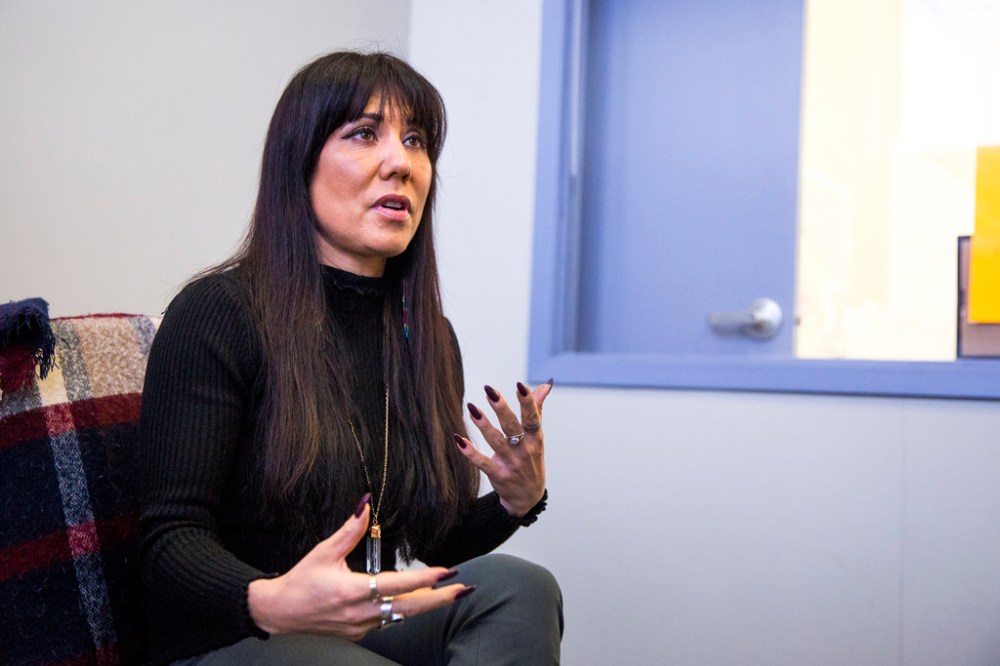
NDP MP Leah Gazan is hoping her Winnipeg Centre riding retains the boundaries it has held since 1997, arguing it does a good job of representing downtown communities and history. Otherwise, Gazan would welcome North Point Douglas into her riding, as it “mirrors the makeup of Winnipeg Centre in its history, demographics and interests.”
That idea was shared by two staffers for the provincial Progressive Conservatives.
Colin Hornby, who used to work for a Tory MP, argued Point Douglas has similar “wage statistics and historical binds” as Winnipeg Centre, and it houses University of Winnipeg students.
He called for that neighbourhood to be swapped with Winnipeg North, in exchange for the Notre Dame area, instead of leaving the CN Rail line as the dividing line.
Hornby also advocated moving Elmwood into Winnipeg Centre, arguing “the interests and people of Elmwood have far more in common with downtown than the current changes happening in Radisson and Transcona,” which are part of the current riding represented by NDP MP Daniel Blaikie.
Hornby’s PC colleague, Duncan Hamilton, had similar ideas for adding those areas into Winnipeg Centre and moving the riding boundaries to follow Portage Avenue, Broadway and Route 90.
That would lump together Wolseley, West Broadway and The Forks with the Winnipeg South Centre riding which currently includes River Heights, arguing the areas have “much in common with the neighbourhoods across the river that they are connected to through a number of bridges.”
Yet, Blaikie had no desire to see his Elmwood—Transcona riding changed, arguing its current configuration does a good job of keeping similar communities together and using the Red River and Perimeter Highway as boundaries.
But the riding is growing above the target for electoral districts. Blaikie conceded if changes are needed, he’d rather they happen along the northern edge, instead of scooping up areas east of the city limit.
Neighbouring Conservative MP Ted Falk has the opposite idea, arguing “the vast majority of people in Springfield look at Winnipeg as their hub, rather than Steinbach, Beausejour or Lac du Bonnet.” Falk noted his Provencher riding already has a population boom in areas such as Niverville.
Nicole Forest Lavergne, a Provencher resident who used to lead the Société de la francophonie manitobaine, asked the commission to find a way to keep French-speaking and bilingual communities in one riding.
“We’re losing our voice being placed with Steinbach. And so we’re stuck with far-right conservatives,” she wrote in French.
Meanwhile, Swan River Mayor Lance Jacobson urged her community remain linked with Dauphin, instead of being absorbed into the massive Churchill Keewatinook—Aski riding that covers the entire northern part of the province and has a relatively small population.
Westman MPs Larry Maguire and Dan Mazier support that call, arguing neither riding in that area be changed.
Separately, the Conservative party wrote ridings should not split any rural municipalities, and communities with economic ties should be included together when possible, so town councils and industries can more easily seek federal attention.
Cindy Lamoureux, the MLA whose father represents Winnipeg North for the Liberals, suggested that riding be expanded to include part of the Amber Trails development “as it would help alleviate some confusion that has been expressed.”
Further north, the former reeve of the RM of Rosser Alice Bourgouin suggested her area be included in the riding of Kildonan—St. Paul, arguing its links with neighbouring West St. Paul are stronger than its current Selkirk—Interlake—Eastman riding.
The commission is still accepting public feedback, and plans publish an initial proposal “before the end of June,” a spokesman wrote Wednesday.
That’s far behind other commissions that have published proposed maps for British Columbia and Nova Scotia.
Public hearings will start in Manitoba in early to mid-September, depending on the COVID-19 pandemic.

A report is then sent to MPs for review by the end of the year, and should be finalized by September 2023, though the new ridings would not actually take effect until the election that follows April 2024, to allow officials and parties time to adapt.
Canada has independent commissions review provincial boundaries once a decade, usually led by chiefs and assisted by non-partisan experts.
Provinces get quota largely based on census results, and Manitoba will still have 14 seats, though their shape and names might change, to ensure similar population counts while retaining community ties.
Manitoba’s chief justice has appointed Justice Diana Cameron to lead the process, while the Speaker of the House of Commons has appointed political scientists Paul Thomas and Kelly Saunders to the committee.
dylan.robertson@freepress.mb.ca
History
Updated on Thursday, May 5, 2022 5:38 AM CDT: Adds photos