

Manitoba wildfire forecast heats up in July
Advertisement
Read this article for free:
or
Already have an account? Log in here »
To continue reading, please subscribe:

Digital Subscription
One year of digital access for only $205*
- Enjoy unlimited reading on winnipegfreepress.com
- Read the E-Edition, our digital replica newspaper
- Access News Break, our award-winning app
- Play interactive puzzles
*First annual payment billed as $205.00 + GST for one year. This annual subscription will automatically renew at $233.00 + GST every 52 weeks (10% off the regular annual price of $259.35). Offer available to new and qualified returning subscribers only. Cancel any time.
To continue reading, please subscribe:
Add Free Press access to your Brandon Sun subscription for only an additional
$1 for the first 4 weeks*
- Enjoy unlimited reading on winnipegfreepress.com
- Read the E-Edition, our digital replica newspaper
- Access News Break, our award-winning app
- Play interactive puzzles
*Your next Brandon Sun subscription payment will increase by $1.00 and you will be charged $17.95 plus GST for four weeks. After four weeks, your payment will increase to $24.95 plus GST every four weeks.
Read unlimited articles for free today:
or
Already have an account? Log in here »
Hey there, time traveller!
This article was published 13/05/2022 (1585 days ago), so information in it may no longer be current.
OTTAWA — Manitoba should brace for yet another summer of severe wildfires, federal officials warned Friday, saying areas currently underwater could easily be on fire in two months.
“We’re expecting things to get a bit more active in southern Manitoba by the end of July,” Natural Resources Canada analyst Richard Carr told the Free Press.
“Flooding, at the current time, may not have too much of an effect a couple months down the road.”
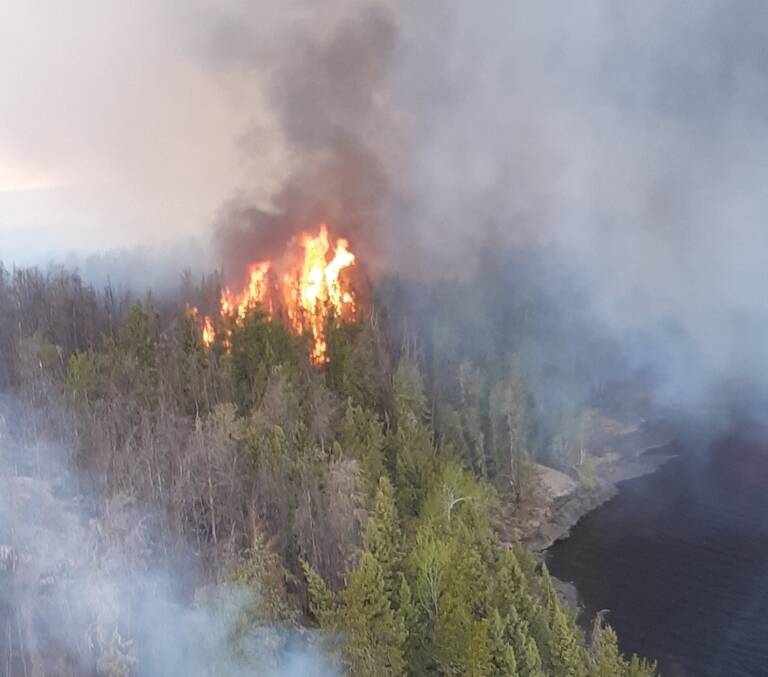
The federal department published its modelling Friday, in which less drought, wind patterns and the risk of heatwaves are predicted to have a less drastic wildfire season in some regions of Canada, compared to the disastrous blazes that destroyed areas around Lytton, B.C., in 2021.
The modelling compares forecast weather for this year with the historical data for wildfires each month.
The only spot in Canada flagged as a risk of above-average severity in May is no longer deemed higher risk, due to ongoing flooding. Otherwise, the area from Lakes Manitoba and Winnipegosis west to the Qu’Appelle Valley would have been at moderately higher risk.
“At this stage of month, with the amount of rain that they’ve through the area, and are continuing to get currently, there’s probably not too much concern for that area,” Carr said.
However, in July, the Interlake and Eastman can expect when wildfires occur, they’ll have a “well-above average” severity — a risk that will apply in August to virtually all of Manitoba, save for its far northeast corner.
“We’re off to quite a different start then what we had in 2021, with longer snow cover, less drought and therefore a slower start to fire season,” Carr said.
“That more intense drought has shifted west and it’s now appeared in southern Alberta and southwestern Saskatchewan, although the total area has shrunk quite a bit.”
The federal Liberals said Friday they’re preparing to sent out support, such as the military firefighters who helped with blazes across Manitoba last year. Ottawa is also working with provinces to control and prevent blazes.
“With the changing climate, all orders of government and emergency management partners need to take strong action to prepare for future emergencies, including wildfires,” Emergency Preparedness Minister Bill Blair wrote.
Meanwhile, it’s unclear whether this summer will have a repeat of the hazy smoke that covered cities such as Winnipeg and Ottawa.

Research scientist Piyush Jain noted as many as 100 million people in North America were exposed to smoke in July 2021, because so much was burning in multiple provinces.
“Last year was a very anomalous year in terms of smoke,” he said. “If we see that sort of activity again, simultaneous burning over many regions in Canada, that’s when we tend to get these widespread smoke events.”
A repeat would require more than just heatwaves and drought, but for fires to occur at the same time over a large swath of land, to the point the wind doesn’t significantly dilute the smoke.
“It’s very difficult to predict, basically.”
dylan.robertson@freepress.mb.ca