Cold case guide overstuffed with facts
Advertisement
Read this article for free:
or
Already have an account? Log in here »
To continue reading, please subscribe:

Digital Subscription
One year of digital access for only $205*
- Enjoy unlimited reading on winnipegfreepress.com
- Read the E-Edition, our digital replica newspaper
- Access News Break, our award-winning app
- Play interactive puzzles
*First annual payment billed as $205.00 + GST for one year. This annual subscription will automatically renew at $233.00 + GST every 52 weeks (10% off the regular annual price of $259.35). Offer available to new and qualified returning subscribers only. Cancel any time.
To continue reading, please subscribe:
Add Free Press access to your Brandon Sun subscription for only an additional
$1 for the first 4 weeks*
- Enjoy unlimited reading on winnipegfreepress.com
- Read the E-Edition, our digital replica newspaper
- Access News Break, our award-winning app
- Play interactive puzzles
*Your next Brandon Sun subscription payment will increase by $1.00 and you will be charged $17.95 plus GST for four weeks. After four weeks, your payment will increase to $24.95 plus GST every four weeks.
Read unlimited articles for free today:
or
Already have an account? Log in here »
Hey there, time traveller!
This article was published 14/05/2022 (1611 days ago), so information in it may no longer be current.
There’s no kitchen sink in How to Solve a Cold Case. But as the title’s sub-heading indicates, the book does contain everything else you wanted to know about catching killers. Everything — as in everything but the kitchen sink. And that’s its main problem. Michael Arntfield’s book is too chock-full of fairly extraneous facts ,stories, data and lingo.
Oh man, the lingo: Paraphilia, sanctuary trauma, hybristophilia, vandalized lovemaps, and so on. It’s as if he presents materials from a first-year course in forensics crammed into a very rudimentary manual on solving cold cases. Quiz to follow.
Most of the stuff is fascinating and informative. But things don’t fit comfortably together.
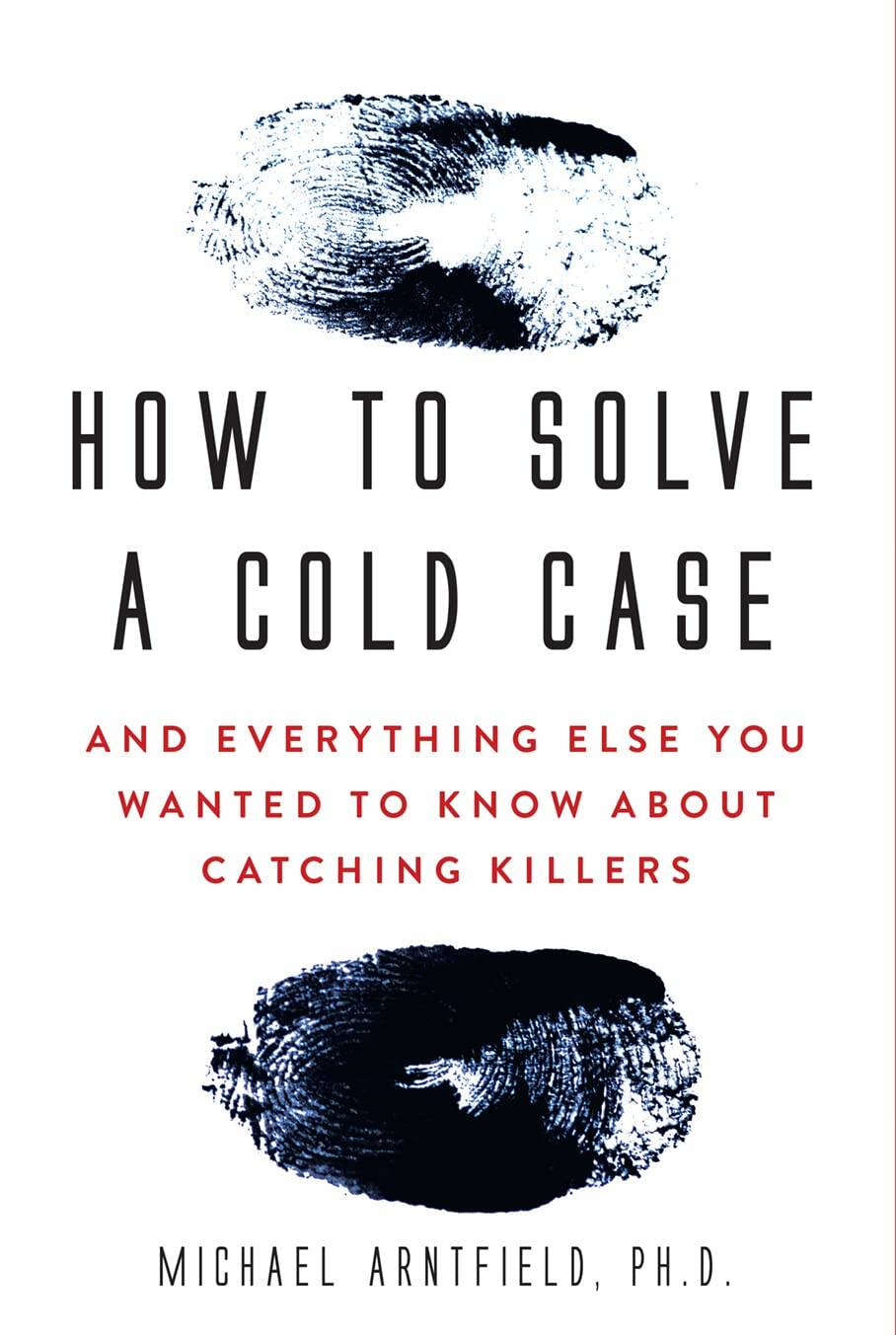
Arntfield was a cop for 15 years; he’s now a professor at Western University with a doctorate in criminology. He’s also founder of the Cold Case Society at Western and director of the Murder Accountability Project in Washington, D.C. And he’s a prolific writer, the author of over a dozen true crime books or criminology textbooks — many of them with long titles pivoting on a colon such as Murder City: The Untold Story of Canada’s Serial Killer Capital. (It’s London, Ont., not Winnipeg.)
In other words, he has the credentials. What he doesn’t have is an effective editor to force him to stick to the essentials and probe deeper.
The main reason behind this book appears in a paragraph on page 99. Police forces have become much less effective at clearing crimes (officially resolving them and reporting them as such to the government). In 1960, a little over 90 per cent of homicides were cleared; alarmingly, in 2015 just under 50 per cent were cleared. And, according to Arntfield, unsolved murders, now numbering around 300,000 over the past 60 years, “will soon be nearly half a million” because of the rise in COVID-driven homicides. Scary numbers that demand attention.
Arntfield’s solution to the problem? The police should open the books on homicide’s cold cases and enlist the public’s help in solving the crimes.
What he doesn’t seem to consider — and as an ex-cop he should — is the danger involved in encouraging freelance forensic sleuthing. There’s no mention of vigilantism, of overzealous amateur sleuths taking matters into their own hands. No worries about contaminating evidence or interfering with the proper channels of an investigation.
The bulk of How to Solve a Cold Case is made up of brief but gripping tales of notable murder cases, possibly involving serial killers. They are crisply told and should satisfy anyone interested in true crime stories.
Victims whose homicides have yet to be cleared provide many examples — perhaps as studies amateurs can research. Of the cold cases that have been resolved, most are by official police methods, including recent efforts using genealogical DNA testing, data from the U.S. National Crime Information Center. Ironically, Arntfield seems to be making the case that forensic investigators have new and increasingly effective tools at their disposal. No amateurs need apply.
What is surprisingly missing in the book are good examples of homicide cases resolved by amateurs once police have given up on them, typically after a year or so. Possibilities exist, as the section on the history of true-crime writing delineates. Although the section is hasty and truncated, it does single out two TV series, Unsolved Mysteries and America’s Most Wanted, as helpful. The former solved 260 cases; the latter nearly 500, according to Arntfield. Why there’s not a single example from either show included in a book purporting to encourage citizen participation is its own mystery.
How to Solve a Cold Case should appeal to true crime buffs. Helping non-professionals solve crimes is not its strength.
Gene Walz hopes to be an award-winning forensic anthropologist or Sam Spade in his next life.