

In for the long haul
Winnipegger believes COVID-19 to blame for months-long debilitating exhaustion

Advertisement
Read this article for free:
or
Already have an account? Log in here »
To continue reading, please subscribe:

Digital Subscription
One year of digital access for only $205*
- Enjoy unlimited reading on winnipegfreepress.com
- Read the E-Edition, our digital replica newspaper
- Access News Break, our award-winning app
- Play interactive puzzles
*First annual payment billed as $205.00 + GST for one year. This annual subscription will automatically renew at $233.00 + GST every 52 weeks (10% off the regular annual price of $259.35). Offer available to new and qualified returning subscribers only. Cancel any time.
To continue reading, please subscribe:
Add Free Press access to your Brandon Sun subscription for only an additional
$1 for the first 4 weeks*
- Enjoy unlimited reading on winnipegfreepress.com
- Read the E-Edition, our digital replica newspaper
- Access News Break, our award-winning app
- Play interactive puzzles
*Your next Brandon Sun subscription payment will increase by $1.00 and you will be charged $17.95 plus GST for four weeks. After four weeks, your payment will increase to $24.95 plus GST every four weeks.
Read unlimited articles for free today:
or
Already have an account? Log in here »
Hey there, time traveller!
This article was published 23/05/2022 (1584 days ago), so information in it may no longer be current.
Last November, Alex Long climbed for 17 consecutive hours, reaching the equivalent of 58,000 feet for a cancer fundraiser. A few weeks later, he couldn’t climb the stairs in his home without gasping for air.
The 47-year-old Winnipegger counts himself among an unknown number of COVID-19 long haulers. His cardiac and respiratory symptoms mean he can no longer push his limits – or even exercise. But after five months, his brain fog and exhaustion are starting to lift. He’s seen slow improvement, which makes him hopeful for the future.
“I’m still missing a big part of my life, which is the athletic and the fitness side,” he says.
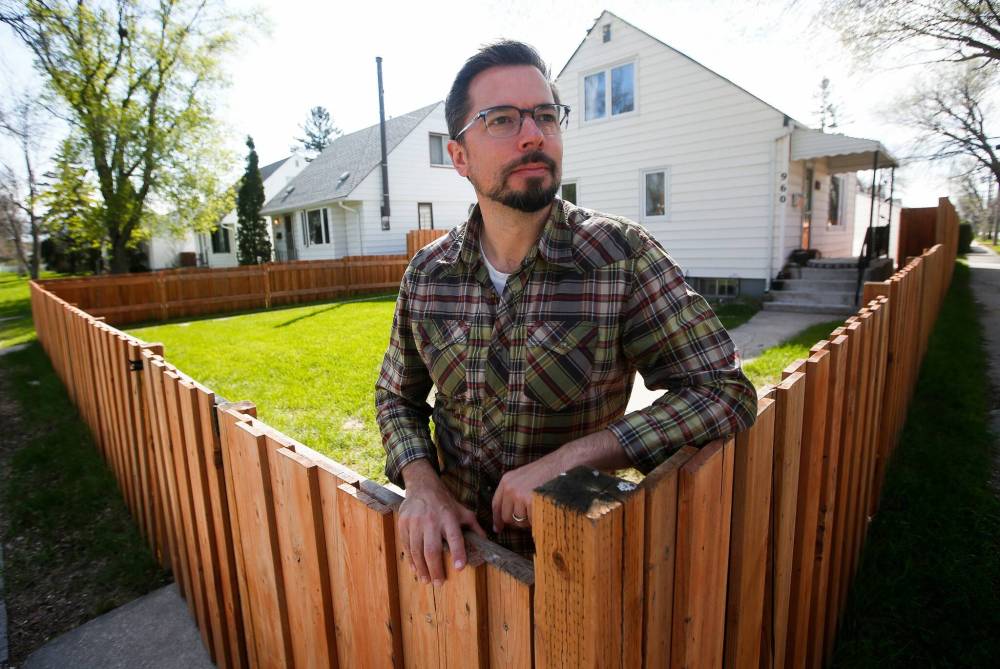
“But I have hope that maybe in another four months, on this curve, I’ll be able to introduce that part of my life again.”
Long began feeling “debilitating” exhaustion in early January. He had trouble concentrating and struggled to breathe. He was fully vaccinated and boosted, and followed stringent masking and testing protocols. Despite undergoing regular rapid antigen testing for his job, he never tested positive for COVID-19, and didn’t seek medical help until the severe fatigue had stretched on for more than a month.
“I didn’t know what was going on, except that I was debilitated (every) afternoon at two o’clock, with zero energy, wiped out.”
Long hasn’t been officially diagnosed with long COVID, but he believes he was unknowingly infected with the virus early this year and is suffering long-term effects. He says he’s undergone all kinds of medical tests that haven’t signalled any other health conditions.
“There was no indication of any problems whatsoever, except that I still couldn’t breathe, my blood pressure was spiking,” he says.
He’s been referred to heart and lung specialists, and started seeing a naturopath for acupuncture.
He spent the first months of this year out of breath on conference calls. To fill his lungs with air required a “full-bore” effort, and a trip to the grocery store left him depleted to the point of tears. Shovelling snow was out of the question.
He thinks back to the athlete he was mere months ago, the one who climbed a Jacobs ladder stationary exercise machine for CancerCare.
“That’s the bar for Alex Long, who pushes limits, who likes to stay active, who doesn’t smoke, who eats well,” he says.
His life has drastically changed.
“It was and is still a big mental challenge, an emotional roller-coaster, because I don’t know if it’s all going to come back.”
Long says he felt alone through this experience, and while he waits for medical answers, resources and investments in long COVID, he wants to let others know there’s still hope.

He can get through a full conversation now, and go grocery shopping. Last week, he completed an “ultra-lite” workout – what would have been a warm-up for him before – and he says his brain fog is about 60 per cent better.
“It’s still there, but everything is improving.”
For others who are dealing with long-term symptoms, Long says: don’t be afraid to talk about it, and do whatever you can to get help. He’s keeping his fingers crossed, he says, for a scientific “epiphany” on long COVID.
“That’s what I’ve been hoping for, and I don’t know when and or if that will ever come.”
katie.may@winnipegfreepress.com
Katie May is a multimedia producer for the Free Press.
Our newsroom depends on a growing audience of readers to power our journalism. If you are not a paid reader, please consider becoming a subscriber.
Our newsroom depends on its audience of readers to power our journalism. Thank you for your support.
Katie May is a multimedia producer for the Free Press.
Our newsroom depends on a growing audience of readers to power our journalism. If you are not a paid reader, please consider becoming a subscriber.
Our newsroom depends on its audience of readers to power our journalism. Thank you for your support.
Advertisement Advertise With Us
Advertisement Advertise With Us
History
Updated on Tuesday, May 24, 2022 11:03 AM CDT: Adds web headline