Gardening success means avoiding these common mistakes
Advertisement
Read this article for free:
or
Already have an account? Log in here »
To continue reading, please subscribe:

Digital Subscription
One year of digital access for only $205*
- Enjoy unlimited reading on winnipegfreepress.com
- Read the E-Edition, our digital replica newspaper
- Access News Break, our award-winning app
- Play interactive puzzles
*First annual payment billed as $205.00 + GST for one year. This annual subscription will automatically renew at $233.00 + GST every 52 weeks (10% off the regular annual price of $259.35). Offer available to new and qualified returning subscribers only. Cancel any time.
To continue reading, please subscribe:
Add Free Press access to your Brandon Sun subscription for only an additional
$1 for the first 4 weeks*
- Enjoy unlimited reading on winnipegfreepress.com
- Read the E-Edition, our digital replica newspaper
- Access News Break, our award-winning app
- Play interactive puzzles
*Your next Brandon Sun subscription payment will increase by $1.00 and you will be charged $17.95 plus GST for four weeks. After four weeks, your payment will increase to $24.95 plus GST every four weeks.
Read unlimited articles for free today:
or
Already have an account? Log in here »
Hey there, time traveller!
This article was published 24/05/2022 (1580 days ago), so information in it may no longer be current.
Much of gardening is learned by trial and error – for many, mostly error.
Planting a shade-lover in full sun isn’t likely to breed success, nor is letting your emotions run rampant at the nursery. But we’ve all been there, and the good news is we can learn from others’ mistakes as well as our own. First, we need to admit we’re not perfect.
I’ll go first: Many years ago, I sowed a handful of morning glory seeds at the foot of the arbor surrounding my front gate. Labeled a “fast-grower” and “self-sower,” I was sure the vine would provide the lush foliage, flowers and instant gratification I wanted. Unfortunately, it did its job too well, and these days, I spend about a half hour every week during summer pulling up seedlings that pop up as far as 50 feet away.
Ditto for my mint-planting debacle, which I smugly thought I could avoid by planting in a container set into the garden bed. Sure, that first summer was all sunshine and mojitos. But mint is a pot-jumper, and it spread with abandon via seeds as well as roots that emerged from the planter’s drainage holes and traveled underground. By the third year, I had to dig up the entire bed to remove it. I learned quickly to recognize invasive plants, even if they aren’t labeled as such.
Here are five other common gardening mistakes – and how to avoid them.
NOT TESTING SOIL
Proper soil pH is the No. 1 ingredient for success, but there’s no one-size-fits-all number to strive for. Tomatoes, for instance, grow best in soil with a pH between 6.0-6.8. Blueberry plants, on the other hand, will likely turn yellow and produce scant, if any, fruit if the pH is higher than 5.5. That’s because nutrients are available to plants only at target pH levels, which vary for each type of plant.
Test kits are relatively inexpensive and widely available at garden centers. Pick one up and test the soil in each garden bed individually, as the pH often varies even on the same property. A reading of 7.0 is considered neutral. Anything lower indicates acidic soil; higher, alkaline.
The path of least resistance – and the best course of action – would be to select plants best-suited to your garden conditions. But suppose you need to reconcile your love of tomatoes with your soil’s low pH value? In that case, you can incorporate dolomitic lime (follow package directions) to raise the level. And just as lime raises the pH – or increases the alkalinity – of soil, amendments such as elemental sulfur will lower it (opt for pelleted over powdered, and again, follow directions).
WATERING INCORRECTLY
Most garden plants require 1 to 1 1/2 inches of water per week, either from rainfall or supplemental irrigation. But leaving the work to a sprinkler, while suitable for the lawn, puts shrubs, annuals, perennials and edibles at risk. Mold, mildew, fungal and bacterial diseases spread as water becomes trapped between plant parts or splashes from infected leaves to healthy ones.
Instead, snake a porous soaker hose or drip-irrigation system made of perforated plastic tubing over the soil surface. That will direct water to roots, where it’s needed, instead of leaves, fruit and flowers.
SKIPPING COMPOST
Compost is a gardener’s best friend: It improves the drainage of heavy clay soil, increases the moisture-holding capacity of sand and adds high-quality nutrients.
Incorporate generous helpings into new beds and borders, or add an amount equal to half the removed soil to individual planting holes.
WRONG PLANT, WRONG PLACE
A plant labeled as needing “full sun” will likely disappoint if planted in part shade, and vice versa. And no matter how much you hope otherwise, “drought tolerant” will never mean “likes poorly-draining, soggy soil.”
Selecting plants suited to your growing conditions will result in a better-looking, healthier garden that requires less care and maintenance.
IMPROPER MULCHING
Mulch retains soil moisture, suppresses weeds and helps keep soil temperatures even, so it’s an essential component of every garden. Mulching improperly, however, can kill your plants.
Always opt for a natural material such as shredded bark, wood chips, straw or pine needles, which will enrich the soil as they decompose.
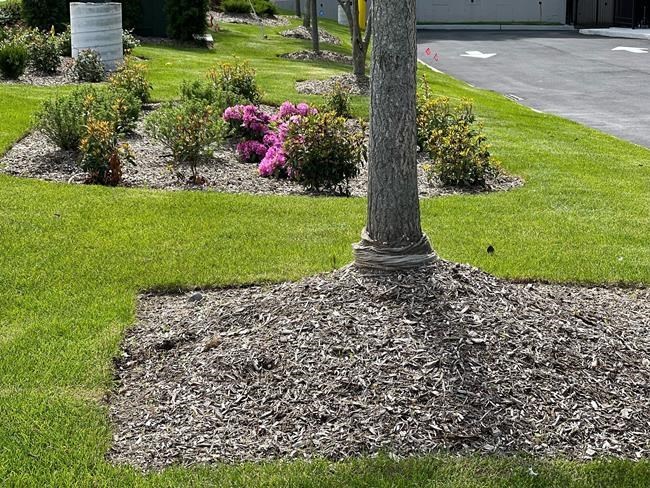
As a matter of routine, apply 2 to 3 inches of mulch around plants. Keep the material 3 inches away from trunks and stems to avoid blocking air circulation and locking in moisture, which would result in rot.
And never pile up mounds of mulch against tree trunks. The practice, often called “volcano mulching,” prevents air circulation and locks in moisture, which leads to suffocation and rotting over time. To avoid this, make sure the flare at the base of the trunk is always visible.
—-
Jessica Damiano writes regularly about gardening for The Associated Press. A master gardener and educator, she writes The Weekly Dirt newsletter and creates an annual wall calendar of daily gardening tips. Send her a note at jessica@jessicadamiano.com and find her at jessicadamiano.com and on Instagram @JesDamiano.