

Relaxed restrictions won’t solve airport chaos
Advertisement
Read this article for free:
or
Already have an account? Log in here »
To continue reading, please subscribe:
Monthly Digital Subscription
$1 per week for 24 weeks*
- Enjoy unlimited reading on winnipegfreepress.com
- Read the E-Edition, our digital replica newspaper
- Access News Break, our award-winning app
- Play interactive puzzles
*Billed as $4.00 plus GST every four weeks. After 24 weeks, price increases to the regular rate of $19.95 plus GST every four weeks. Offer available to new and qualified returning subscribers only. Cancel any time.
Monthly Digital Subscription
$4.99/week*
- Enjoy unlimited reading on winnipegfreepress.com
- Read the E-Edition, our digital replica newspaper
- Access News Break, our award-winning app
- Play interactive puzzles
*Billed as $19.95 plus GST every four weeks. Cancel any time.
To continue reading, please subscribe:
Add Free Press access to your Brandon Sun subscription for only an additional
$1 for the first 4 weeks*
*Your next subscription payment will increase by $1.00 and you will be charged $16.99 plus GST for four weeks. After four weeks, your payment will increase to $23.99 plus GST every four weeks.
Read unlimited articles for free today:
or
Already have an account? Log in here »
Hey there, time traveller!
This article was published 20/06/2022 (1366 days ago), so information in it may no longer be current.
In a bid to both stem the resurgence of COVID-19 and its variants, and to protect us from future pandemics, it is essential to limit, as much as possible, the introduction and spread of lethal diseases in this country via air travel.
However, instead of looking for new and improved ways of ensuring air travellers are not the source of rapidly spreading pathogen, in Canada we’re taking a significant step backwards.
In response to chronic delays and cancelled flights at Canadian airports, the federal government announced this month it was dropping the mandatory vaccination requirements for all domestic and international travellers, and ending random testing of travellers arriving on international flights.
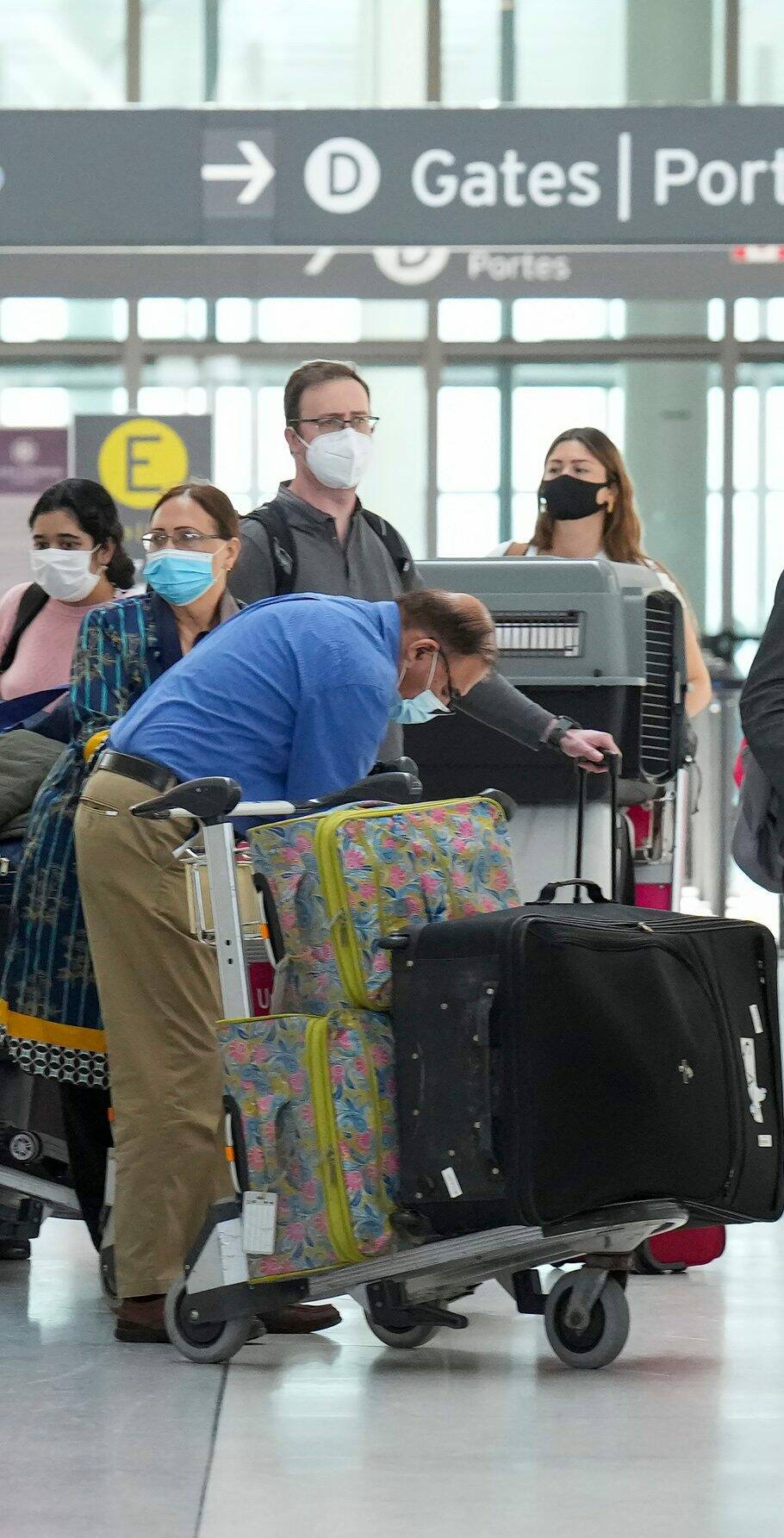
Until the end of June, unvaccinated travellers on international flights will still be subject to mandatory testing, but as of July 1, those tests will be done after the travellers have left the airport, or “off-site,” as the industry likes to say.
As a result, Canada will be allowing more people to disembark, travel through airports and onto connecting flights or exit into the community without providing proof they are vaccinated against COVID-19 or whether they are, in fact, infected by the novel coronavirus.
This policy change was preceded by intense lobbying by the Canadian Airports Council and the National Airlines Council of Canada, both of which argued COVID-19 vaccine and testing requirements were slowing down air travel. A deeper look into the true root causes of the backlogs suggests a shortage of human resources, and not pandemic screening, is to blame.
Airports claim inbound international travellers are being held in planes on the tarmac for hours because there simply isn’t room for them inside the airports as they queue up for random testing and to establish proof of vaccination. Although that process does take more time, it would likely have little impact on the flow of disembarking passengers if there were enough people to do the screening.
Deep within the subtext of this story, however, airlines and airports have admitted they simply don’t have enough people to do the jobs.

From baggage handlers to mechanics, check-in staff, flight attendants, security personnel and even pilots, airports and airlines are trying to adjust to a rapid increase in air travel without the necessary staff to accommodate all the flights. And although the pandemic has made the situation worse, many of these staff shortages pre-date the pandemic.
There has been, for example, a global shortage of pilots for many years. In the years following 9/11, pilot certifications in the United States fell precipitously. At least partly because of the low pay afforded to those who fly the planes in the U.S., the airline industry has suffered from a profound pilot shortage for many years.
The consulting firm Oliver Wyman, an expert in the airline sector, estimates the worldwide global pilot shortage may reach 35,000 by 2025.
And yet, in the face of these and other staff shortages, many of which pre-dated COVID-19, the Canadian airport and airline industries have convinced the federal government to drop vaccine mandates and testing requirements without, it seems, any clear strategy to address the personnel issues that are the true heart of the delays.
What the federal government needs to do, while airports and airlines address their staffing shortages, is make major investments to improve and enhance pathogen screening so air travellers can move quickly, and safely, through Canada’s airports. Doing less screening in the name of expediency, without any accompanying effort to build a better screening system and boost staffing, is only going to leave us more vulnerable to the next global pandemic.