Supreme Court decision may slow transition to cleaner energy
Advertisement
Read this article for free:
or
Already have an account? Log in here »
To continue reading, please subscribe:

Digital Subscription
One year of digital access for only $205*
- Enjoy unlimited reading on winnipegfreepress.com
- Read the E-Edition, our digital replica newspaper
- Access News Break, our award-winning app
- Play interactive puzzles
*First annual payment billed as $205.00 + GST for one year. This annual subscription will automatically renew at $233.00 + GST every 52 weeks (10% off the regular annual price of $259.35). Offer available to new and qualified returning subscribers only. Cancel any time.
To continue reading, please subscribe:
Add Free Press access to your Brandon Sun subscription for only an additional
$1 for the first 4 weeks*
- Enjoy unlimited reading on winnipegfreepress.com
- Read the E-Edition, our digital replica newspaper
- Access News Break, our award-winning app
- Play interactive puzzles
*Your next Brandon Sun subscription payment will increase by $1.00 and you will be charged $17.95 plus GST for four weeks. After four weeks, your payment will increase to $24.95 plus GST every four weeks.
Read unlimited articles for free today:
or
Already have an account? Log in here »
Hey there, time traveller!
This article was published 30/06/2022 (1541 days ago), so information in it may no longer be current.
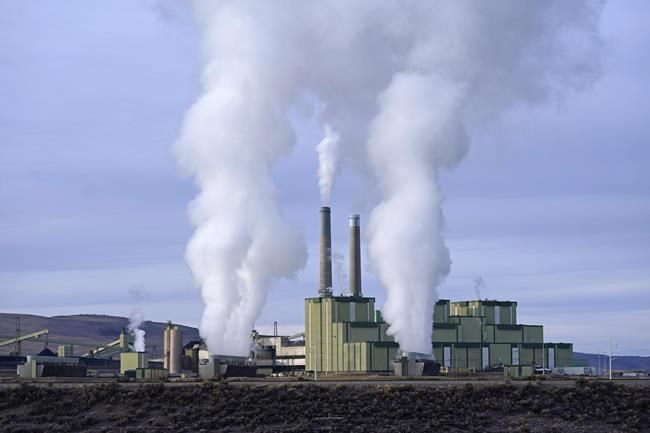
NEW YORK (AP) — The Supreme Court ruling limiting the Environmental Protection Agency’s authority to regulate greenhouse gas emissions from power plants could have far-reaching consequences for the energy sector — and make it harder for the Biden administration to meet its goal of having the U.S. power grid run on clean energy by 2035.
The nation has been gradually transitioning away from coal to cleaner sources of electricity such as natural gas, solar energy and wind, often because they are less expensive. Most experts don’t think the Supreme Court decision in West Virginia vs. EPA will immediately reverse that trajectory.
But the ruling could slow the transition to clean energy in the future because it imposes constraints on what the EPA can do without exceeding its legal authority. That is a frightening prospect, with climate experts warning of dire consequences as global temperatures and extreme weather conditions steadily rise.
Depending how Congress or the courts interpret the court’s ruling in the future, it could also change the way other agencies can regulate the power sector.
The ruling will also set a tone in policymaking chambers, making it harder to persuade state lawmakers to craft laws to boost renewables, said Sachu Constantine, executive director of Vote Solar, which advocates for laws favorable to solar energy in state legislatures.
“Without the threat of EPA or federal regulation of climate, without a recognition that carbon pollution is really, truly harmful, it becomes harder to make that argument,” Constantine said. “It makes it less likely that the risk or the cost of carbon will be directly felt by the utilities, or by other agencies who have control over how much solar we can deploy. And that loss of regulatory risk means they might be less likely to choose solar.”
The case that the Supreme Court took up, West Virginia vs. EPA, had been filed in response to former President Barack Obama’s Clean Power Plan. The Obama plan would have required states to reduce emissions from electricity generation, primarily by shifting away from coal-fired plants. That prospect upset several industries, including coal, and some state attorneys general. They challenged how far the EPA could go to influence the industry’s transition away from coal and to cleaner sources.
“It was sort of a scary prospect that EPA had the authority to close down power plants and build others,” said Jeff Holmstead, a partner at Bracewell LLP who served as an assistant EPA administrator in the George W. Bush administration. “All the major industry groups opposed that approach because of what they saw as a regulatory overreach. Power companies may still feel the same way, but in the meantime, they’ve invested a lot of resources to try to decarbonize.”
When Congress writes laws, it often leaves implementation details up to regulators such as the EPA. In this case, energy industry officials argued that the EPA had gone too far and overstepped what Congress had intended. The challenge in the West Virginia case sought to diminish that authority. It succeeded.
Thursday’s ruling means the EPA cannot force states to shift away from coal to cleaner sources such as natural gas or renewables and compel coal plants shut down. One option that’s now off the table as a result of the ruling is for the EPA to create a nationwide cap-and-trade system, said Richard Revesz, law professor at New York University. Under that system, a limit is set on how much carbon dioxide can be emitted, and companies can trade with each other to reach those goals.
“What the court is ruling out are the most effective and cheapest ways of regulating the power sector,” Revesz said.
Nothing in the ruling would stop Congress from creating a cap-and-trade system, but “under the current gridlock and given the filibuster rules in the Senate, it’s not going to happen,” he said.
Still, Revesz said, the EPA does have authority to regulate emissions from power plants in other ways.
And while the Clean Power Plan never took effect, the nation has been pivoting from coal to cleaner sources such as renewables anyway, often for economic reasons. Many states and large companies have commitments to use clean energy in the near future.
“Those commitments are driven by shareholders, by the economics of carbon reduction options,” said Sue Tierney, a senior advisor at Analysis Group and expert on power markets. “Multiple states have carbon reduction commitments, and large electricity users like very large corporations are saying we want 100% clean way earlier than 2050 … so there’s a whole lot of other forces going on besides EPA regulations at the moment that are driving things in a certain direction.”
Most major electric utilities have aggressive net-zero goals and commitments to phase out coal plants.
“Those aren’t fast enough for some advocates, but it’s not clear how much faster you can go unless you build the infrastructure to replace them,” Holmstead said.
The National Rural Electric Cooperative Association, a trade association of local electric cooperatives, applauded Thursday’s ruling.
“Coal, natural gas and nuclear plants — those are all dispatchable, always-available resources and at the same time, we’re taking those offline,” said the association’s CEO, Jim Matheson. “In terms of the overall generating capacity in this country, I think it creates greater risk for reliability.”
That doesn’t mean power companies will re-open shut-down coal plants. Doing so would be far more complicated than flipping a switch and turning power back on.
Meeting aggressive carbon reduction goals in the power sector will require work from agencies such as the Federal Energy Regulatory Commission, which plays a key role in approving the infrastructure that’s needed to transition to a power sector with fewer emissions. The Supreme Court’s ruling could affect how much authority FERC has to, for example, regulate pipeline emissions or approve locations for transmission lines or facilities, experts said.
“This is less about what’s going to happen about power plants than what’s going to happen about regulation more broadly,” Tierney said.
___
Associated Press Writers Mark Sherman and Matthew Daly in Washington contributed to this report.