Zoroastrians confront depletion of their ancient faith

Advertisement

Advertise with us

NEW YORK (AP) — Among the world’s present-day religions, Zoroastrianism, founded more than 3,000 years ago, is one of the most ancient and historically influential. Yet even though its adherents maintain vibrant communities on four continents, they acknowledge their numbers are dauntingly small — perhaps 125,000 worldwide.

Read this article for free:


or

Already have an account? Log in here »

To continue reading, please subscribe:

Subscribe and receive a limited-edition Free Press branded hat or tote.

Digital Subscription

One year of digital access for only $205*

  • Enjoy unlimited reading on winnipegfreepress.com
  • Read the E-Edition, our digital replica newspaper
  • Access News Break, our award-winning app
  • Play interactive puzzles

*First annual payment billed as $205.00 + GST for one year. This annual subscription will automatically renew at $233.00 + GST every 52 weeks (10% off the regular annual price of $259.35). Offer available to new and qualified returning subscribers only. Cancel any time.

To continue reading, please subscribe:

Add Free Press access to your Brandon Sun subscription for only an additional

$1 for the first 4 weeks*

  • Enjoy unlimited reading on winnipegfreepress.com
  • Read the E-Edition, our digital replica newspaper
  • Access News Break, our award-winning app
  • Play interactive puzzles
Start now

*Your next Brandon Sun subscription payment will increase by $1.00 and you will be charged $17.95 plus GST for four weeks. After four weeks, your payment will increase to $24.95 plus GST every four weeks.

Hey there, time traveller!
This article was published 01/07/2022 (1565 days ago), so information in it may no longer be current.

NEW YORK (AP) — Among the world’s present-day religions, Zoroastrianism, founded more than 3,000 years ago, is one of the most ancient and historically influential. Yet even though its adherents maintain vibrant communities on four continents, they acknowledge their numbers are dauntingly small — perhaps 125,000 worldwide.

Starting Friday, about 1,200 attendees from 16 countries will be assessing their faith’s prospects during the four-day World Zoroastrian Congress in New York City, the first one held in the United States since 2000.

The agenda reflects a keen awareness of the challenges facing their religion. Prospects for growth are limited, given that Zoroastrians don’t seek to convert outsiders and — in many cases — don’t consider the children of mixed marriages to be members of the faith. Yet there’s also some cause for optimism.

This photo from March 2020 shows participants, from left, Zubin Gheesta, Parinaz Navder, trip leader Arzan Sam Wadia, Sheherazad Pavri, Zruvan Chothia, Kayras Irani (bright blue shirt in the front), Mahfrin Santoke, in a group trip to Mumbai, India organized by Zoroastrian Return to Roots. The aim of the trip to help young Zoroastrians from other parts of the world learn more about the culture and history of their ancient faith. (Zoroastrian Return to Roots via AP)

“Have we ever been in a time like this?” wondered Arzan Sam Wadia, a Mumbai-born, New York-based architect who is co-chair of the congress.

“Should we all despair and give up — ‘We can’t do anything, let’s just die peacefully’ — or do we have hope for the future?” he told The Associated Press.

Here’s some basic information about the faith:

HISTORY

Founded more than 3,000 years ago, Zoroastrianism is one of the oldest monotheistic religions still in existence, predating Christianity and Islam by many centuries. Details of its origin are imprecise, however.

The prophet Zoroaster, also known as Zarathustra, is revered as the founder of the faith, which became dominant in Persia before Arab Muslims conquered the region in the 7th century.

Wary of persecution, many Zoroastrians left for destinations in western India, notably Mumbai and Gujarat. India’s Zoroastrian population — known as Parsis — is larger than that of any other country, though the numbers there are declining while they increase in North America, Britain, Australia and New Zealand.

BELIEFS

At its core, Zoroastrianism emphasizes a never-ending battle between good and evil — a contest between the religion’s God, Ahura Mazda, and an evil spirit, Ahriman. Believers have the freedom to make good or bad choices; they were exhorted by Zoroaster to think good thoughts, say good words and do good deeds.

Scholars say these tenets and other aspects of Zoroastrianism had significant influence on other religions, notably Christianity, Islam, Judaism and Buddhism.

“You have these ideas that have fundamentally shaped Western society,” said Jamsheed Choksy, a professor of Central Eurasian Studies at Indiana University. “Fighting the good fight, a purpose of existing to do good, to make the world flourish, to work together, to respect and love each other … all that goes back to Zarathustra.”

Traditional temples house a sacred fire intended to burn perpetually. Another ancient custom: raised, circular structures known as Towers of Silence, where dead bodies were placed to decompose rather than being buried.
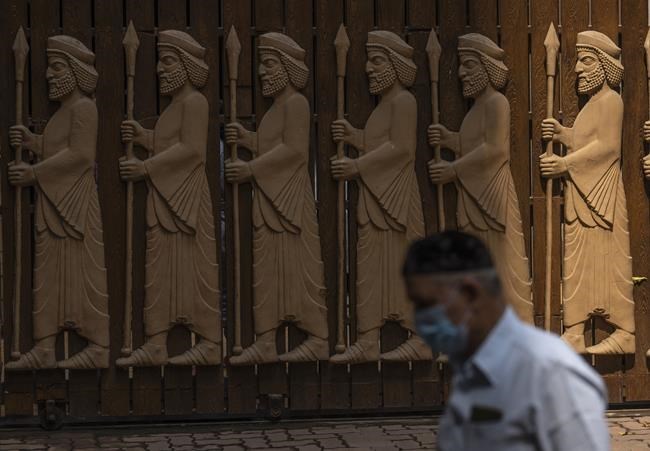
FILE - A Parsi man walks next to a bas-relief depicting early Zoroastrians at a Parsi colony on Nowruz, the Parsi New Year, in Mumbai, India, Monday, March 21, 2022. Parsis, also known as Zoroastrians, worship fire and are followers of the Bronze Age Persian prophet Zarathustra. (AP Photo/Rafiq Maqbool, File)

CULTURE

The Nowruz holiday, which incorporates ancient Zoroastrian traditions and marks the Persian New Year, remains a major event on the Iranian calendar. It is widely celebrated, on or around March 21, in other regions that once were part of the Persian empire.

For Zoroastrians who left Iran and settled in India or eventually in more distant regions, their communities became renowned for producing entrepreneurs and philanthropists. Becoming wealthy was encouraged within the faith, but with the proviso that riches should be used to help others.

Jamsetji Tata, born in India in 1839, became one of the most prominent industrialists and philanthropists of the 19th century, and the Tata Group that he founded is one of the world’s largest multinational conglomerates.

Another flourishing conglomerate, the Wadia Group, was founded by Parsi shipbuilder Lovji Wadia in 1736. The company built scores of war vessels for Britain; its holdings today include a fashion magazine, a cricket team and manufacturers of textiles and biscuits.

However the most famous Parsi of modern times was neither an entrepreneur nor industrialist: Freddie Mercury, the legendary lead vocalist of the rock band Queen, was born Farrokh Bulsara in 1946 to parents from Gujarat who were living in Zanzibar.

FUTURE

The possibility of further shrinkage of the global Zoroastrian community will be very much on the minds of attendees at the New York congress.

Several sessions will focus on Zoroastrians in their 20s and 30s. In describing the gathering, organizers promised that participants will come away “reassured that the destiny of the faith is secure in the hands of passionate and visionary young Zoroastrians.”

Other topics on the agenda include entrepreneurship, interfaith collaboration and the role of women.

Wadia, the congress’ co-chair, who is not related to the family behind the Wadia Group, has leading roles in two separate initiatives aimed at strengthening the religion’s prospects.

One is a global survey being conducted by SOAS University of London that aims to shed light on factors that are promoting or inhibiting Zoroastrianism’s growth and vitality.
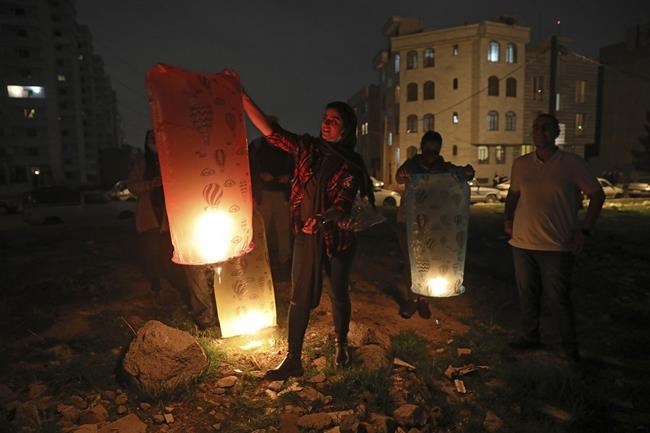
FILE - People light wish lanterns while celebrating Chaharshanbe Souri, or Wednesday Feast, an ancient Festival of Fire, on the eve of the last Wednesday of the solar Persian year, in Tehran, Iran, Tuesday, March 15, 2022. Among the world’s present-day religions, Zoroastrianism is one of the most ancient and historically influential. It was founded more than 3,000 years ago and became the major religion in Persia.  (AP Photo/Vahid Salemi, File)
FILE - People light wish lanterns while celebrating Chaharshanbe Souri, or Wednesday Feast, an ancient Festival of Fire, on the eve of the last Wednesday of the solar Persian year, in Tehran, Iran, Tuesday, March 15, 2022. Among the world’s present-day religions, Zoroastrianism is one of the most ancient and historically influential. It was founded more than 3,000 years ago and became the major religion in Persia. (AP Photo/Vahid Salemi, File)

Wadia also is program director of Zoroastrian Return To Roots, which organizes trips to India for young Zoroastrians who want to learn more about their religion’s history and culture.

Wadia is convinced the faith will survive, but perhaps while undergoing major changes. In North America, for example, he believes that adherence to specific cultural traditions might diminish, even as Zoroastrians maintain a basic set of spiritual guidelines.

SOAS University’s Almut Hintze, a professor of Zoroastrianism, has described the global community as “microscopically small” and worries about the decline of Parsis in India.

“However, Zoroastrians are doing well in the global diaspora,” she said via email. “It could well be that numbers are going to stabilise, although secularisation and the marriage laws pose threats.”

Choksy, the Indiana University professor, sees North America as the most promising region for growth. He estimates that the United States and Canada are now home to more than 30,000 Zoroastrians, higher than the latest figure for Iran.

“North America is where there’s hope,” Choksy said. “It’s partly due to immigration, but also the communities have more children, they feel more stable. It’s the bright light.”

___

Associated Press religion coverage receives support through the AP’s collaboration with The Conversation US, with funding from Lilly Endowment Inc. The AP is solely responsible for this content.

Report Error Submit a Tip

The Free Press acknowledges the financial support it receives from members of the city’s faith community, which makes our coverage of religion possible.

More Stories

Woman accused of pulling handgun on taxi driver

1 minute read Yesterday at 10:39 AM CDT

A 45-year-old woman accused of pulling a handgun on a Winnipeg taxi driver is facing multiple firearms-related charges.

It happened Sunday afternoon, at about 2:30 p.m., near the intersection of Concordia Avenue and Louelda Street. Officers learned a woman got into a cab in the Munroe East neighbourhood and pulled out a handgun, asking the driver to take her to a specific location, the Winnipeg Police Service stated in a news release.

The taxi driver activated the taxi's emergency beacon, exited the vehicle, and contacted police.

The woman got into the driver's seat of the taxi, but the keys had been removed, and she fled on foot. A suspect was arrested shortly afterward in the 1000 block of Concordia Avenue. Police seized a .22-calibre handgun during the arrest.

Collaros turns back the clock in crucial win over Stamps

Taylor Allen 7 minute read Preview

Collaros turns back the clock in crucial win over Stamps

Taylor Allen 7 minute read Sunday, Oct. 11, 2026

It was around this time seven years ago that the Winnipeg Blue Bombers officially became Zach Collaros’s team.

Making his first start in blue and gold after being acquired via trade, Collaros ran backwards to escape a collapsing pocket before rolling to his right and firing a perfect pass to Darvin Adams in the back corner of the south end zone during a home game against the Calgary Stampeders.

The play marked the beginning of the Collaros era in Winnipeg.

And a similar play Saturday night, once again against the Stampeders, served as a reminder that the 38-year-old pivot isn’t done just yet.

Read
Sunday, Oct. 11, 2026

A question of public utility

Tom Pearson 5 minute read 2:00 AM CDT

The editorial page of the Free Press often provides perspectives that are thought-provoking and sometimes contradictory. Keeping the lights on, (Oct. 5) by Hal Turner and Wasteful operations should be held accountable, (Oct. 6) by Barry Prentice are both thought-provoking. They are not contradictory because they cover two quite different topics. Where they differ is in their delivery and the quality of the underlying facts.

Mr. Turner provides what is, in my view, the most cogent rationale for gas-fuelled generation that I have read. He highlights the essential aspect of power supply to Manitobans. He supports the argument for natural gas generation with succinct, relatable facts and anecdotes relating to what other comparable utilities have done. He states that, “Manitoba Hydro’s experts are neither anti-wind nor pro-fossil fuel.” They are simply seeking the best possible solution for Manitobans — a fact many special-interest groups either ignore or sadly, impugn.

Although some would argue the contrary, I believe that Mr. Turner’s position and longevity in the Manitoba Hydro organization lend gravitas to his column. Mr. Turner understands that “keeping the lights on” is a non-negotiable requirement and a public trust.

Before I turn to Mr. Prentice’s column, I should disclose that before I retired (it’s been a while), I was responsible at different times for Winnipeg’s regional water system and subsequently water supply from source to tap. In that context I was also responsible for the operation of the Greater Winnipeg Water District (GWWD) railway. Like Mr. Turner’s perspective on the supply of electricity to Manitobans, I regard the supply of safe drinking water to Winnipeggers as a public trust.

Piece of magic history disappears

Kelly-Anne Riess 5 minute read Preview

Piece of magic history disappears

Kelly-Anne Riess 5 minute read Updated: Yesterday at 4:15 PM CDT

A piece of Winnipeg’s magic history has vanished, and internationally renowned escape artist Dean Gunnarson is offering a $500 reward to anyone who can make it reappear.

The plaque marked the birthplace of what has become the world’s largest organization of professional and amateur magicians, the International Brotherhood of Magicians, which was founded in Winnipeg more than a century ago.

Gunnarson said fellow magician and local magic historian Bruce Thompson discovered the disappearance Tuesday while on his way to work.

Thompson returned to inspect the site and found what appeared to be evidence it had been forcibly removed.

Read
Updated: Yesterday at 4:15 PM CDT

‘Unique’ crackdown leads to dozens of arrests, hundreds of referrals to outreach groups

Free Press staff 3 minute read Preview

‘Unique’ crackdown leads to dozens of arrests, hundreds of referrals to outreach groups

Free Press staff 3 minute read Updated: 12:44 PM CDT

More than 200 people were referred to support organizations and police made 55 arrests during a two-month crackdown on drug use and disorder on city streets.

The Winnipeg Police Service and community group leaders released the latest details Tuesday of a sweep focused on open drug use and trafficking that began in August. An earlier blitz, in June, drew rebuke from some community groups that led police to take an outreach-first approach when it was relaunched.

“I feel it’s something that’s very unique, we’ve looked across the country and from what I’m hearing, what we’re hearing, I think we’re definitely going in the right direction, if not leading the way in some of our initiatives,” said police Chief Gene Bowers of the service’s partnered approach to cracking down on open air drug use.

Between Aug. 7 and Oct. 6, community organizations participated in 14 joint outreach and enforcement efforts, police said on Tuesday. Ten people were helped into Main Street Project detox programs, 48 people were given access to support services and 553 naloxone opioid antidote kits were handed out. Outreach organizations engaged with a total of 3,758 people.

Read
Updated: 12:44 PM CDT

Separatist movements are an indication of dissatisfaction, not imminent collapse

Tom Brodbeck 5 minute read Preview

Separatist movements are an indication of dissatisfaction, not imminent collapse

Tom Brodbeck 5 minute read 12:18 PM CDT

For a country supposedly on the verge of breaking apart, Canada has remarkably few people who actually support it.

You’d never know that from the headlines, with Quebec’s separatist party back in power and Alberta preparing to vote on its future in Confederation. The political noise is loud, but the public appetite for separation is extremely weak.

Roughly 70 per cent of Quebecers have no interest in separating from Canada, and the numbers in Alberta are probably about the same. That will be evident after Albertans vote Monday on whether they want to stay in Canada.

So where’s the crisis? Well, the truth is, there isn’t one.

Read
12:18 PM CDT