Painter’s wartime experiences chronicled
Advertisement
Read this article for free:
or
Already have an account? Log in here »
To continue reading, please subscribe:

Digital Subscription
One year of digital access for only $205*
- Enjoy unlimited reading on winnipegfreepress.com
- Read the E-Edition, our digital replica newspaper
- Access News Break, our award-winning app
- Play interactive puzzles
*First annual payment billed as $205.00 + GST for one year. This annual subscription will automatically renew at $233.00 + GST every 52 weeks (10% off the regular annual price of $259.35). Offer available to new and qualified returning subscribers only. Cancel any time.
To continue reading, please subscribe:
Add Free Press access to your Brandon Sun subscription for only an additional
$1 for the first 4 weeks*
- Enjoy unlimited reading on winnipegfreepress.com
- Read the E-Edition, our digital replica newspaper
- Access News Break, our award-winning app
- Play interactive puzzles
*Your next Brandon Sun subscription payment will increase by $1.00 and you will be charged $17.95 plus GST for four weeks. After four weeks, your payment will increase to $24.95 plus GST every four weeks.
Read unlimited articles for free today:
or
Already have an account? Log in here »
Hey there, time traveller!
This article was published 02/07/2022 (1496 days ago), so information in it may no longer be current.
Douglas Hunter is an award-winning journalist and historian. He has published books on a variety of historical topics including 2021’s The Place of Stone: Dighton Rock and the Erasure of America’s Indigenous Past.
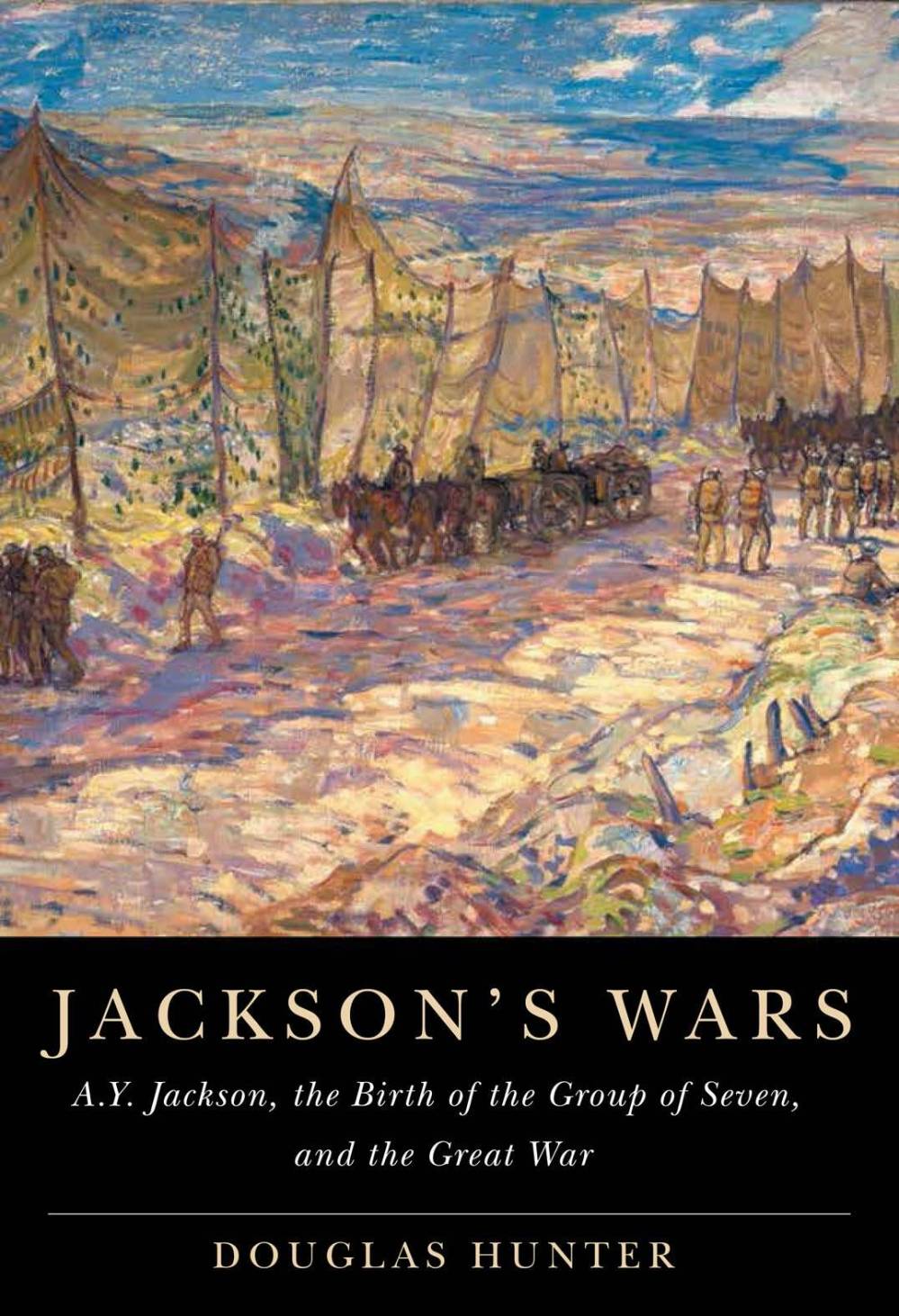
His latest book Jackson’s Wars is not a complete biography of painter A.Y. Jackson; rather, it is an account of his early life as an artist and his years at the western front during the First World War. Jackson was one of the founding painters of the Group of Seven; Hunter’s book gives us a lot of detail up to the early 1920s when, with the war over, the group actually began to exhibit and have some success in their “war” to establish a style of post-impressionist Canadian painting.
Alexander Young Jackson was born in Montreal in 1882. When he was nine, his father went bankrupt, and Jackson was forced to leave school and go to work in an advertising lithography firm to help the family pay bills. Later he studied in the Council of Arts and Manufactures beginning in 1898, and the lessons in lithography were invaluable. He was able to earn a living creating lithographs of mattresses, ladies shoes and literally everything that might appear in a catalogue. At night he went to the Art Association of Montreal. Jackson was impressed by the instructor William Brynner ,who was encouraging his students to try to create impressionist and post-impressionist art.
Jackson worked and studied in Chicago and saved money so he could go to Paris and study at the Académie Julian, where many other Canadians also studied. He went to France before the Great War, where he met his close friend, the painter Rudolf Hewlett, and studied impressionistic and post-impressionistic painters, striving to develop new styles and new colours. Before the war, they mounted a two-man show which received positive reviews and were called promising. For artists like them, they were beginning in a time of depression, after 1912, when people who had been collecting paintings could no longer afford to do so.
With the beginning of the First World War, several Canadian painters joined the army. Jackson hesitated until 1915, when he became a private in the Canadian infantry, saying he wanted to start at the bottom so he could learn about the army. He was friends with Lawren Harris by this time and Harris, being wealthy — from the Harris family of Massey Harris — offered to get him made a lieutenant. Jackson refused.
Most of the men who would form the Group of Seven were in the army. Jackson became exhausted and shell-shocked from his experiences in the trenches. In 1917, Canadian artists suffered a tragic loss when Tom Thomson, a painter who acted as a sort of inspiration and mentor to many young artists, drowned in Canoe Lake in northern Ontario. While Thomson had not been willing to join the army, he was lost to Canadian painting nevertheless.
Jackson was involved in several bloody battles, eventually carrying two pieces of shrapnel in his body. In November 1917 he was saved from further danger when Lord Beaverbrook decided to begin funding a series of paintings by Canadian artists which would show the Canadian public what their soldiers were doing at the front. Jackson was one of the painters Beaverbrook recruited for his artwork, making him a lieutenant and, like the other painters, telling him to do whatever paintings he wanted. The Canadians were told to make sketches of scenes which would then be given to British painters to turn into major oils.
Jackson and other artists returned to Canada as the war ended and asked to create paintings of war factories and show what had been done to support the war at home. Jackson took some of this work, but soon he and the other members of the Group of Seven, which had now taken shape, opened two exhibitions, in 1920 and 1921 — and the Group was truly established.

While Jackson’s Wars is largely about the war and Jackson’s war experiences, it provides a worthwhile introduction to the Group of Seven’s development and birth. It is well-written and amply footnoted should readers want to learn more, and is recommended for general readers as well.
Jim Blanchard is a local historian and retired librarian at the Univerity of Manitoba.