

Province nervous over military court shift
Advertisement
Read this article for free:
or
Already have an account? Log in here »
To continue reading, please subscribe:

Digital Subscription
One year of digital access for only $205*
- Enjoy unlimited reading on winnipegfreepress.com
- Read the E-Edition, our digital replica newspaper
- Access News Break, our award-winning app
- Play interactive puzzles
*First annual payment billed as $205.00 + GST for one year. This annual subscription will automatically renew at $233.00 + GST every 52 weeks (10% off the regular annual price of $259.35). Offer available to new and qualified returning subscribers only. Cancel any time.
To continue reading, please subscribe:
Add Free Press access to your Brandon Sun subscription for only an additional
$1 for the first 4 weeks*
- Enjoy unlimited reading on winnipegfreepress.com
- Read the E-Edition, our digital replica newspaper
- Access News Break, our award-winning app
- Play interactive puzzles
*Your next Brandon Sun subscription payment will increase by $1.00 and you will be charged $17.95 plus GST for four weeks. After four weeks, your payment will increase to $24.95 plus GST every four weeks.
Read unlimited articles for free today:
or
Already have an account? Log in here »
Hey there, time traveller!
This article was published 25/07/2022 (1473 days ago), so information in it may no longer be current.
OTTAWA — Manitoba is pushing back against the federal government’s decision to shift military sex-offence cases to civilian courts, asking for more cash and warning that victims might not have enough support.
“Manitoba expressed significant concerns regarding what is perceived as a unilateral decision by the federal government,” Justice Minister Kelvin Goertzen said.
Last fall, the Trudeau government ordered the RCMP and provincial forces to gradually start taking on sex-offence investigations involving members of the Canadian Armed Forces.
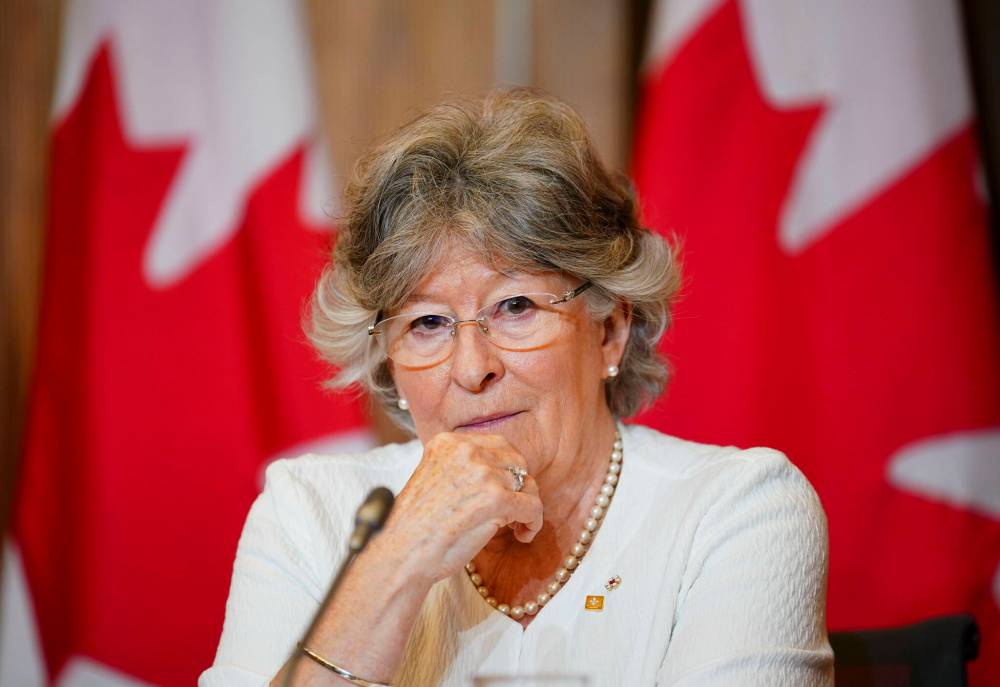
Former Supreme Court justice Louise Arbour’s report showed that an average of eight alleged sex offence cases involving military members were reported annually in Manitoba between 2016 and 2021. (Sean Kilpatrick / The Canadian Press files)
Civilian police had exclusive jurisdiction over such cases until 1998. That”s when Military Police were given parallel authority to investigate offences of a sexual nature and have them tried in military courts.
Since then, experts have argued victims cannot trust the military system to impartially handle cases and prevent reprisals.
The Liberals promised years ago to combat sexual harassment within the military, which is believed to be widespread, and tasked retired Supreme Court justice Louise Arbour with mapping out how to do so.
She called for all sex-offence cases to be handled by civilian police and courts. Her final report, in May, noted there was pushback to the idea, particularly from police forces in Ontario and urban B.C.
Arbour’s report showed that an average of eight alleged sex-offence cases involving military members were reported annually in Manitoba between 2016 and 2021. She argued many of them occur in a city with an army or air base.
“The targeted need for additional resources, if any, can be easily identified and accommodated,” Arbour wrote.
She noted that RCMP are accepting military cases, and that Winnipeg police started doing so “on an ad hoc basis.” Her report also noted the head of the Military Police’s air force division met with Manitoba Justice officials to discuss the issue in January.
This month, the Ontario and B.C. governments said they had sought federal funding to make up for the extra cases.
Ontario raised concerns about municipal forces lacking resources to investigate soldiers and witnesses who have moved to military offices in other provinces or abroad. It argued that not providing federal cash to civilian police forces would delay justice for all sex-assault complainants.
The Stefanson government says it’s also unhappy, and not just about the money.
“In addition to the lack of consultation, concerns include resource implications, implications for victims and victims’ services, issues of jurisdiction and the need for consistent, nationwide protocols, procedures and standards for transfer, investigations and information sharing,” Goertzen said in a statement.
Defence Minister Anita Anand wrote to Goertzen on June 5, saying her government is considering removing the Military Police from doing such probes, which would force them onto civilian police forces indefinitely.

Anand’s office provided the letter to the Free Press. It said Ottawa would meet with provincial officials “to advance and sustain this important culture-change initiative.”
As of May 30, Military Police had sought to refer 49 new cases to civilian police, of which 23 were declined, leaving military officers to instead start those investigations. Nine of 13 ongoing cases were transferred to civilian forces. The Canadian Armed Forces would not provide more recent data.
Anand was unavailable for an interview, but her spokesman gave no indication of any increased funding for provinces.
“We urge provincial and territorial governments to work to ensure that civilian law enforcement exercises its jurisdiction, enforces the law, and investigates these cases,” wrote Daniel Minden.
dylan.robertson@freepress.mb.ca