

Manitoba expected to have plenty of turkeys for Thanksgiving
Advertisement
Read this article for free:
or
Already have an account? Log in here »
To continue reading, please subscribe:

Digital Subscription
One year of digital access for only $205*
- Enjoy unlimited reading on winnipegfreepress.com
- Read the E-Edition, our digital replica newspaper
- Access News Break, our award-winning app
- Play interactive puzzles
*First annual payment billed as $205.00 + GST for one year. This annual subscription will automatically renew at $233.00 + GST every 52 weeks (10% off the regular annual price of $259.35). Offer available to new and qualified returning subscribers only. Cancel any time.
To continue reading, please subscribe:
Add Free Press access to your Brandon Sun subscription for only an additional
$1 for the first 4 weeks*
- Enjoy unlimited reading on winnipegfreepress.com
- Read the E-Edition, our digital replica newspaper
- Access News Break, our award-winning app
- Play interactive puzzles
*Your next Brandon Sun subscription payment will increase by $1.00 and you will be charged $17.95 plus GST for four weeks. After four weeks, your payment will increase to $24.95 plus GST every four weeks.
Read unlimited articles for free today:
or
Already have an account? Log in here »
Hey there, time traveller!
This article was published 27/09/2022 (1438 days ago), so information in it may no longer be current.
Avian influenza has wiped out a couple of commercial turkey flocks in Manitoba over the past couple of weeks with another unconfirmed incident of infection reported on Tuesday.
But with about 35,000 birds affected to date — which means they have already been euthanized or will be soon — Manitoba has so far been spared the much more numerous outbreaks currently happening in Western Canada.
The Canadian Food Inspection Agency (CFIA) reports 2.7 million birds affected across the country — most of them turkeys — but industry officials say there should be plenty of supply of birds for Thanksgiving.
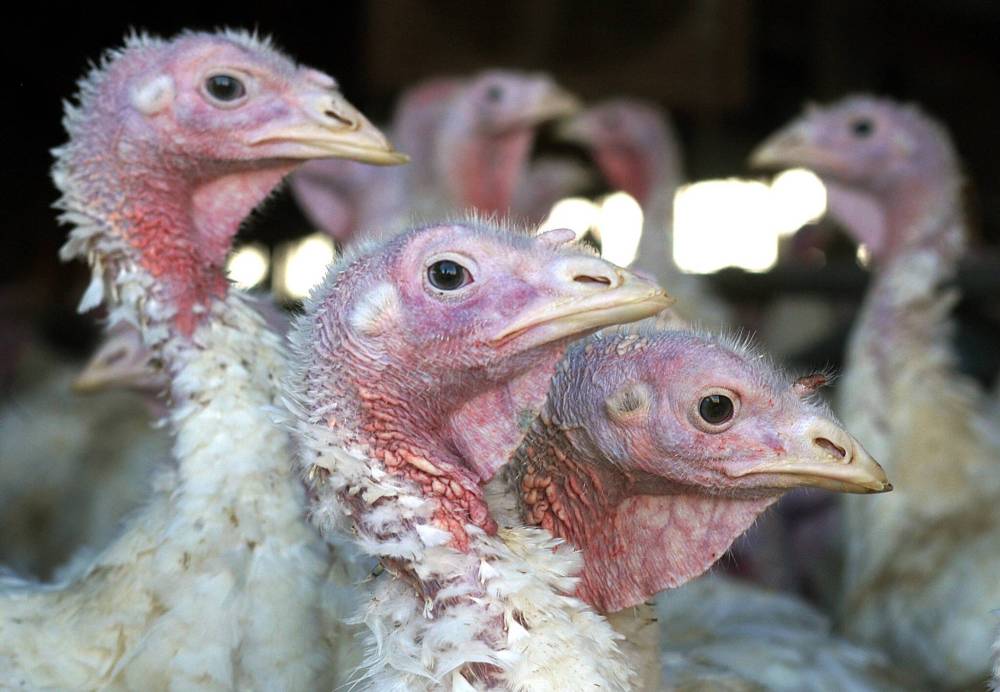
Janet Hostetter / The Associated Press Files
Experts say Manitoba should have plenty of turkeys for Thanksgiving this year despite the effects of avian influenza.
Helga Weddon, general manager of Manitoba Turkey Producers, which manages quota allocation for 45 Manitoba turkey producers, said, “Some parts of Canada may experience lower supply of fresh turkey, but including frozen there is an adequate enough supply to ensure turkey will be available for Canadians this Thanksgiving.”
Ed Cantor at Cantor’s Quality Meats & Groceries said, “So far so good,” when it comes to his turkey supply.
“The turkey supply is not the issue, but there is an issue with pricing,” he said.
Prices are up 15 per cent this year, but Tony Tavares, senior vice-president in charge of turkey for Quebec-based Exceldor Cooperative — which produces the popular Butterball brand — said production costs have gone up that much irrespective of the avian influenza outbreak.
The outbreak is unusual this year in that it has spread across the country, indeed around the world.
A recent report out of the U.S. said that millions of turkey have been euthanized in recent weeks, with prices up 30 per cent from a year ago and 80 per cent above pre-pandemic levels.
Typically introduced to domestic flocks by migratory water fowl like geese and ducks, typical avian influenza outbreaks are usually very localized.
But that’s not the case this year. Every province but P.E.I. have reported cases this year.
Dr. Noel Ritson-Bennett, veterinary program manager and part of the CFIA’s Western area response team for avian influenza, said, “We’re hopping. We have close to 300 people deployed and working AI investigations.”
He said this year’s outbreak is affected unprecedented numbers of birds, across Canada, the U.S., Europe and in Asia and Africa as well.
While there is no public health concerns — human infection is very rare — every incident detected requires the entire flock to be euthanized.
“We have a stamping out policy in Canada,” Ritson-Bennett said. “That means we will humanely de-populate that flock and typically all the birds on the premise as well.”
As well there are heightened bio-security measures in place which means limited exposure to birds, change of clothes entering barns and full personal protective equipment used in handling infected birds.
Manitoba’s current outbreaks are all in turkey flocks but an outbreak in April hit a Manitoba broiler chicken operation.
Tavares said that some say climate change is affecting migratory birds’s habits.
“No one is sure,” he said. “One thing I can say is that it is more widespread.”
Exceldor’s Manitoba processing plant, in Blumenort — Exceldor merged with Granny’s Poultry a couple of years ago — is located in a CFIA primary control zone (PCZ) which means it is within 10 kilometres of a confirmed infection. All birds moving into the plant now must have permits and be tested.
“It means an awful lot of paperwork, but unfortunately we have become more experience at it so we getting more efficient,” Tavares said.
While he agrees that the outbreak is not going to affect Exceldor’s service to its customer, he said, “We are all on pins and needles because this thing sometimes can take a life of its own.”
That said, the producers whose flocks are infected face considerable hardship.

While CFIA covers the cost of euthanizing – with CO2 gas – and removable of the carcasses, industry officials say insurance coverage is not a guarantee.
Wayne Hiltz, the executive director of Manitoba Chicken, said this virus is something that producers have to be aware of every spring and fall during migration.
“For our broiler chicken members (about 125 in Manitoba) our birds are inside 100 per cent of the time,” he said. “This is an example of exactly why they are.”
While most commercial producers may keep their flocks indoors, Ritson-Bennett said there is growing number of free range producers and back yard poultry flocks. It is that much harder for those producers to keep their birds away from wild geese and ducks.
martin.cash@freepres.mb.ca
History
Updated on Tuesday, September 27, 2022 10:12 PM CDT: Corrects number of sick birds to 2.7 million, to date