In Conversation with Joshua Whitehead
The Canada Reads winner for novel Jonny Appleseed chats about his first foray into non-fiction
Advertisement
Read this article for free:
or
Already have an account? Log in here »
To continue reading, please subscribe:

Digital Subscription
One year of digital access for only $205*
- Enjoy unlimited reading on winnipegfreepress.com
- Read the E-Edition, our digital replica newspaper
- Access News Break, our award-winning app
- Play interactive puzzles
*First annual payment billed as $205.00 + GST for one year. This annual subscription will automatically renew at $233.00 + GST every 52 weeks (10% off the regular annual price of $259.35). Offer available to new and qualified returning subscribers only. Cancel any time.
To continue reading, please subscribe:
Add Free Press access to your Brandon Sun subscription for only an additional
$1 for the first 4 weeks*
- Enjoy unlimited reading on winnipegfreepress.com
- Read the E-Edition, our digital replica newspaper
- Access News Break, our award-winning app
- Play interactive puzzles
*Your next Brandon Sun subscription payment will increase by $1.00 and you will be charged $17.95 plus GST for four weeks. After four weeks, your payment will increase to $24.95 plus GST every four weeks.
Read unlimited articles for free today:
or
Already have an account? Log in here »
Hey there, time traveller!
This article was published 08/10/2022 (1417 days ago), so information in it may no longer be current.
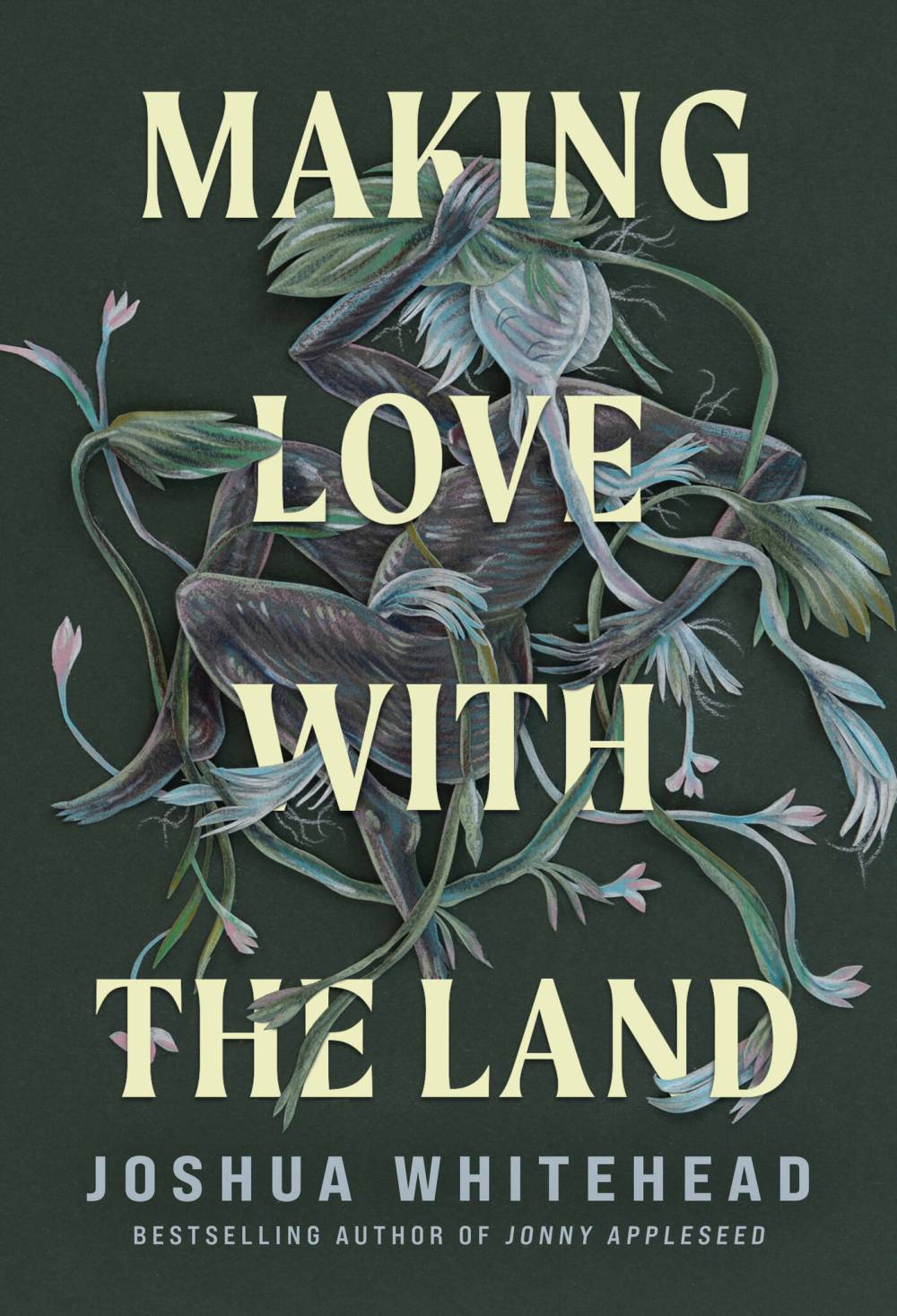
Beginning his writing career as a poet with full-metal indigiqueer, two-spirit, Oji-nêhiyaw author Joshua Whitehead, a member of Peguis First Nation (Treaty 1), went on to win Canada Reads in 2021 with his first novel, Jonny Appleseed. In his first foray into non-fiction, Whitehead’s most recent book, Making Love with the Land, is a series of essays that explore “Indigeneity, queerness and the relationships between body, language and land through a variety of genres.”
Joshua Whitehead has exclusive content on thinairfestival.ca for Thin Air 2022, running this year until Oct. 18.
WFP: What first inspired you to start writing Making Love with the Land?
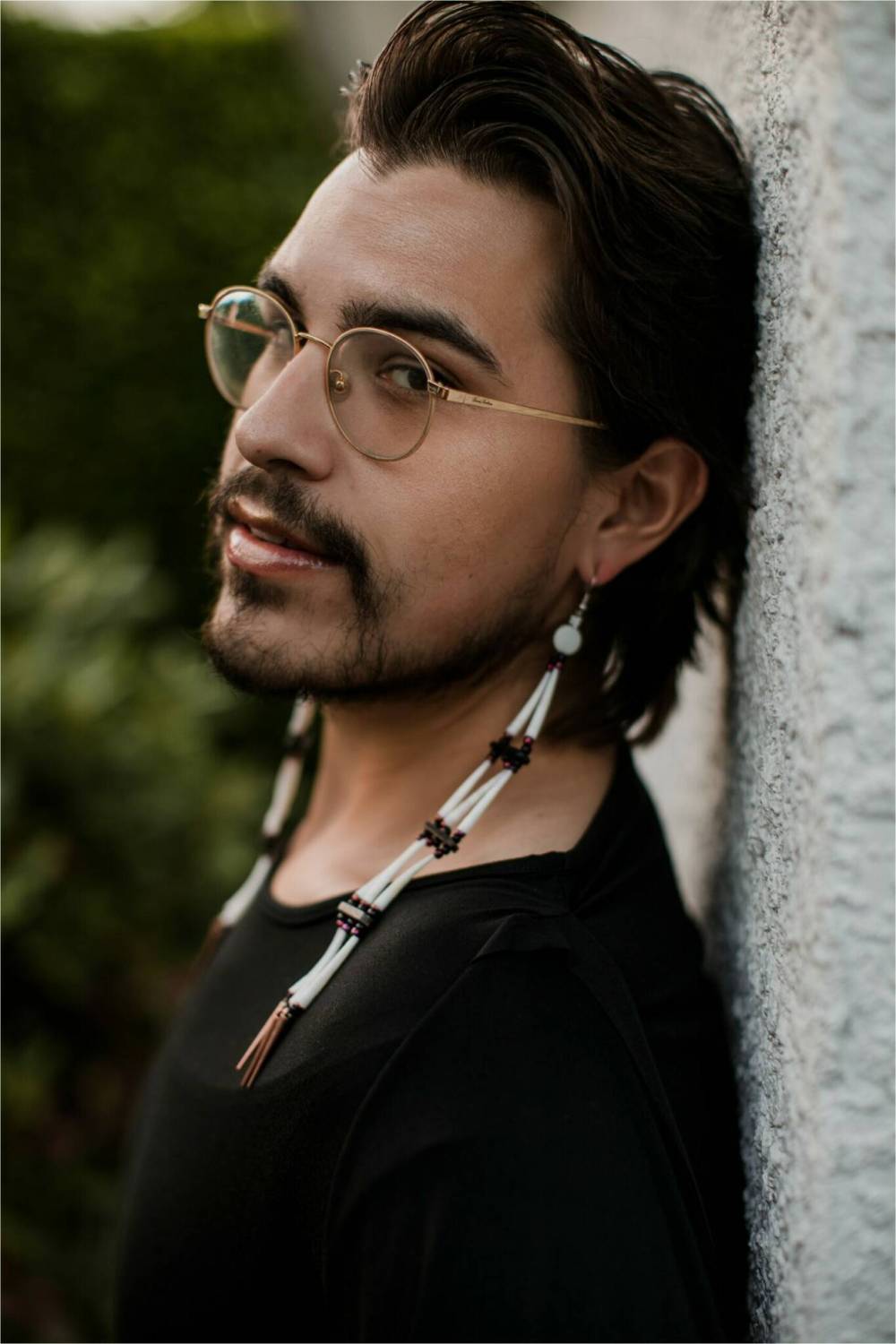
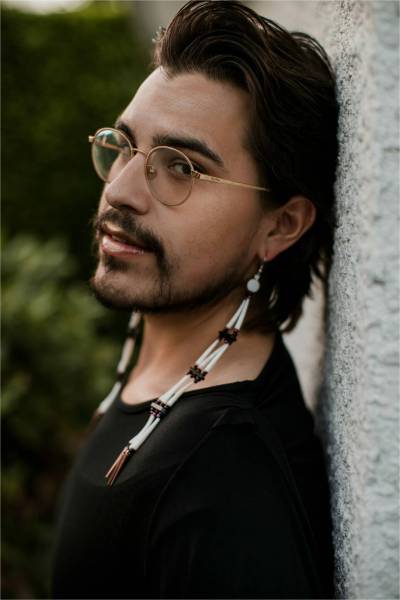
Sweetmoon Photography
Joshua Whitehead
Making Love with the Land (MLWTL) was inspired by two things: one, the rather intense touring I did with Jonny Appleseed and the overnight attention he garnered after winning Canada Reads 2021. During that time, a lot of interviews and audience members were very interested in the verisimilitude of Jonny — inasmuch as they began to ask personal questions about my life, deaths, traumas, losses and how those consolidated or further embodied the character of Jonny. Joshua and Jonny were often confused with one another by reader and lover alike. Second, MLWTL was inspired by an experience I had with a youth when I worked for the Selkirk Friendship Centre — a young boy who overdosed on opiates on my desk. I remember asking myself: what kind of pain does a 14-year-old boy have to be in to be addicted to painkillers? His response when we asked him what happened was, “I just thought this was a natural part of growing up NDN.” So I came to MLWTL with two motoring thoughts: one, to give my readership a “behind-the-scenes” peek at the making and reception of Jonny; and two, to showcase my own struggles with mental health in the hopes that it might destigmatize it for my communities.
WFP: What do you hope Making Love with the Land adds to the wider conversation around mental health?
I hope MLWTL helps normalize the idea that we are all struggling with our mental capacities and durability — especially after the two-year lockdown periods of COVID-19. I tired, quickly, of repressing my own warring thoughts and also having secret conversations in the corners of rooms with kin who would express to me their difficulties with suicidal ideation, depression, body dysmorphia, insomnia, panic attacks, anxiety, etc. How universal a feeling is it to break? To self-destruct? To cope unhealthily? It’s a story I know too well. Meanwhile we have rampant youth suicides, many of whom are two-spirit, happening across Turtle Island due to a lack of mental health care (including healing lodges for substance abuse). I needed to put my theories into action (What use is a story when your reader is dying/dead?) and in doing so, I thought the best way I could do that would be to remove the mask of character and step onto the metaphorical (and literal) stage and blood-let and cauterize myself with a 10-essay, spotlit monologue. Writing comes from community, so it must serve it too.
WFP: You have talked about how Making Love With the Land “is about what writing costs the writer and the type of relationship reader and writer enter together.” How do you understand this relationship between reader and writer?
I do not believe it is necessarily or always vitriolic, this kind of fusing together of author and character. But I do strongly believe that in our highly politicized (not that it hasn’t always been political) moments we find ourselves, in that the general consensus of this population living within what we refer to as “Canada,” is aching to ally. And in doing so, rushing their ally-ship. And by rushing it, they seek out books to illuminate their ideas, challenge themselves, and what I’ve noticed is that in reading these books, hastily so for decolonial, pro-queer, and/or BLM ideologies, they seem to be fusing the “I/eye” of these texts with the autobiographical “I.” BIPOC and/or queer texts are written from the body — to erase our bodies in our stories would be a violent disfigurement. But what needs to be understood is that we, as readers, are guests within the oratories and pages of authors, much as we are on these lands, and we must move into them with grace and also prepared for self-care of themselves and of the story and author. MLWLT is written to teach you that I allow you in, but it requires work and translation and sometimes rejection, to build a relationship with me within the essays.
WFP: What themes do you always seem to return to in your writing, and why are you drawn to those themes?
The body. Writing of it, from it, for it, with it. It may be simple but it is an expansive word — “body,” in that it signals both our physical bodies, bodies of water, bodies of land, bodies of text. They are all in relation, always. I’m consistently returning to the site of the body so that I may enter mine. Perhaps my problem is that my body is a border between myself and the world, rather than a vehicle. I want to write it into being so it can explore the full range of this world’s sensations.
WFP: What are you reading right now? What are you writing right now?
I have been returning to books I love as a form of inspiration and research for a new novel I’m working on. Cormac McCarthy has been the author I’ve been returning to, especially The Road. I’ve also been returning to Miriam Toews in my excitement over the film adaptation of Women Talking. I’m attempting to work on something joyful of myself, perhaps á la Cormac, with a novel that is McCarthyian meets an NDN version of the X-Men. Or so I hope, hah!
Making Love with the Land is available now from Penguin Random House.
Alyssa Sherlock is a Winnipeg writer.