The next invasive garden threat? A slithering, jumping worm

Advertisement

Advertise with us

Just when you think you’ve become accustomed to the spotted lanternfly invasion, along comes another menace to the ecosystem: the Asian jumping worm.

Read this article for free:


or

Already have an account? Log in here »

To continue reading, please subscribe:

Subscribe and receive a limited-edition Free Press branded hat or tote.

Digital Subscription

One year of digital access for only $205*

  • Enjoy unlimited reading on winnipegfreepress.com
  • Read the E-Edition, our digital replica newspaper
  • Access News Break, our award-winning app
  • Play interactive puzzles

*First annual payment billed as $205.00 + GST for one year. This annual subscription will automatically renew at $233.00 + GST every 52 weeks (10% off the regular annual price of $259.35). Offer available to new and qualified returning subscribers only. Cancel any time.

To continue reading, please subscribe:

Add Free Press access to your Brandon Sun subscription for only an additional

$1 for the first 4 weeks*

  • Enjoy unlimited reading on winnipegfreepress.com
  • Read the E-Edition, our digital replica newspaper
  • Access News Break, our award-winning app
  • Play interactive puzzles
Start now

*Your next Brandon Sun subscription payment will increase by $1.00 and you will be charged $17.95 plus GST for four weeks. After four weeks, your payment will increase to $24.95 plus GST every four weeks.

Hey there, time traveller!
This article was published 18/10/2022 (1410 days ago), so information in it may no longer be current.

Just when you think you’ve become accustomed to the spotted lanternfly invasion, along comes another menace to the ecosystem: the Asian jumping worm.

Allow me to introduce you to Amynthas agrestis, also known as “Alabama jumper,” “Jersey wriggler” and the rude-but-accurate “crazy worm.” Unlike garden-variety earthworms, these flipping, thrashing, invasive miscreants are ravenous consumers of humus, the rich, organic, essential top layer of soil formed by dead and decaying small animals, insects and leaf litter in places like forests, plant nurseries and your garden.

Plants, fungi and other soil life cannot survive without humus, and “Asian jumping worms can eat all of it,” Sarah Farmer of the U.S. Forest Service wrote in a USDA Southern Research Center blog post published in May.
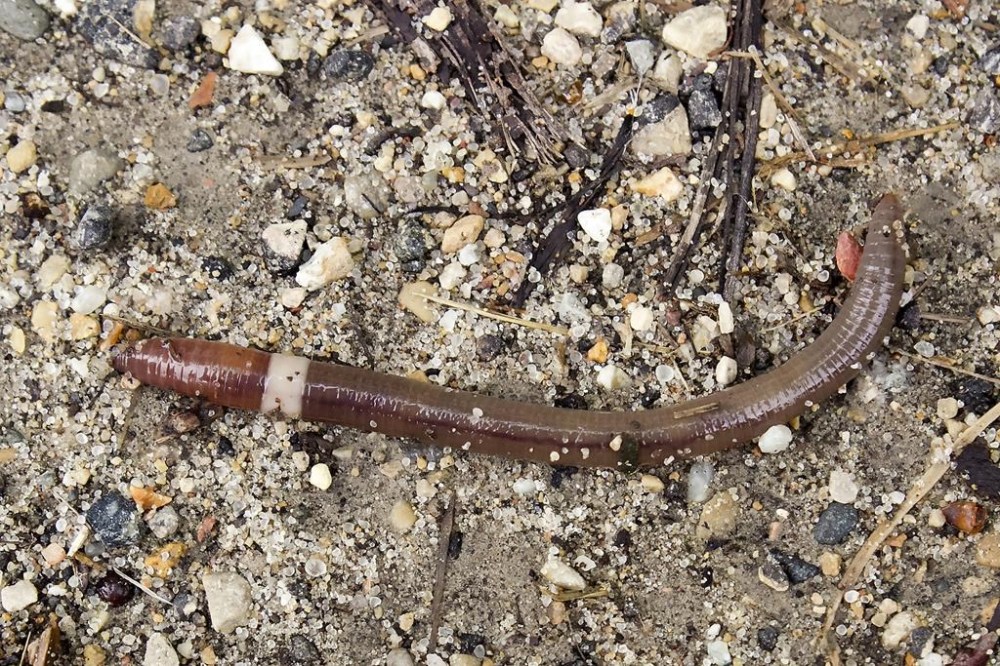
This July 2, 2014, image provided by Susan Day shows a mature Asian jumping worm found in Madison, Wis. The species is distinguishable from other earthworms by the presence of a creamy gray or white band encircling its body. (Susan Day/UW–Madison Arboretum via AP)

A decline in humus would also threaten birds and other wildlife that depend on soil-dwelling insects for food.

The insatiable invertebrates, native to east-central Asia, are believed to have been introduced to the United States in the late 1800s, likely as hitchhikers in potted plants. But their existence went largely unnoticed — or perhaps underreported — until the past decade, when ecologists flagged them as problematic, according to Dr. Timothy McCay, a biology and environmental studies professor at Colgate University in Hamilton, New York.

Since then, the worms’ presence has been confirmed in 35 states across the country.

Although their annual life cycle ends in winter, Asian jumping worm cocoons survive to spawn a new generation in spring. Their tiny eggs are nearly impossible to notice in soil or mulch, but adult worms, which range from 3 to 8 inches long, are easy to spot close to the soil surface and can often be seen moving under mulch or leaf litter, McCay said.

As they devour their way through the soil, the worms leave two things behind: cocoons and castings. The cocoons are tiny and soil-colored, so they are easy to miss. However, the castings, or excrement, have a granular, coffee-ground texture that will alert you to their presence.

The glossy worms can be either gray or brown, with a smooth cream or white collar that wraps entirely around part of their bodies. When touched, they thrash from side to side, jump, and may even slither back and forth like a snake. That behavior, coupled with their ability to reproduce rapidly without a mate, gives them an advantage over predators, McCay said.

“Robins and other birds, shrews, garter snakes, and amphibians like toads may not be able to effectively suppress their populations,” he said.

McCay, whose research focuses on understanding how the worms invade intact forests, and their effect on forest biodiversity, cautions that “gardeners should do what they can to avoid spreading jumping worms to new areas.” Because the worms typically move into forests from nearby gardens, he said, control in home and community gardens is necessary to slow their invasion into natural habitats.
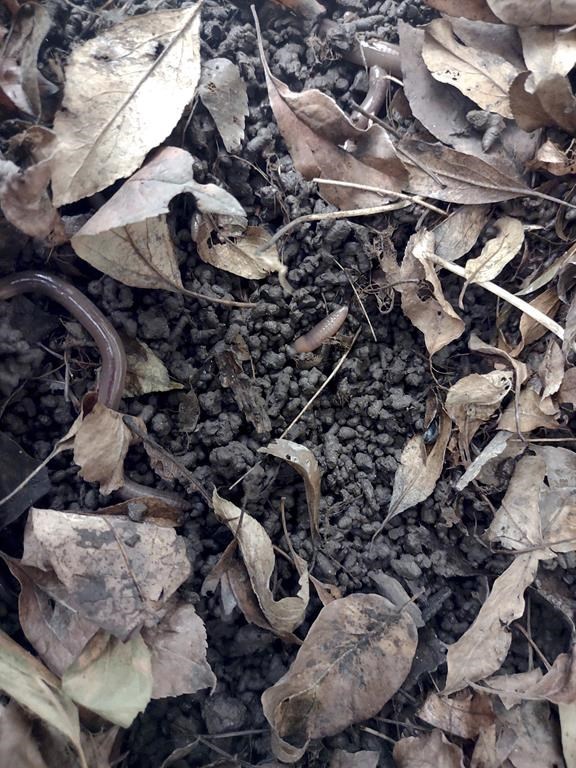
This September 2022 photo provided by Dr. Timothy McCay shows Asian jumping worms in Hamilton, N.Y., wriggling in damaged soil that bares the coffee-ground texture indicative of their presence. (Timothy McCay via AP)

So during this season of plant dividing and swapping, gardeners must be vigilant. Keep an eye out for the worms’ castings, a tell-tale sign of their presence. Inspect the soil clinging to plant roots and in the ground surrounding them. In addition, McCay advises, do not dispose of waste from infected gardens into nearby forests, and share only plants that have been repotted after their roots have been cleaned of clinging soil.

Unfortunately, there are no good control measures available for established populations of jumping worms. But McCay said picking them out by hand and dropping them into containers of vinegar will reduce their numbers. He knows of one gardener in Susquehanna County, Pennsylvania, who removed 51,000 worms that way in 2021.

—-

Jessica Damiano writes regular gardening columns for The Associated Press. She publishes a Gardening Calendar and Weekly Dirt Newsletter. Sign up here for weekly gardening tips and advice.

For more AP gardening stories, go to https://apnews.com/hub/gardening.

Report Error Submit a Tip

More Stories

Size up ex interest for what it is: trouble

Maureen Scurfield 4 minute read 2:00 AM CDT

DEAR MISS LONELYHEARTS: I spotted a familiar male figure at the beach, seeing him from behind. It had to be my old love from Grade 12. I’d know that big body anywhere. He was a football player and weightlifter — a real find in my graduation year. Why? I was five-foot-11 in heels. We were together for a few months, through graduation, but broke up shortly after. Mutual height can only get you so far.

I followed the big guy into the water at the lake, and tapped him on the shoulder. My high school ex turned around, holding a small child in his big arms. Within two minutes, his wife was suddenly at his side! I saw her wedding ring.

So much for that, or so I thought. But a few days later I got a phone call at my work, and my old love said he wanted to talk, now that there’d be no one listening in.

He went on to say how great it was to see me again, and he wanted to apologize for what an “awkward guy” he was in high school. He said he stopped calling me back then because he didn’t feel he was up to keeping someone like me interested.

Physical activity ‘for every single child’

Maggie Macintosh 6 minute read Preview

Physical activity ‘for every single child’

Maggie Macintosh 6 minute read Updated: Yesterday at 6:55 PM CDT

Manitoba is overhauling phys-ed class and requiring all high school students to regularly work up a sweat on school grounds to graduate.

Premier Wab Kinew announced on Thursday that a new curriculum is being piloted across the kindergarten to Grade 12 system this fall.

Changes to phys-ed and health education — which apply to all grades, but Grade 11 and 12 students, in particular — will ensure these mandatory subjects are delivered entirely in-person, starting in the 2028-29 school year.

The policy is called “Every Body, Every Day.”

Read
Updated: Yesterday at 6:55 PM CDT

Ex-MP Mark faces more charges after 445 guns, explosives found at Dauphin home

Scott Billeck 5 minute read Preview

Ex-MP Mark faces more charges after 445 guns, explosives found at Dauphin home

Scott Billeck 5 minute read Wednesday, Aug. 26, 2026

A former member of Parliament accused of firearms trafficking has been hit with 26 new charges after an RCMP investigation uncovered 445 guns and more than four times the legal limit of explosives at his Dauphin home.

Read
Wednesday, Aug. 26, 2026

Journalling club looking for folks up for a scrap

Sheldon Birnie 5 minute read Preview

Journalling club looking for folks up for a scrap

Sheldon Birnie 5 minute read 2:00 AM CDT

On any given Monday evening this summer, Katie Borgfjord could be found scrapping and yapping with friends and strangers alike, building community one collage at a time.

Borgfjord is the creative force behind Scrap and Yap, a local journalling club that hosts workshops and drop-in events that launched in January. This summer, she set up shop at the weekly Riverview Community Centre’s Monday Markets, inviting visitors of all ages to pull up a chair and get crafty for a while.

“We have magazines, stickers, scrap paper, glue, scissors, stamps, anything you might want to just let your creativity out,” Borgfjord, 26, says.

“It’s different every time. Usually a few people will drop in, some will stay the whole time. My favourite is when people just drop in who have never heard of us before. I hope that it helps spark some creativity.”

Read
2:00 AM CDT

Doctor pays $500K to revamp courtyard at care home where he works

By Zoe Pierce 4 minute read Preview

Doctor pays $500K to revamp courtyard at care home where he works

By Zoe Pierce 4 minute read Yesterday at 5:06 PM CDT

Fifty years after Dr. Pravinsagar Mehta began caring for residents at Actionmarguerite, a courtyard he had long watched deteriorate is getting a new life after he and his wife committed $500,000 to its redevelopment and long-term maintenance.

The renewed courtyard at Actionmarguerite St. Boniface on Despins Street will officially open Friday, giving its 299 residents an accessible place to spend time outside.

When Mehta, now 80, began working at St. Boniface Home in 1976, the new courtyard reminded him of a park near his childhood home in Uganda — one of the highlights of his upbringing.

“I said, ‘Wow, isn’t it amazing that I can go out, sit outside, and relax there?’” Mehta recalled.

Read
Yesterday at 5:06 PM CDT

Manitoba Hydro’s strategy: Deny, deny, deny

Tim Sale 5 minute read Preview

Manitoba Hydro’s strategy: Deny, deny, deny

Tim Sale 5 minute read 2:00 AM CDT

Here’s a good story…

A man walks into your office and says, “Have I got a deal for you! I want $3 billion (plus perhaps a bit more) to build you something that you might use three or even four times a year, for maybe 30-60 hours each time. Sign here.”

You might respond… “and I’ve got a lovely bridge for sale…”

That is exactly what Manitoba Hydro wants — $3 billion or more, plus the fossil fuel bonus for peak load events that happen a few times each year. They assure us that the gas turbines will only be used very occasionally. At the same time, they tell us that we are headed for a crisis of energy supply by 2030.

Read
2:00 AM CDT