

Rebuilding better structures crucial after spring-flood toll: infrastructure minister
Advertisement
Read this article for free:
or
Already have an account? Log in here »
To continue reading, please subscribe:

Digital Subscription
One year of digital access for only $205*
- Enjoy unlimited reading on winnipegfreepress.com
- Read the E-Edition, our digital replica newspaper
- Access News Break, our award-winning app
- Play interactive puzzles
*First annual payment billed as $205.00 + GST for one year. This annual subscription will automatically renew at $233.00 + GST every 52 weeks (10% off the regular annual price of $259.35). Offer available to new and qualified returning subscribers only. Cancel any time.
To continue reading, please subscribe:
Add Free Press access to your Brandon Sun subscription for only an additional
$1 for the first 4 weeks*
- Enjoy unlimited reading on winnipegfreepress.com
- Read the E-Edition, our digital replica newspaper
- Access News Break, our award-winning app
- Play interactive puzzles
*Your next Brandon Sun subscription payment will increase by $1.00 and you will be charged $17.95 plus GST for four weeks. After four weeks, your payment will increase to $24.95 plus GST every four weeks.
Read unlimited articles for free today:
or
Already have an account? Log in here »
Hey there, time traveller!
This article was published 20/10/2022 (1436 days ago), so information in it may no longer be current.
With taxpayers set to cover a massive bill for last spring’s flooding, attention is turning to provincial mitigation efforts as natural disasters and extreme weather are forecast to increase with climate change.
Infrastructure Minister Doyle Piwniuk said the Manitoba government is focused on rebuilding “better” after the second-most expensive flood event in more than 20 years. The price tag is at $200 million and rising.
Manitoba suffered significant spring and summer losses — particularly in the Red River Valley, Duck Mountain and Porcupine Mountain regions — with some critical infrastructure in need of replacement, Piwniuk said in an interview Thursday.
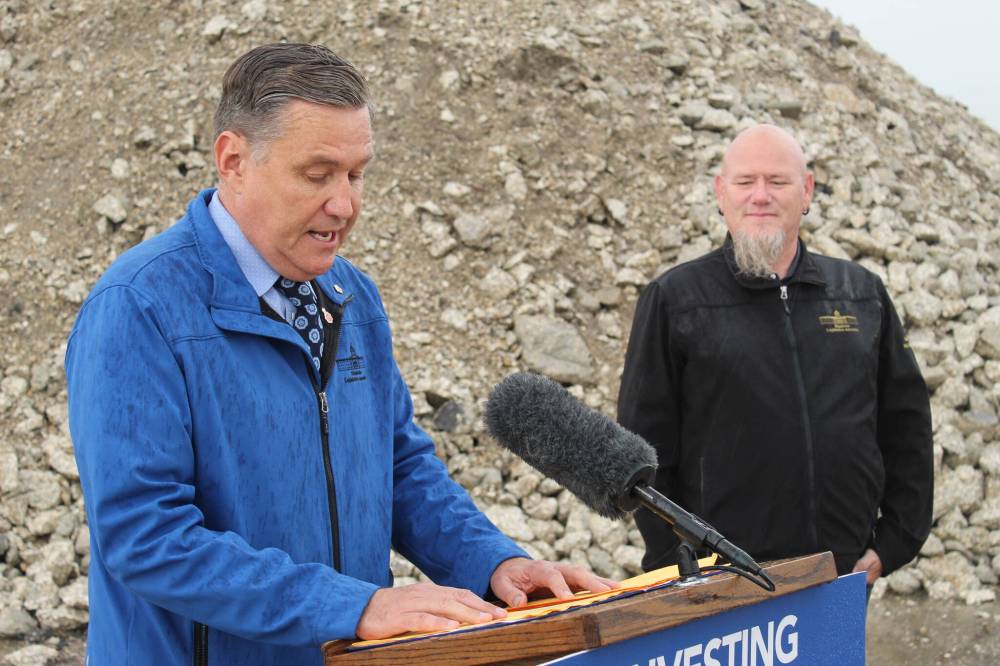
JORDAN ROSS THE CARILLON
Infrastructure Minister Doyle Piwniuk said the Manitoba government is focused on rebuilding “better” after the second-most expensive flood event in more than 20 years.
“It’s going to take some time,” Piwniuk said, explaining that flood damage shaved decades off some expected infrastructure lifespans. “(Some) structures are to a point where we’re going to have to replace them, so it will be a substantial amount of time to design a newer structure that would probably withstand future floods.
“But we have to invest. We have to do better than what we had.”
Designs to bolster critical infrastructure against a one-in-100, or one-in-200-year flood event are incorporated in new construction projects and, as repairs to roads, bridges and structures damaged in the spring continue, the same approach will be taken, the minister said.
“We’re seeing that over and over, especially with municipal roads — you put the same culverts in, do the same thing, and then year after year it gets blown out. It’s the definition of insanity,” he said.
About 24 per cent of this year’s $467.6 million highways budget is earmarked for flood-mitigation or climate-resiliency projects. The province has also budgeted $32.3 million for water-related infrastructure.
There are 64 climate-resiliency projects on the province’s books for the next three years, ranging from culvert replacements to the $600 million Lake Manitoba-Lake St. Martin Outlet Channel Project. Another $717,000 from the province’s mitigation and preparedness program will be directed to municipalities to increase their ability to weather natural disasters.
The vulnerability of critical infrastructure to drought, heat waves and floods should be top of mind for governments, as experts anticipate an increase in extreme weather events, Prairie Climate Centre co-director Danny Blair said.
The University of Winnipeg-based organization assists government, the private sector and other organizations to mitigate and adapt to climate change.
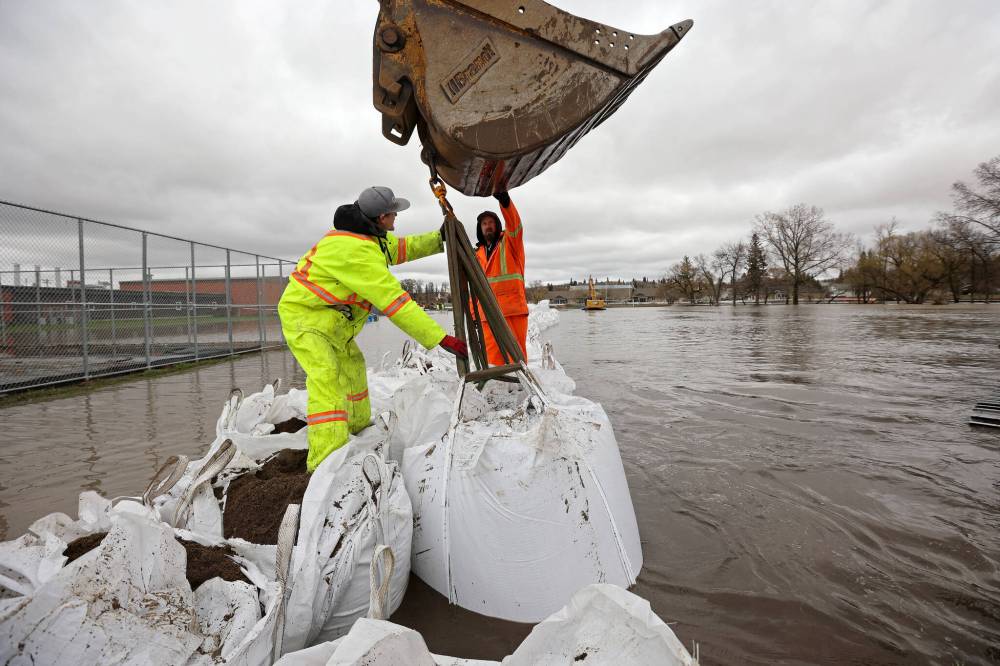
“Naturally, even without the effects of climate change tacked on top of it, our climate is just incredibly variable,” said Blair. “We’re quite resilient, but we really need to think carefully about are we resilient enough, are we prepared enough, for the kind of things the Prairie Climate Centre, and all affiliated climate centres, are saying: it’s going to get worse.”
Blair said projections point towards significant changes when it comes to the climate, and urgent investments and policy change can help governments protect human and animal health, transportation routes, food and supply chains and their bottom lines.
“Investments we make today will, in the long run, reduce our vulnerability and the cost of the damages that might be inevitable, or the events that might be inevitable,” he said. “Spend it in prevention rather than reaction or recovery.”
Piwniuk said his department is working closely with the federal government and municipalities to make sure all dollars available through the programs are being put toward infrastructure improvements and disaster mitigation.
Improving existing water-control structures, working with Ottawa to advance new projects and getting the outlet channels project built are also part of the province’s strategy, he said.
Opposition Leader Wab Kinew argued the Progressive Conservative government has fallen behind on flood-mitigation projects — including the outlet channels project — and infrastructure spending.

He pointed to budget documents showing the province under-spent its water-infrastructure budget by $10.5 million last year. Government officials said delays getting projects to the construction phase were behind the shortfall.
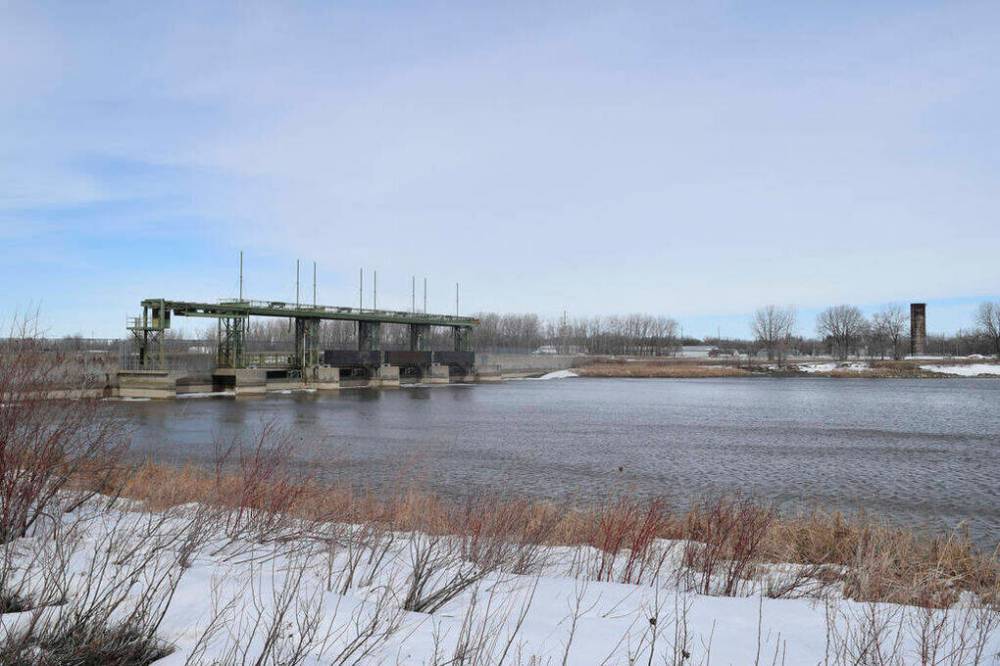
WINNIPEG FREE PRESS FILES
About 24 per cent of this year’s $467.6 million highways budget is earmarked for flood-mitigation or climate-resiliency projects.
Frozen municipal funding has also left local governments with less money to appropriately maintain drains, culverts and ditches, which contributes to overland flooding, the NDP MLA said.
“These narrow decisions that the PCs take have big, real-world impacts in the climate-change present that our province inhabits,” Kinew said. “We need to be making more forward-thinking public policy decisions and working with municipalities.”
“We’re going to have a ton of water in Manitoba’s future. We need to be able to move that around in a way that protects communities and protects the environment,” he said.
danielle.dasilva@freepress.mb.ca