A riveting refrain

Connections between music and the mind made in compelling chronicle

Advertisement

Advertise with us

Music is nothing more than “auditory cheesecake.”

Read this article for free:

or

Already have an account? Log in here »

To continue reading, please subscribe:

Subscribe and receive a limited-edition Free Press branded hat or tote.

Digital Subscription

One year of digital access for only $205*

  • Enjoy unlimited reading on winnipegfreepress.com
  • Read the E-Edition, our digital replica newspaper
  • Access News Break, our award-winning app
  • Play interactive puzzles

*First annual payment billed as $205.00 + GST for one year. This annual subscription will automatically renew at $233.00 + GST every 52 weeks (10% off the regular annual price of $259.35). Offer available to new and qualified returning subscribers only. Cancel any time.

To continue reading, please subscribe:

Add Free Press access to your Brandon Sun subscription for only an additional

$1 for the first 4 weeks*

  • Enjoy unlimited reading on winnipegfreepress.com
  • Read the E-Edition, our digital replica newspaper
  • Access News Break, our award-winning app
  • Play interactive puzzles
Start now

*Your next Brandon Sun subscription payment will increase by $1.00 and you will be charged $17.95 plus GST for four weeks. After four weeks, your payment will increase to $24.95 plus GST every four weeks.

Hey there, time traveller!
This article was published 05/11/2022 (1354 days ago), so information in it may no longer be current.

Music is nothing more than “auditory cheesecake.”

So declared Harvard University cognitive psychologist and best-selling author Steven Pinker in his 1997 book How the Mind Works.

Former Globe and Mail health reporter Adriana Barton’s book Wired for Music amounts to a rebuttal of Pinker’s glib dismissal of music’s role in our lives.
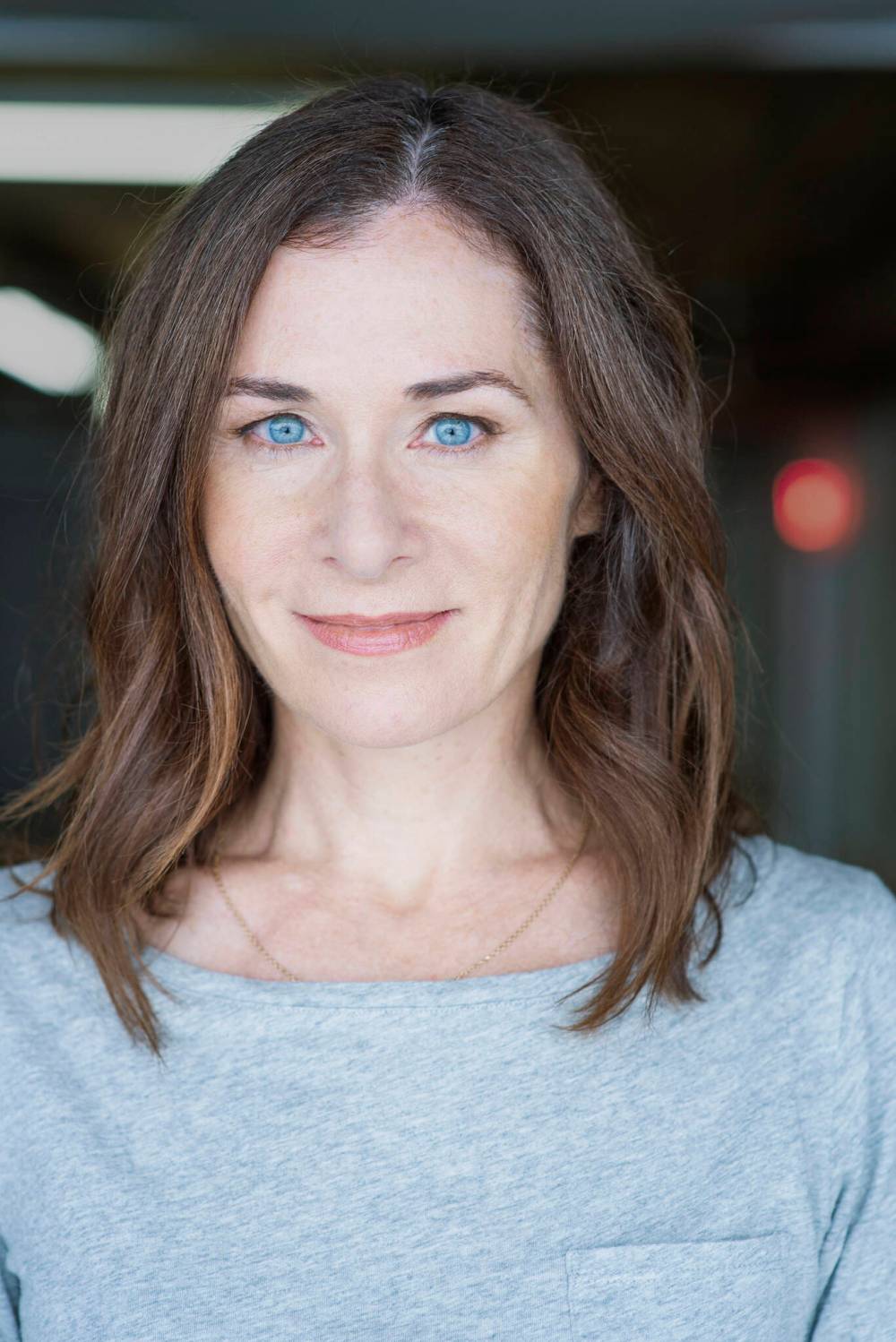
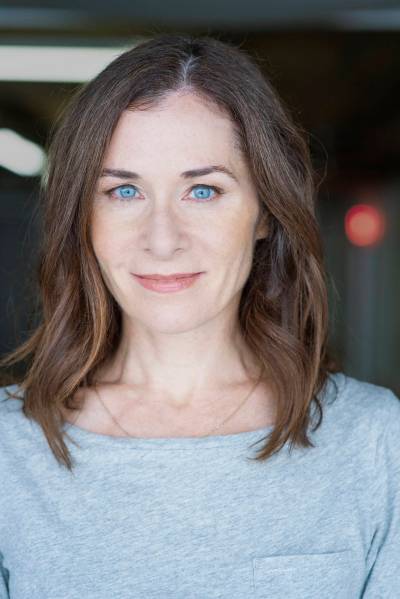
Dina Goldstein photo
                                Author Adriana Barton’s exploration of the cognitive effects of music is part memoir, part scientific inquiry.

Dina Goldstein photo

Author Adriana Barton’s exploration of the cognitive effects of music is part memoir, part scientific inquiry.

Music — appreciated, but still more so when created — facilitates a fount of benefits, everything from buffing cognitive skills and inhibiting dementia to general psychological well-being, according to Barton.

Her book is a hybrid. It’s part memoir (she’s a failed concert cellist, dogged by chronic trauma and remorse) and part scientific inquiry (distillations of medical studies, interviews with neuroscientists and recountings of biological and anthropological research).

The memoir episodes are an interesting aside that help explain and underline the genesis of her investigations. But on the whole, they pale beside her research.

She traces some interesting evolutions in how we regard our interactions with music.

For example, people struggling with depression often surround themselves with sad music. Psychologists used to consider this behaviour “maladaptive, a form of wallowing,” she writes.

No longer.

Apparently melancholy music beneficially befriends us, and in the words of one clinical study participant, helps us “cry a little and then feel relieved, and move on.”

The book’s title is a clever double entendre.

Wired is employed in the sense of we humans being constitutionally programmed to connect to music. But wired is also used here in the slangy sense of our being nervously excited or stimulated by music.

Most of Barton’s book tends toward the former meaning, but it’s not without a tilt toward the latter.

Wired for Music

Wired for Music

Her explorations of music in the latter sense of wired are coupled with a one-time personal dalliance with a powerful psychotropic drug native to South America, ayahuasca.

The combined effect of music and psychedelics on the human brain is nothing short of amazing, in her telling.

Barton’s tripping experiment is no mere self-indulgent search for kicks. It’s a first-person attempt to understand how melodies and rhythms “shape the drug experience” in ways that are therapeutic, or at least lead to psychological betterment. And it aptly supports her documentation of music-cum-drug enhanced psychological growth across different cultures around the globe.

Apart from an occasional tendency to rapidly pile too many studies on top of each other, her prose flows, and is almost conversational in tone.

Barton does a nice job of finding the science in music, and the music in that science.

Douglas J. Johnston is a Winnipeg lawyer and writer.

Report Error Submit a Tip

More Stories

Animal rescue worker reportedly killed in dog attack

Morgan Modjeski 4 minute read Preview

Animal rescue worker reportedly killed in dog attack

Morgan Modjeski 4 minute read Friday, Jul. 17, 2026

Police are investigating after a woman died on the Sandy Bay First Nation, reportedly after being attacked by dogs.

The woman was identified by family as 37-year-old Amanda Nobiss.

“It’s just disbelief,” said Sherri Nobiss, her mother, in a phone call. Her family is devastated by the loss. “You just want to know what has happened.”

She said Amanda was a dedicated animal advocate who was volunteering with K9 Advocacy Manitoba in the community at the time. Amanda, who was from Winnipeg, is pictured with a dog in almost all of her photos on social media.

Read
Friday, Jul. 17, 2026

CUPE leader Delbridge dies

Malak Abas 4 minute read Preview

CUPE leader Delbridge dies

Malak Abas 4 minute read Updated: 4:13 PM CDT

Winnipeg union leader Gord Delbridge has died.

The Canadian Union of Public Employees Local 500 announced Tuesday its president had died Monday night after a sudden medical incident. He was 55 years old.

His colleagues described him as a friend, mentor and “staunch trade unionist” who fought against the privatization of public work.

“Winnipeg meant everything to Gord, and I really do feel like Gord should mean everything to Winnipeg,” CUPE Manitoba president Gina McKay told reporters Tuesday as she wiped away tears.

Read
Updated: 4:13 PM CDT

Search continues for brothers feared drowned at Nutimik Lake

Zoe Pierce 6 minute read Preview

Search continues for brothers feared drowned at Nutimik Lake

Zoe Pierce 6 minute read Updated: Yesterday at 6:39 PM CDT

Search-and-rescue crews continued efforts Monday to locate two boys who are presumed drowned after falling into fast-moving rapids at Nutimik Lake on the weekend, as community members and Manitoba Parks begin conversations about preventing future tragedies.

The boys, identified as brothers Aaron Au Ramirez, 13, and Maximo Au Ramirez, 10, were visiting Whiteshell Provincial Park with their father and some friends when they entered the water near the Sturgeon Falls Trail Saturday afternoon.

Lac du Bonnet RCMP received a report of a possible drowning at about 12:40 p.m. Police, along with local emergency responders, searched the shoreline and waterways but were unable to find the boys, RCMP said in a news release.

The Manitoba RCMP Underwater Recovery Team and the Hutterian Emergency Aquatic Response Team were later deployed to assist with the search.

Read
Updated: Yesterday at 6:39 PM CDT

WestJet adding two new direct flights from Winnipeg to warm-weather destinations

Aaron Epp 3 minute read Preview

WestJet adding two new direct flights from Winnipeg to warm-weather destinations

Aaron Epp 3 minute read Updated: Yesterday at 4:46 PM CDT

WestJet announced on Monday it will launch non-stop routes between Winnipeg and Punta Cana, Dominican Republic, and between Winnipeg and Belize City, Belize.

Read
Updated: Yesterday at 4:46 PM CDT

Teacher disciplinary panel will make history today

Maggie Macintosh 4 minute read Preview

Teacher disciplinary panel will make history today

Maggie Macintosh 4 minute read 6:27 AM CDT

A professional disciplinary panel will assemble today to hear serious allegations against a Manitoba teacher.

The public hearing — a first-of-its-kind videoconference scheduled for 10 a.m. — will take place more than 18 months after the province launched a professional disciplinary system and teacher registry.

“In a hearing, it’s the teacher against me, basically,” said Noni Classen, Manitoba’s independent commissioner of teacher professional conduct.

Both parties are expected to make their respective arguments in front of a three-person panel consisting of one teacher, one non-teacher and one individual nominated by the Manitoba School Boards Association.

Read
6:27 AM CDT

Big spike in catalytic converter thefts

Chris Kitching 6 minute read Preview

Big spike in catalytic converter thefts

Chris Kitching 6 minute read Yesterday at 5:46 PM CDT

Harvey Tschetter didn’t know someone was under his SUV when he was roused by the sounds of a power saw cutting metal and took a look around the vehicle outside his North Kildonan condo.

After finding nothing untoward and going back inside, he heard repeated hammer strikes and saw a vehicle idling next to his Mitsubishi RVR, which he’d purchased two days earlier. Someone was trying to steal the SUV’s catalytic converter.

“I ran out there and I screamed at them, ‘What the F do you think you’re doing?’ They crawled out from under my car, held the hammer up like, don’t come near me, and drove off,” Tschetter said of the June 8 incident. “It was 5 a.m. and completely light out. I can’t believe how brazen they were. They showed no fear.”

The incident happened amid a sharp year-over-year increase in reports of catalytic converter thefts or attempted thefts to Manitoba Public Insurance, after record highs in 2021 and 2022 led to increased enforcement, provincial anti-theft legislation and a period of significant decline.

Read
Yesterday at 5:46 PM CDT