

What’s next for Australia after World Cup exit?
Advertisement
Read this article for free:
or
Already have an account? Log in here »
To continue reading, please subscribe:

Digital Subscription
One year of digital access for only $205*
- Enjoy unlimited reading on winnipegfreepress.com
- Read the E-Edition, our digital replica newspaper
- Access News Break, our award-winning app
- Play interactive puzzles
*First annual payment billed as $205.00 + GST for one year. This annual subscription will automatically renew at $233.00 + GST every 52 weeks (10% off the regular annual price of $259.35). Offer available to new and qualified returning subscribers only. Cancel any time.
To continue reading, please subscribe:
Add Free Press access to your Brandon Sun subscription for only an additional
$1 for the first 4 weeks*
- Enjoy unlimited reading on winnipegfreepress.com
- Read the E-Edition, our digital replica newspaper
- Access News Break, our award-winning app
- Play interactive puzzles
*Your next Brandon Sun subscription payment will increase by $1.00 and you will be charged $17.95 plus GST for four weeks. After four weeks, your payment will increase to $24.95 plus GST every four weeks.
Read unlimited articles for free today:
or
Already have an account? Log in here »
Hey there, time traveller!
This article was published 04/12/2022 (1351 days ago), so information in it may no longer be current.
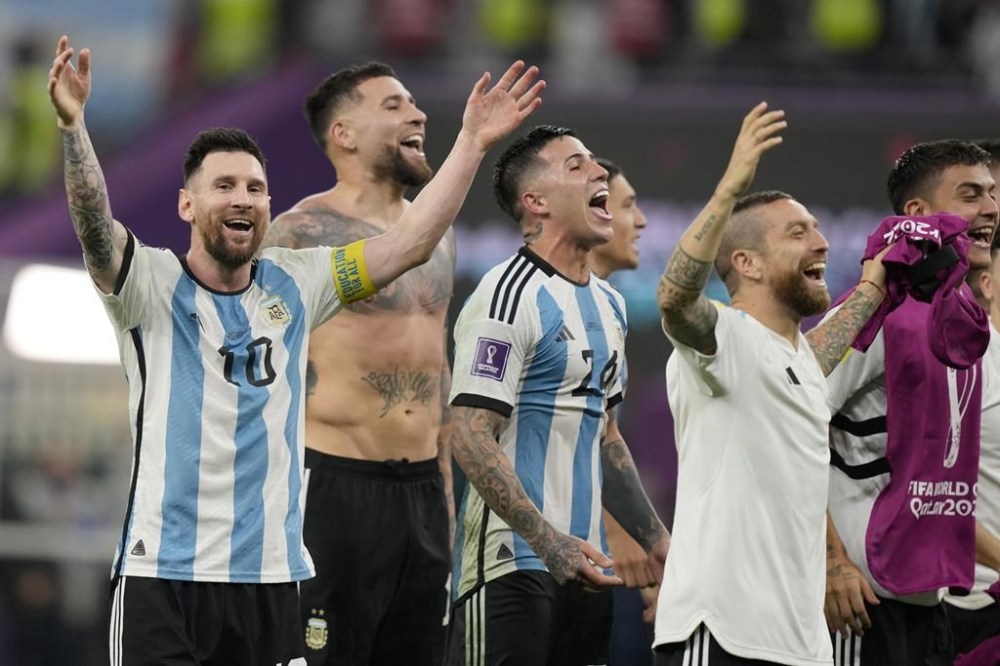
DOHA, Qatar (AP) — Australia’s World Cup adventure came to an end against a Lionel Messi-inspired Argentina. A 2-1 loss at the Ahmad Bin Ali Stadium matched its best-ever performance at soccer’s biggest tournament by reaching the round of 16 for only the second time in its history.
EXPECTATION VS. PERFORMANCE
Drawn in Group D with defending champion France and Euro 2020 semifinalists Denmark, the Socceroos had a tough task just to reach the round of 16. A 4-1 loss to France in its opening game was a worrying start.
Back-to-back wins against Tunisia and Denmark saw the Aussies pick up their highest points total in a group stage and emulate the performance from 2006 by qualifying for the knockouts.
Few would have expected Australia to get past Argentina, but it gave Messi and co. a real fright with a late fightback Saturday.
“Everyone said before we came here we were the worst Socceroo team ever to qualify for a World Cup, but that’s gone now,” said coach Graham Arnold.
WHO’S OUT?
Arnold’s contract is up and his future is uncertain.
“I need a break, a rest and no doubt I’ll have some good discussions with the organisation,” he said after the match.
Six of the players who made the field for Australia against Argentina are in their 30s, with Aaron Mooy the oldest of those at 32.
Mitchell Duke, who scored the winner against Tunisia, is 31 and so is Matthew Leckie, who struck against Denmark.
How many of those will still be around in four years’ time remains to be seen.
WHO’S NEXT?
Garang Kuol, at 18 years and 79 days, became the youngest player to appear in a World Cup knockout match since Pele in 1958.
And the teenager, who is joining Premier League club Newcastle in January, was close to making himself an Australian hero when forcing a late save from Argentina goalkeeper Emi Martinez.
Stoke defender Harry Souttar, at 24, is another who could have a bright future after enhancing his reputation with impressive performances at the World Cup.

Arnold used his post-match news conference to lobby for a national soccer development centre in Australia to produce more high-quality players.
“We need to spend money and get help from government to put some money in the game to help develop kids,” he said. “One thing I’d really love to see before I finish up in football is that the government build us a house. We don’t have a home. We’ve been homeless since I’ve been involved for 37 years in the national teams.”
WHAT’S NEXT?
Australia has a quick chance to build on the success of the World Cup when it returns to Qatar for the 2023 Asian Cup.
It won the tournament in 2015, but will face tough competition, with Japan, South Korea and Saudi Arabia also qualifying.

The performances of those nations, along with Australia, at the World Cup is evidence of the growing strength of soccer in the region.
___
James Robson is at https://twitter.com/jamesalanrobson
___
AP World Cup coverage: https://apnews.com/hub/world-cup and https://twitter.com/AP_Sports
Related Articles
Paulo Dybala, the Serie A standout not needed by Argentina









Advertisement Advertise With Us
Advertisement Advertise With Us