

Canada commits $800 million to support Indigenous-led conservation projects
Advertisement
Read this article for free:
or
Already have an account? Log in here »
To continue reading, please subscribe:
Digital Subscription
One year of digital access for only $1.44 a week*
- Enjoy unlimited reading on winnipegfreepress.com
- Read the E-Edition, our digital replica newspaper
- Access News Break, our award-winning app
- Play interactive puzzles
*Billed as $5.77 plus GST every four weeks. After 52 weeks, price increases to the regular rate of $19.95 plus GST every four weeks. Offer available to new and qualified returning subscribers only. Cancel any time.
To continue reading, please subscribe:
Add Free Press access to your Brandon Sun subscription for only an additional
$1 for the first 4 weeks*
- Enjoy unlimited reading on winnipegfreepress.com
- Read the E-Edition, our digital replica newspaper
- Access News Break, our award-winning app
- Play interactive puzzles
*Your next Brandon Sun subscription payment will increase by $1.00 and you will be charged $17.95 plus GST for four weeks. After four weeks, your payment will increase to $24.95 plus GST every four weeks.
Read unlimited articles for free today:
or
Already have an account? Log in here »
Hey there, time traveller!
This article was published 07/12/2022 (1273 days ago), so information in it may no longer be current.
MONTREAL – Ottawa will spend up to $800 million to support four major Indigenous-led conservation projects across the country covering nearly one million square kilometres of land and water, Prime Minister Justin Trudeau announced Wednesday.
Trudeau made the announcement at the Biosphere environment museum in Montreal accompanied by Indigenous leaders and federal Environment Minister Steven Guilbeault as a UN meeting on global biodiversity, known as COP15, takes place in the city.
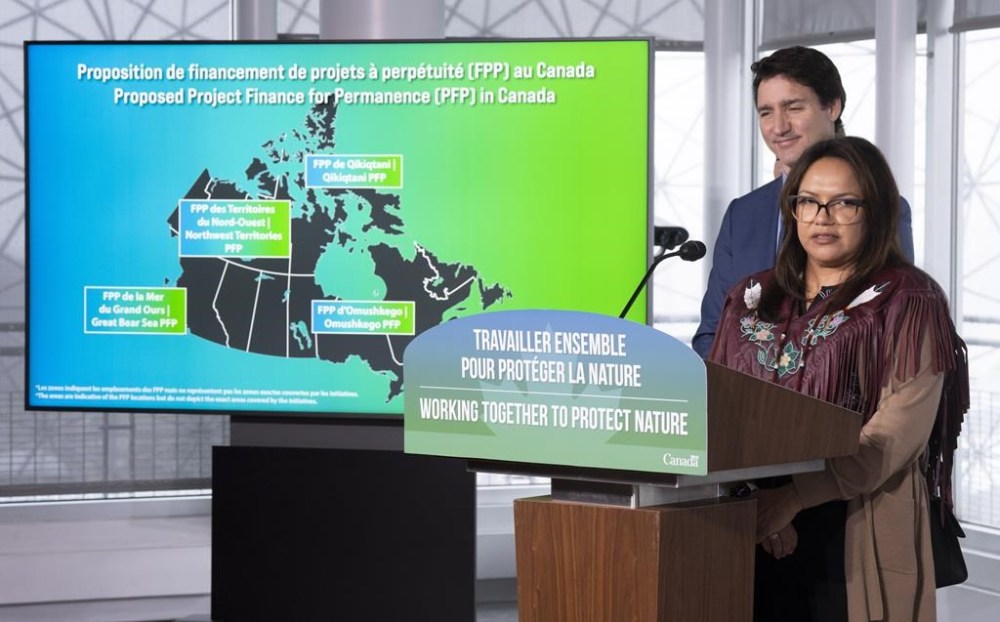
Trudeau said the four projects — which will be located in British Columbia, the Northwest Territories, northern Ontario and Nunavut — will be developed in partnership with the communities in question.
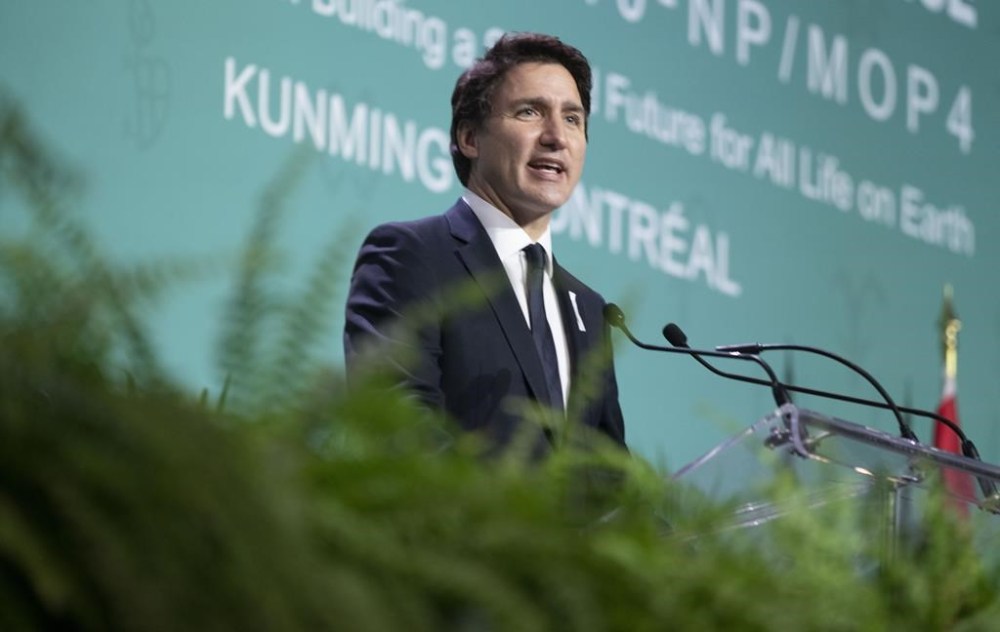
“Each of these projects is different, because each of these projects is being designed by communities, for communities,” he said.
Chief Jackson Lafferty, of the Tlicho government in the Northwest Territories, said Indigenous groups have long been working to protect their lands and water but have lacked resources and tools to fully do so.
Lafferty, who attended the announcement, called the funding “a significant step forward on a path to reconciliation across Canada.”
Among the projects to be funded is a marine conservation and sustainability initiative in the Great Bear Sea along British Columbia’s north coast, championed by 17 First Nations in the area.
Another project includes protection for boreal forests, rivers and lands across the Northwest Territories, spearheaded by 30 Indigenous governments.
Funds will also go to an Inuit-led project involving waters and land in Nunavut’s Qikiqtani region and to a project in western James Bay to protect the world’s third largest wetland, led by the Omushkego Cree in Ontario.
Trudeau told reporters that the exact details of the agreements have yet to be worked out — including which portions of the lands will be shielded from resource extraction.
The Indigenous partners, he said, will be able to decide which lands need to be completely protected and where there can be “responsible, targeted development.”
“We know we need jobs, we know we need protected areas, we know we need economic development,” he said. “And nobody knows that, and the importance of that balance, better than Indigenous communities themselves that have been left out of this equation, not just in Canada but around the world, for too long.”
Dallas Smith, president of Nanwakolas Council, said the B.C. funding to help protect the Great Bear Sea would allow Indigenous groups to build on previous agreements to protect the terrestrial lands of Great Bear Rainforest, which were announced about 15 years ago.
“I did media all over the world, and I got home and my elder said, ‘Don’t sprain your arm patting yourself on the back, because until you do the marine component, it doesn’t mean anything,'” he said.
Grand Chief Alison Linklater of the Mushkegowuk Council, which represents seven Cree communities in northern Ontario, said their traditional territory includes ancient peatlands that store “billions of tons” of carbon, as well as wetlands that are home to many migratory birds and fish, and 1,200 kilometres of coastline.
She said caring for the lands is one of her sacred duties as grand chief and one of the main concerns of the people she represents.
“Without our lands and waters we do not exist,” she told the news conference.
In a statement, the federal government said the program would employ a “unique funding model” bringing together government, Indigenous Peoples, philanthropic partners and other investors to secure long-term financing for community-led conservation projects.
The government did not specify how much of the funding would be allocated for each project.
This report by The Canadian Press was first published Dec. 7, 2022.