Climate change affecting Christmas tree farms across Canada, expert say

Advertisement

Advertise with us

VANCOUVER - The effects of climate change are taking a toll on Christmas tree farms across Canada, with one forestry expert and the head of the Canadian Christmas Tree Association saying the sector that's already undergoing shifts will need to adapt.

Read this article for free:


or

Already have an account? Log in here »

To continue reading, please subscribe:

Subscribe and receive a limited-edition Free Press branded hat or tote.

Digital Subscription

One year of digital access for only $205*

  • Enjoy unlimited reading on winnipegfreepress.com
  • Read the E-Edition, our digital replica newspaper
  • Access News Break, our award-winning app
  • Play interactive puzzles

*First annual payment billed as $205.00 + GST for one year. This annual subscription will automatically renew at $233.00 + GST every 52 weeks (10% off the regular annual price of $259.35). Offer available to new and qualified returning subscribers only. Cancel any time.

To continue reading, please subscribe:

Add Free Press access to your Brandon Sun subscription for only an additional

$1 for the first 4 weeks*

  • Enjoy unlimited reading on winnipegfreepress.com
  • Read the E-Edition, our digital replica newspaper
  • Access News Break, our award-winning app
  • Play interactive puzzles
Start now

*Your next Brandon Sun subscription payment will increase by $1.00 and you will be charged $17.95 plus GST for four weeks. After four weeks, your payment will increase to $24.95 plus GST every four weeks.

Hey there, time traveller!
This article was published 11/12/2022 (1368 days ago), so information in it may no longer be current.

VANCOUVER – The effects of climate change are taking a toll on Christmas tree farms across Canada, with one forestry expert and the head of the Canadian Christmas Tree Association saying the sector that’s already undergoing shifts will need to adapt.

The festive trees take eight to 12 years to reach the size most people look for, and young seedlings are particularly vulnerable to climate risks, said Richard Hamelin, head of the forest conservation sciences department at the University of B.C.

Much of the province has experienced prolonged drought and extreme heat over the last two summers, and the seedlings have shallow root systems that don’t reach beyond the very dry layers of soil near the surface, Hamelin explained.

A parcel of land on the Sahtlam Tree Farm is seen, in the Cowichan Valley area of Duncan, B.C., on Saturday, July 31, 2021. The effects of climate change are taking a toll on Christmas tree farms in British Columbia and beyond, and one forestry expert says the sector that's already shrinking will need to adapt in the coming years. THE CANADIAN PRESS/Chad Hipolito

Meanwhile, their older counterparts may survive but lose their needles or turn brown as a result of extreme heat and drought, he said in an interview.

Seedlings and their shallow roots are also at risk of being inundated during flooding, while wet, cool soils increase the risk of root diseases, Hamelin noted.

Record-breaking atmospheric rivers of rain caused extensive flooding throughout southwestern B.C. in November 2021, but Shirley Brennan, the executive director of the Canadian Christmas Trees Association, said farmers in the province reported their seedlings mostly appeared fine and the extreme heat had been much harder on the trees.

The effects of flooding, however, may become clearer over time.

“Right now the seedlings look OK, but it’s whether or not the root system is strong enough to grow into that tree, and that’s what we don’t know,” Brennan said.

Quebec, Ontario and Nova Scotia lead the country when it comes to producing Christmas trees, and Brennan said farmers in those provinces have also been grappling with the effects of increasingly extreme, unseasonable weather.

Brennan said she has spoken with tree farmers from across southwestern Ontario and the Greater Toronto Area, some of whom told her they lost upwards of 40 per cent of their crops as they didn’t receive rain between May and August this year.

Christmas tree farmers are no strangers to drought, Brennan added.

“Drought is part of farming,” she said. “Mother nature is a silent partner in any farming commodity, whether it’s Christmas trees or whether it is corn.”

The difference, Brennan said, is the extreme, unseasonable nature of recent droughts and other climate-related events, including intense late-spring frosts in Nova Scotia in 2018 followed by eastern Ontario and western Quebec in 2020.

Brennan said she expects more tree farmers will start planting seedlings in both spring and fall, when they would normally favour planting in one season.

Hamelin noted climate change is also causing warmer weather that fuels activity among pests, which can plague trees already weakened by drought or disease.

“Just like humans, when we are stressed or when we’re more tired, we’re more susceptible to diseases. Well, trees are the same way,” he said. “All this added stress from all this heat and flooding make the trees more susceptible to pests and pathogens.”

Climate change is not the only factor challenging farmers and threatening Canada’s stock of real Christmas trees, which has been declining for several years.

Since the trees take about a decade to reach the desired size, the closure of tree farms in Canada and the United States during the 2008 recession is now being felt.

The closures have continued since then. Data from Statistics Canada shows the total area of Christmas tree farms shrunk by nearly 20,000 acres between 2011 and 2021.

The average age of a tree farmer is between 65 and 85 years old, and younger generations aren’t entering the sector as longtime farmers retire, Brennan noted.

Hamelin said the high cost of land and competition with crops that yield revenue more quickly than festive trees may also be inhibiting factors for the sector in B.C.

He pointed to some options that could help Christmas tree farmers weather the effects of climate change, including genetically selecting and breeding the strongest trees among classic Canadian speciesor importing different species from parts of the world where fir trees are better adapted to sweltering heat, such as Turkey.

The plantation-like approach to Christmas tree farming is also “completely unnatural,” leaving seedlings and young trees exposed to the sun, he said.

Christmas tree farmers could consider letting some trees grow taller, or planting seedlings in areas where more mature trees could provide some shade, he said.

“I think there are some solutions, we just need to scratch our head and realize that things are different, and in the future we just need to change the way we do things.”

This report by The Canadian Press was first published Dec. 11, 2022.

Report Error Submit a Tip

The Free Press acknowledges the financial support it receives from members of the city’s faith community, which makes our coverage of religion possible.
More Stories

Trump ramps up retaliation against Canada, banning imports of booze, other products

Kelly Geraldine Malone, The Canadian Press 6 minute read Preview

Trump ramps up retaliation against Canada, banning imports of booze, other products

Kelly Geraldine Malone, The Canadian Press 6 minute read Updated: Yesterday at 10:13 PM CDT

WASHINGTON - U.S. President Donald Trump signed new executive orders on Tuesday, ramping up retaliation after Canada imposed its latest set of duties on the United States. 

The five orders, which will take effect later this month, will completely bar imports of certain Canadian goods, including motorcycles, some dairy products and alcoholic beverages.

U.S. Trade Representative Jamieson Greer, in a statement later Tuesday, said the decision was a "natural consequence" of Canada's "discriminatory" treatment of American exports.

"After weeks of good faith and intensive efforts between U.S. and Canadian negotiators, Canada walked away from a near-final trade deal that offered better treatment than any other trading partner, and instead Canada chose to embark on senseless retaliation against the United States," Greer said in the statement.

Read
Updated: Yesterday at 10:13 PM CDT

Why our democracy depends on your vote

Erna Buffie 5 minute read 2:00 AM CDT

Some years ago, I did some pretty in-depth research on ancient Athens and its democratic system of government as part of a documentary film I was pitching. It was actually a lot of fun, because I was looking at ways their democratic beliefs and practices were both similar to and different from ours.

Some of the differences were quite striking, such as the fact that only Athenian-born males 18 years of age and over could participate. Or the fact their executive branch was selected by a totally random lottery system — a system one expert described as akin to picking names out of a phone book.

Then there was the practice of ostracism, a procedure I found particularly attractive. Essentially, every year the citizens of Athens chose a political figure who was becoming too powerful or pushing for a more authoritarian regime and voted to banish him from the city for 10 years.

Needless to say, I can think of quite a few politicians I’d like to see subjected to that procedure.

Winkler-based internet provider delivering high-speed service to 30 rural and First Nations Manitoba communities

Nicole Buffie 3 minute read Preview

Winkler-based internet provider delivering high-speed service to 30 rural and First Nations Manitoba communities

Nicole Buffie 3 minute read Yesterday at 7:12 PM CDT

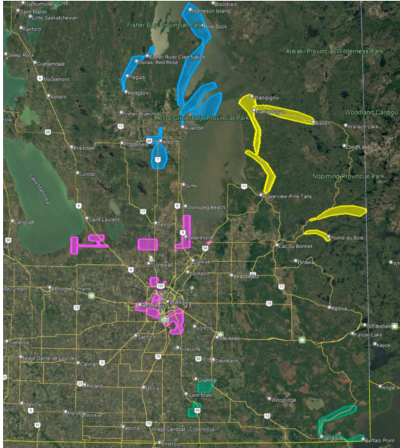
Valley Fiber says it is undertaking one of its largest fibre optic projects and is building infrastructure that will deliver internet to 10,000 homes and businesses in rural and First Nations communities across Manitoba.

“These communities will now have access to the fastest internet network in Manitoba, and it will power their lives and their business,” Ryan Klassen, chief executive officer of the Winkler-based internet provider, said Tuesday from Fisher River Cree Nation.

The province has granted Valley Fiber use of two of its underused cables on the existing Manitoba Hydro fibre optic network for up to 20 years as part of the project, which will connect nearly 30 communities — including Buffalo Point, Hollow Water, Black River and Peguis First Nations, along with Fisher River and Fox Lake Cree Nations — to high-speed internet.

Construction should be finished by 2027.

Read
Yesterday at 7:12 PM CDT

Double climate whammy hits home

Editorial 4 minute read Preview

Double climate whammy hits home

Editorial 4 minute read 2:00 AM CDT

It’s a bit of a one-two punch. First, the show-and-tell of what global warming could be bringing us. Then, the fact we’ve already failed our best chance of halting climate change.

Read
2:00 AM CDT

Flash, bang … oops: police raid leads to lawsuit

Erik Pindera 4 minute read Preview

Flash, bang … oops: police raid leads to lawsuit

Erik Pindera 4 minute read 6:00 AM CDT

A couple suing the city allege Winnipeg Police Service officers trying to execute a search warrant at their condominium complex rappelled down the side of the building, broke in their glass patio door and fired off a stun grenade before realizing they were in the wrong unit.

Saeid Ghavami and Shahla Shojaei, a married couple who are academics and scientific researchers at the University of Manitoba, filed the lawsuit in Court of King’s Bench last month over the Jan. 31, 2025 incident.

The claim names the City of Winnipeg and several officers involved in the operation, whose identities are, at this point, unknown to the couple, and are referred to as “John Does.”

Officers were attempting to execute the warrant on the third floor of the eight-storey Pembina Highway building, the court filing says. The couple lives on the fourth floor.

Read
6:00 AM CDT

‘Dynacare sucks:’ premier muses about bringing lab services back into public system after strike halted

Free Press staff 3 minute read Preview

‘Dynacare sucks:’ premier muses about bringing lab services back into public system after strike halted

Free Press staff 3 minute read 10:13 AM CDT

Manitoba’s premier said the province is looking at bringing diagnostic lab services back into the public system rather than continuing to contract Dynacare, declaring the for-profit company “sucks.”

“Maybe we’ll take over the whole system… we’re working on it, we’re looking at it, the situation is not great, this company’s making a mess — I think it’s pretty clear I’m not happy with them,” Premier Wab Kinew told CBC Radio Wednesday morning. “At the same time, nobody should be trying to use people’s health care as leverage.”

Kinew made the comments the day after the Manitoba Labour Board cut short a strike by 350 lab technicians and technologists employed by Dynacare, which administers blood, urine and other medical tests for patients in Winnipeg, Brandon and surrounding communities.

Dynacare, which is contracted by the provincial government, performs the majority of non-emergency blood and urine tests in the province.

Read
10:13 AM CDT