

Spain kicks off festivities with ‘El Gordo’ bumper lottery
Advertisement
Read this article for free:
or
Already have an account? Log in here »
To continue reading, please subscribe:

Digital Subscription
One year of digital access for only $205*
- Enjoy unlimited reading on winnipegfreepress.com
- Read the E-Edition, our digital replica newspaper
- Access News Break, our award-winning app
- Play interactive puzzles
*First annual payment billed as $205.00 + GST for one year. This annual subscription will automatically renew at $233.00 + GST every 52 weeks (10% off the regular annual price of $259.35). Offer available to new and qualified returning subscribers only. Cancel any time.
To continue reading, please subscribe:
Add Free Press access to your Brandon Sun subscription for only an additional
$1 for the first 4 weeks*
- Enjoy unlimited reading on winnipegfreepress.com
- Read the E-Edition, our digital replica newspaper
- Access News Break, our award-winning app
- Play interactive puzzles
*Your next Brandon Sun subscription payment will increase by $1.00 and you will be charged $17.95 plus GST for four weeks. After four weeks, your payment will increase to $24.95 plus GST every four weeks.
Read unlimited articles for free today:
or
Already have an account? Log in here »
Hey there, time traveller!
This article was published 22/12/2022 (1337 days ago), so information in it may no longer be current.
MADRID (AP) — Spain kicked off the winter holidays with its huge Christmas lottery known as “El Gordo,” and an unemployed Peruvian woman was among the winners of The Fat One’s top 400,000-euro ($425,000) prize Thursday.
The winning ticket number was announced in Madrid’s Teatro Real opera theater, where the woman, who was identified only by her first name, Perla, was immediately surrounded by reporters during the nationally televised event.
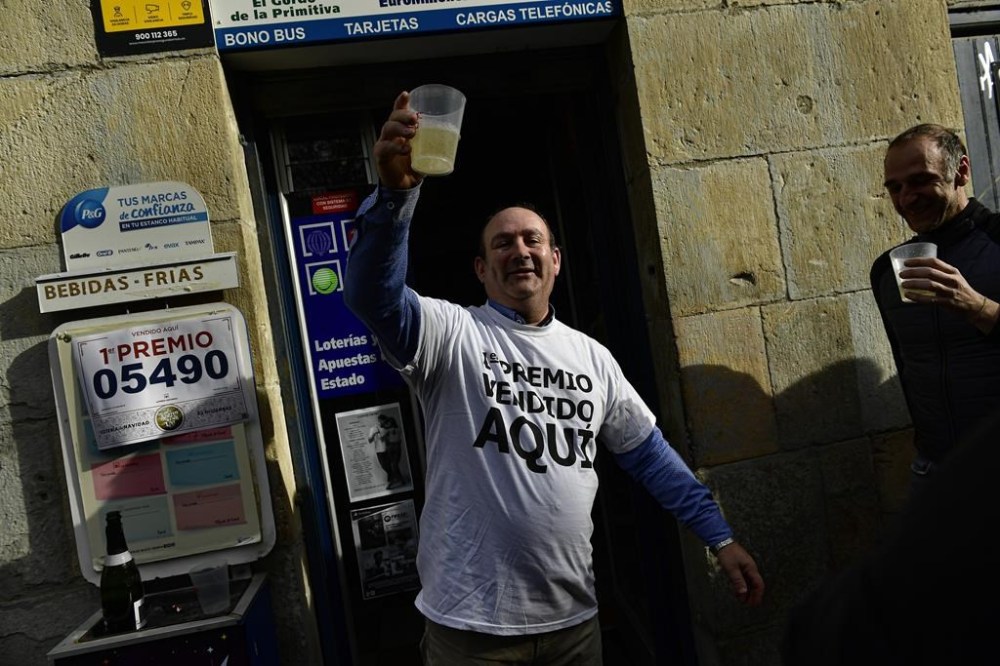
The woman said she lost her job at a café two years ago and had bought lottery tickets “everywhere I have visited this year.” She revealed she purchased the 20-euro ticket with the number 05490 that led to Thursday’s win in Spain’s northern Asturias region.

“I felt (the prize) it would strike me here today,” she told reporters excitedly while standing beside her two children.
The woman said she planned to use her lottery proceeds, which amount to some 325,000 euros after taxes, to buy an apartment in Madrid, where her children attend primary school and to make a donation to an unspecified church.
The incredibly popular El Gordo dishes out a total of 2.5 billion euros ($2.7 billion) in prize money, much of it in hundreds of smaller amounts. Purchasing and sharing tickets, known in Spanish as “décimos” (tenths) in the run-up to Christmas is a tradition among families, friends and co-workers, and in bars and sports and social clubs.
For weeks beforehand there are queues, even in the cold and rain, outside lottery offices, especially those which have sold prize-winning tickets in the past. Ticket sales begin months ahead – this year as early as July.
The Dec. 22 lottery began in 1812. From the beginning, children from Madrid’s San Ildefonso school have called out the winning numbers. .
The children pick up balls showing ticket numbers and their corresponding prizes from two giant rolling drums. They sing out both figures with a rhythmic cadence that is known to everyone in Spain.

Other lotteries have bigger individual top prizes but Spain’s Christmas lottery, held each year on Dec. 22, is ranked as the world’s richest for the total prize money involved.
Spain established its national lottery as a charity in 1763 during the reign of King Carlos III. Its objective later became to shore up state coffers. It also helps several charities.
As in other years, the lottery produced jubilant street and bar scenes of winners laughing, dancing and singing with uncorked bottles of sparkling wine.
____
Raquel Redondo contributed to this report