South Dakota tribe: Storm deaths ‘could have been prevented’
Advertisement
Read this article for free:
or
Already have an account? Log in here »
To continue reading, please subscribe:

Digital Subscription
One year of digital access for only $205*
- Enjoy unlimited reading on winnipegfreepress.com
- Read the E-Edition, our digital replica newspaper
- Access News Break, our award-winning app
- Play interactive puzzles
*First annual payment billed as $205.00 + GST for one year. This annual subscription will automatically renew at $233.00 + GST every 52 weeks (10% off the regular annual price of $259.35). Offer available to new and qualified returning subscribers only. Cancel any time.
To continue reading, please subscribe:
Add Free Press access to your Brandon Sun subscription for only an additional
$1 for the first 4 weeks*
- Enjoy unlimited reading on winnipegfreepress.com
- Read the E-Edition, our digital replica newspaper
- Access News Break, our award-winning app
- Play interactive puzzles
*Your next Brandon Sun subscription payment will increase by $1.00 and you will be charged $17.95 plus GST for four weeks. After four weeks, your payment will increase to $24.95 plus GST every four weeks.
Read unlimited articles for free today:
or
Already have an account? Log in here »
Hey there, time traveller!
This article was published 23/01/2023 (1355 days ago), so information in it may no longer be current.
Honor Beauvais’ every breath was a battle as a snowstorm battered the Rosebud Sioux Reservation in South Dakota.
The asthmatic 12-year-old’s worried aunt and uncle begged for help clearing a path to their cattle ranch near the community of Two Strike as his condition worsened, his fragile lungs fighting a massive infection. But when an ambulance finally managed to get through, Honor’s uncle already was performing CPR, said his grandmother, Rose Cordier-Beauvais.
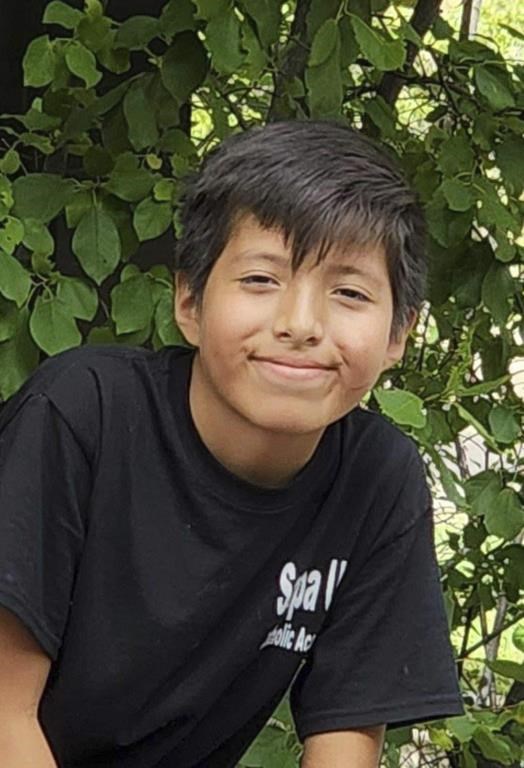
Honor, whose Lakota name is Yuonihan Ihanble, was pronounced dead last month at the Indian Health Service’s hospital on the reservation, one of six deaths that tribal leaders say “could have been prevented” if not for a series of systemic failures. Targets of the frustration include Republican Gov. Kristi Noem, the U.S. Congress, the Indian Health Service and even — for some — the tribe itself.
“We were all just in shock,” said Cordier-Beauvais, who recalled that when the snow finally cleared enough to hold the funeral, the family gave out toys to other children as a symbol of how he played with his siblings. “He loved giving them toys.”
As the storm raged, families ran out of fuel, and two people froze to death, including one in their home, the Rosebud Sioux Tribe said in a letter this month seeking a presidential disaster declaration.
The letter described the situation on the reservation in a remote area on the state’s far southern border with Nebraska, 130 miles (about 209 kilometers) southeast of Rapid City, as a “catastrophe.”
And in a scathing State of the Tribes address delivered last week in the state Legislature, Peter Lengkeek, chairman of the Crow Creek Sioux Tribe, accused emergency services of being “slow to react” as tribes struggled to clear the snow, with many using what he described as “outdated equipment and dilapidated resources.”
Noem’s spokesman, Ian Fury, said the claims were part of a “false narrative” and “couldn’t be further from the truth.” The Indian Health Services didn’t immediately return email messages from The Associated Press seeking comment.
Noem, who is seen as a potential contender for the 2024 White House, declared an emergency on Dec. 22 to respond to the winter storm and activated the state’s National Guard to haul firewood to the tribe.
But by then the Rosebud Sioux Tribe was worn out from a series of storms starting about 10 days before that were so severe that its leaders ultimately rented two helicopters to drop food to remote locations and rescue the stranded.
The firewood, said OJ Semans, a consultant for the tribe, came in the form of uncut logs, which were not immediately usable. The tribe wrote in its letter that volunteers continue to work diligently to get the wood cut.
“It was a political stunt that did nothing to help the people that were in trouble,” he said.
It all started on Dec. 12, when the tribe shut down offices so people could prepare for the first onslaught. The storm hit in earnest around midnight, dumping an average of nearly 2 feet (0.61 meters) of snow on the reservation, most of it in the first day, said Alex Lamers, a National Weather Service meteorologist.
By the time the storm let up on Dec. 16, the reservation also was coated with one-quarter of an inch of ice and wind gusts as high as 55 mph had blown the snow into drifts of up to 25 feet (7.6 meters).
The tribe issued a no travel advisory, except for emergencies, threatening a $500 fine for violators. Still some traveled and got stuck, the tribe said, their abandoned vehicles creating a hazard for first responders.
Starting on Dec. 18, soon after the blizzard moved out, there were 11 straight days with sub-zero temperatures. Wind chills were dangerous, hitting -51 degrees Fahrenheit (-46.11 degrees Celsius) at their lowest. The length and severity of the cold made it one of the worst such stretches on record, Lamers said.
Then, as fierce cold and storms descended across much of the rest of the country, claiming at least 40 lives in western New York, a phenomenon called a ground blizzard hit the reservation on Dec. 22. Strong winds blew existing snow on the ground, and visibility fell to a quarter mile, Lamers said.
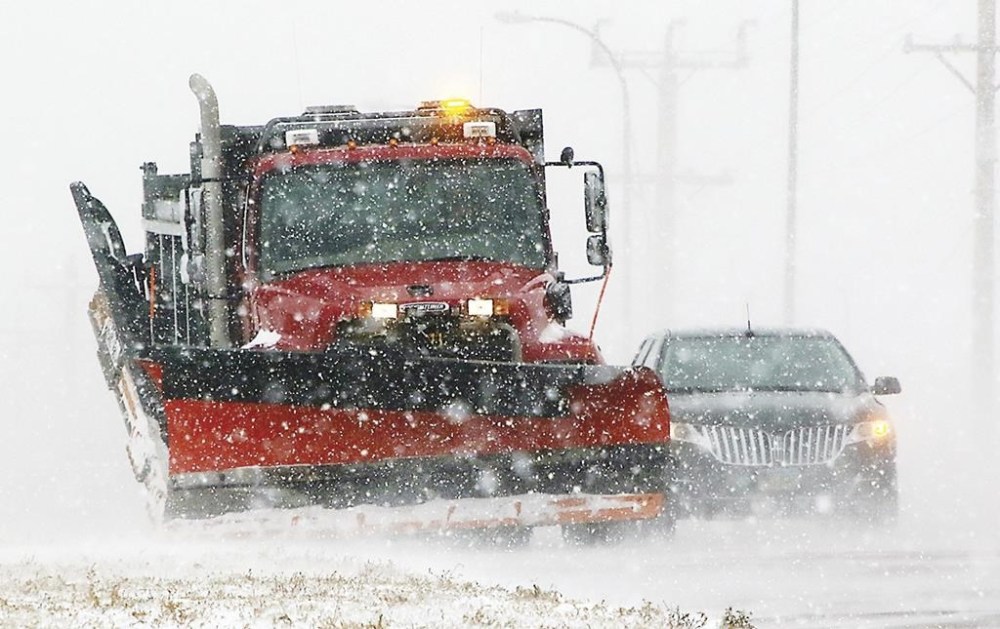
The Bureau of Indian Affairs sent staff to help, and the White House said FEMA also spoke to the tribe’s president. But snowplows were paralyzed in the cold, with the freezing temperatures turning the diesel fuel and hydraulics into gel, the tribe said.

Shawn Bordeaux, a Democratic state lawmaker and a former tribal council member, was running out of propane heat at his home on the reservation when Noem announced she was sending in the National Guard. Unable to get out and shop, he had no Christmas gifts for his children. Even for those who could get out, the store shelves were growing bare. Gas stations were running out of gas.
“I don’t want to totally dog out the system, but we kind of got left to our own devices,” said Bordeaux, who is a frequent critic of the governor. “She basically left us hanging.”
The tribe also alleges Congress is at fault for not changing rules that allocate how money from a tribal transportation program is distributed among the nation’s 574 federally recognized tribes.
Semans said the program’s reliance on making determinations based on tribal enrollment hurts the Rosebud Sioux because while its enrollment of 33,210 members is relatively modest, its land base of nearly 890,000 acres spread across five counties, is massive.
That meant there simply wasn’t enough equipment to respond, said Semans, who lost two family members in the storm.
One of them, his 54-year-old cousin, Anthony DuBray, froze to death outside, his body found after Christmas.
The other victim, his brother-in-law, Douglas James Dillon Sr., called for help during the first storm because his asthma was flaring up. But getting to the hospital would have meant being carried more than a quarter of a mile over snowbanks to a deputy’s patrol car.
Semans said a glimpse outside showed it was “almost impossible,” so Dillon went to bed. He died Dec. 17 at the age of 59.
Semans and his wife, Barbara, were snowed in for 15 days, using a propane space heater to ward off the cold after losing power. They were dug out just in time to make it to Dillon’s funeral 11 days after his death.
“Even angry doesn’t reach the level of the neglect,” Semans said. “This was an atrocity,”
For Honor, who was beloved as a jokester, his illness came at the worst possible moment of the storm.
It was Dec. 14 and his aunt, Brooki Whipple, whom he spent weekdays with as she and her family lived close to his school, was growing frantic as Honor struggled to breath.
The family pleaded for help, and finally a snow plow cleared the road to their ranch. Cordier-Beauvais said Honor and his uncle, Gary Whipple, set off immediately for the hospital just 3 miles (4.8 kilometers) away.
There, Honor was diagnosed with influenza and sent home despite the fact that Cordier-Beauvais, whom he spent weekends and summers with, called and told hospital staff the family wanted him admitted because they were worried about getting out again.
By the next day, Honor was still struggling — and the roads were impassable.
“Due to the high winds,” the Rosebud Sioux Tribe Highway Safety warned that day, “the routes plows make are quickly being filled back in.”
Cordier-Beauvais, the tribe’s business manager, stayed on the phone with her worried daughter, who had delivered a baby boy just days earlier, praying through the hours-long effort to get help clearing the road.
But the help came too late.
A doctor called to break the news to Brooki, who was home with the baby and her daughter so close in age to Honor that their family called them “the twins.”
“In our Lakota way, they’re brothers and sisters. Inseparable,” Cordier-Beauvais said. “She was not handling it well. Of course, she’s a child and Brooki was so stressed out. But she had her baby, and had to tend to them. And it was just awful.”

With no break in the weather, Honor wasn’t buried for nearly four weeks.
At the funeral, Cordier-Beauvais recalled how her basketball-loving grandson’s closest friends were pallbearers.
“They all just miss him so much,” she said.
___
Hollingsworth reported from Mission, Kansas. Stephen Groves in Pierre, South Dakota and Darlene Superville in Washington contributed to this report.