

Montreal ‘smart factory’ aims to demonstrate potential of warehouse automation
Advertisement
Read this article for free:
or
Already have an account? Log in here »
To continue reading, please subscribe:

Digital Subscription
One year of digital access for only $205*
- Enjoy unlimited reading on winnipegfreepress.com
- Read the E-Edition, our digital replica newspaper
- Access News Break, our award-winning app
- Play interactive puzzles
*First annual payment billed as $205.00 + GST for one year. This annual subscription will automatically renew at $233.00 + GST every 52 weeks (10% off the regular annual price of $259.35). Offer available to new and qualified returning subscribers only. Cancel any time.
To continue reading, please subscribe:
Add Free Press access to your Brandon Sun subscription for only an additional
$1 for the first 4 weeks*
- Enjoy unlimited reading on winnipegfreepress.com
- Read the E-Edition, our digital replica newspaper
- Access News Break, our award-winning app
- Play interactive puzzles
*Your next Brandon Sun subscription payment will increase by $1.00 and you will be charged $17.95 plus GST for four weeks. After four weeks, your payment will increase to $24.95 plus GST every four weeks.
Read unlimited articles for free today:
or
Already have an account? Log in here »
Hey there, time traveller!
This article was published 26/01/2023 (1331 days ago), so information in it may no longer be current.
MONTREAL – As a robotic arm at a Montreal demonstration facility attempts to pick up a small box, it senses that it doesn’t have a good grip, puts the package down, adjusts and tries again.
The robot, at Deloitte Canada’s Smart Factory in Montreal, is not only operating on its own, picking differently sized items off a pallet, it’s also learning from the experience.
Deloitte, a business consulting firm, plans to bring clients to the facility — which it bills as the first of its kind in Canada — to show them what’s possible with new technologies and allow them to better adapt to labour shortages and supply chain disruptions.
“The more efficient we can make your operations, the more flexible you’ll be to adapt to disruptions and shocks that may occur in the supply chain in the future,” said Alan Taliaferro, a partner at Deloitte Canada and the leader of the Montreal Smart Factory, which officially opens on Thursday.
The technologies on display during a visit this week were developed by 20 different companies, he said, in addition to technology developed in house by Deloitte.
The $8-million facility is the fourth of its kind in the world, said Geneviève Provost, the company’s managing partner for Quebec and the Ottawa region. There are similar demonstration facilities in the United States, Japan and Germany, she said, but the Montreal location is unique because its main focus is warehousing. Provost said Deloitte’s clients are increasingly looking for advice on how they can prepare for the future.
Much of the new technology at the facility is enabled by advances in computer vision, which has “radically changed” where robots can be used and allowed them to work closer to humans, Taliaferro said.
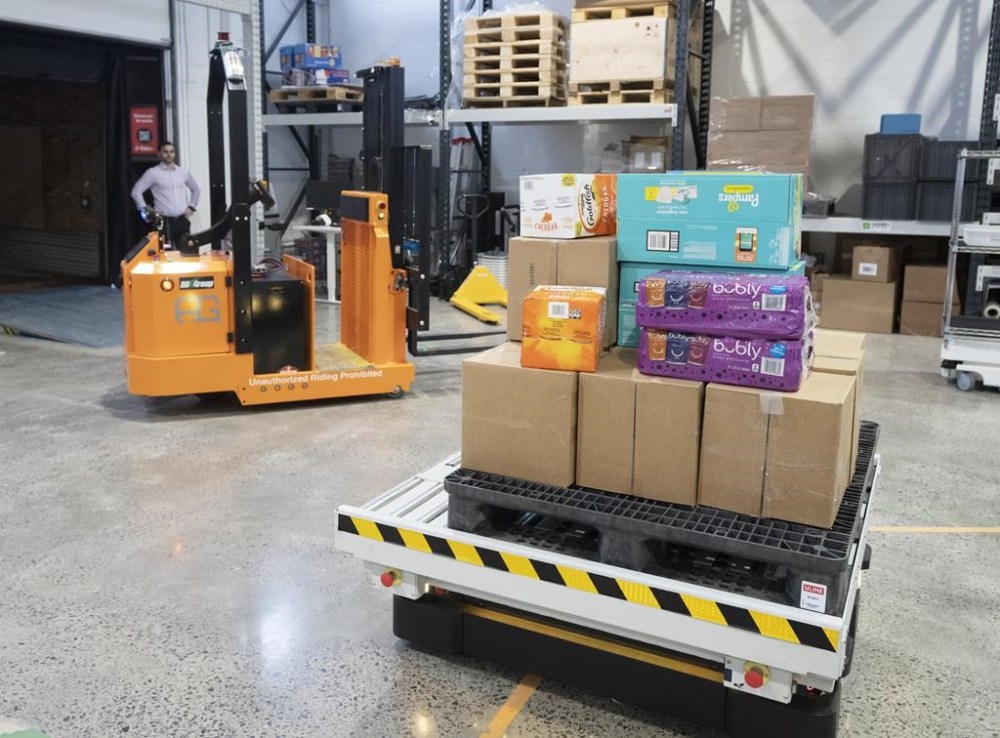
Computer vision advancements also allow automated systems to receive goods — scanning incoming pallets and detecting the number of packages and whether any are damaged — as they’re unloaded from a truck by an automated forklift.
That forklift can then place a pallet onto a self-driving robot, called an AGV or automated guided vehicle, which moves them into position to be unloaded by the robotic arm. The arm uses vision technology to “see” the packages.
“That helps the robot know what tool is required to pick up that box or where exactly to position itself in order to get that product in exactly the right spot,” Taliaferro said, adding that the robots can also “learn” from repeated operations.
“If you pick up that product 100 times, and one time you were a little bit too far to the right and the product fell, the robot and the vision system can remember that and learn from those mistakes,” he said.
Other systems on display include a storage system with no aisles, where plastic tote boxes are stored vertically. On top of the storage space, more than a metre high, small robots drive around, lifting the totes up and moving them to a station on the edge of the structure. That’s where a human — or another robot — would take the specific item out of the tote and place it on a conveyor belt to be packaged and shipped to a customer.
The system takes less space than traditional storage, Taliaferro said, and reduces the number of workers needed by 75 per cent, because they no longer need to walk around looking for items.
Véronique Proulx, the CEO of manufacturing industry association Manufacturiers et Exportateurs du Québec, said the smart factory “could be interesting” for her members.
While large manufacturers in Quebec have invested in automation, the province’s small and medium-sized manufacturing companies have been slower to adopt new technologies, she said in an interview.
Proulx said she recently spoke with the owner of a factory who said he didn’t think automation technology was available for his company.
“I said, ‘Does it not apply, or you’re not aware of what is available?’ And he said, ‘Well, that’s a good question, technology evolves so fast we don’t always know where to find it,'” she recalled.

The managers of small and medium-sized factories tend to have many responsibilities, she added, making it challenging for them to stay on top of what technologies they may want to implement and who can help them plan that adoption.
Proulx said automation can also help manufacturers — as well as warehouse operators — adapt to Quebec’s labour shortage. Finding entry-level workers is the biggest challenge, she said, making automation attractive because it reduces the need for those workers. Those jobs that remain require higher-skilled workers who are easier to attract because their working conditions and pay are better, she said.
But smaller companies need to see the results of investments in new technologies, which can be expensive. To pay for those investments, businesses may want to run their plants 24-7, which can be a challenge as companies struggle to hire people to work nights and weekends.
“Automation and putting in robots doesn’t solve everything around labour shortages, but for sure, it does increase your productivity,” she said. “It does reduce the impact of labour shortages.”
This report by The Canadian Press was first published Jan. 26, 2023.