Don’t feed the bears! But birds OK, new Tahoe research shows
Advertisement
Read this article for free:
or
Already have an account? Log in here »
To continue reading, please subscribe:

Digital Subscription
One year of digital access for only $205*
- Enjoy unlimited reading on winnipegfreepress.com
- Read the E-Edition, our digital replica newspaper
- Access News Break, our award-winning app
- Play interactive puzzles
*First annual payment billed as $205.00 + GST for one year. This annual subscription will automatically renew at $233.00 + GST every 52 weeks (10% off the regular annual price of $259.35). Offer available to new and qualified returning subscribers only. Cancel any time.
To continue reading, please subscribe:
Add Free Press access to your Brandon Sun subscription for only an additional
$1 for the first 4 weeks*
- Enjoy unlimited reading on winnipegfreepress.com
- Read the E-Edition, our digital replica newspaper
- Access News Break, our award-winning app
- Play interactive puzzles
*Your next Brandon Sun subscription payment will increase by $1.00 and you will be charged $17.95 plus GST for four weeks. After four weeks, your payment will increase to $24.95 plus GST every four weeks.
Read unlimited articles for free today:
or
Already have an account? Log in here »
Hey there, time traveller!
This article was published 10/02/2023 (1338 days ago), so information in it may no longer be current.
RENO, Nev. (AP) — Don’t feed the bears!
Wildlife biologists and forest rangers have preached the mantra for nearly a century at national parks like Yellowstone and Yosemite, and for decades in areas where urban development increasingly invaded native wildlife habitat.
But don’t feed the birds? That may be a different story — at least for one bird species at Lake Tahoe.
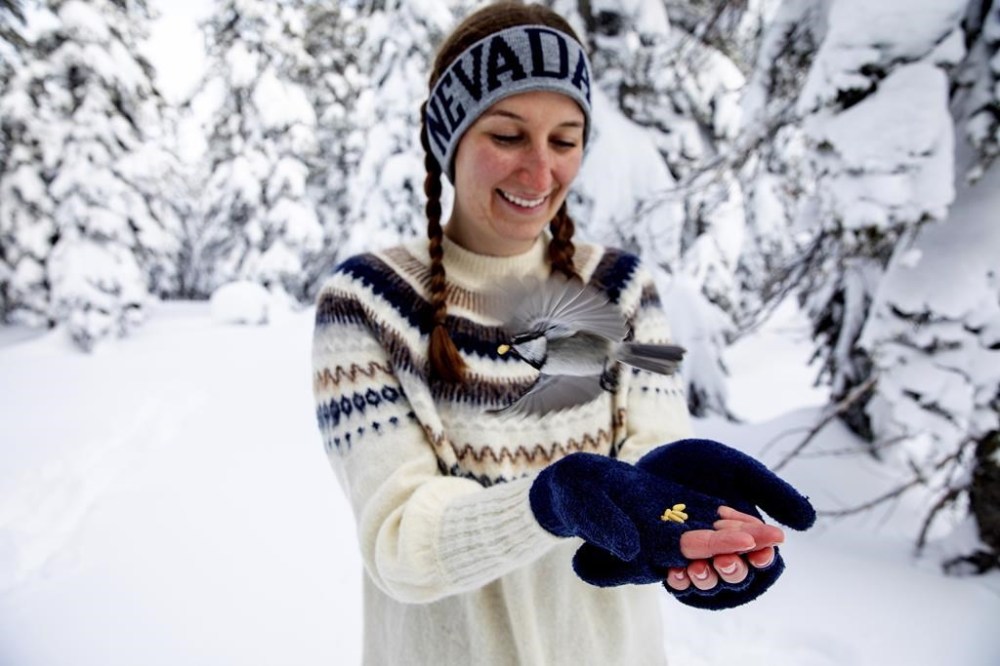
Snowshoe and cross-country ski enthusiasts routinely feed the tiny mountain chickadees high above the north shore of the alpine lake on the California-Nevada border. The black-capped birds of Chickadee Ridge will even perch on extended hands to snatch offered seeds.
New research from University of Nevada scientists found that supplementing the chickadees’ natural food sources with food provided in feeders or by hand did not negatively impact them, as long as proper food is used and certain rules are followed.
“It’s a wonderful experience when the birds fly around and land on your hand to grab food. We call it ‘becoming a Disney princess,’” said Benjamin Sonnenberg, a biologist/behavioral ecologist who co-authored the six-year study.
But he also recognized “there’s always the question of when it is appropriate or not appropriate to feed birds in the wild.”
State wildlife officials said this week they generally frown on feeding wildlife. But Nevada Department of Wildlife spokeswoman Ashley Sanchez acknowledged concerns about potential harm are based on speculation, not scientific data.
The latest research project under the wings of Professor Vladimir Pravosudov’s Chickadee Cognition Lab established feeders in the Forest Service’s Mount Rose Wilderness and tracked populations of mountain chickadees at two elevations — both those that did and didn’t visit feeders.
“If we saw increases in the population size or decreases in the population size, that could mean we were hurting the animals by feeding them,” co-author Joseph Welklin said. “Our study shows that feeding these mountain chickadees in the wild during the winter has no effect on their population dynamics.”
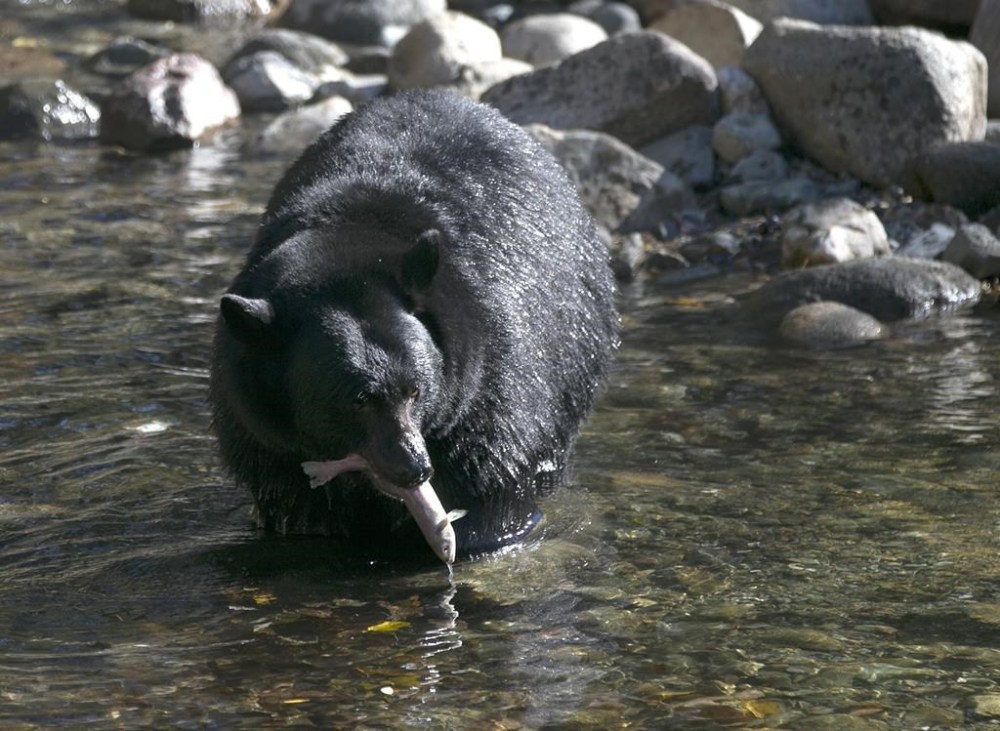
Sonnenberg said he understood concerns about supplementing food for wild creatures at Tahoe, where bears attracted to garbage get into trouble that sometimes turns fatal, and not for humans. The bears may ultimately be killed because they no longer fear people. He grew up in Bozeman, Montana, and has fond memories of grizzly and black bears at Yellowstone National Park where he learned at an early age “not to intentionally or to accidentally feed them.”
“Feeding wildlife is context-specific and comes with nuance,” he said.
Bear-human conflicts were extremely rare at Tahoe when Ranger Smith started battling Yogi and Boo-Boo over “pic-a-nic” baskets at fictional Jellystone Park in the popular cartoon that debuted in 1960. But between 1960 and 1980 the human population around Lake Tahoe exploded from 10,000 to 50,000 — 90,000 in the summer. Peak days now approach 300,000 visitors.
The growth spurred more development encroaching on native bear habitat, which led some so-called “garbage bears” to become dependent on unsecured trash for food. In a few cases, wildlife officials have blamed resulting bear deaths on north Tahoe residents feeding bears in their backyards.
“Should you feed the bears? Of course not,” Sonnenberg said. “But given the millions of people that are feeding birds around the world, understanding the impact of this food on wild populations is important, especially in a changing world.”
Mountain chickadees are of particular interest because they’re among the few avian species that hunker down for the cold Sierra winters instead of migrating to a warmer climate. They stash away tens of thousands of food items every fall then return to the hidden treasure throughout the winter to survive.
They’re “prolific scatter hoarders and rely on specialized spatial memory abilities to recover cached food from their environment during harsh winter months,” according to the findings published last month in the journal Ornithology.
“When they come to your hand and grab a food item,” Sonnenberg said, “if they fly away into the woods and you can’t see them anymore, they are likely storing that food for later.”
Their visits to feeders instead of tapping their own stash, the study said, “may be partially driven by the seemingly compulsive-like nature of caching behavior, as chickadees will cache available resources until they are depleted.”
The project included scientists from Canada’s University of Western Ontario’s Department of Psychology, Kennesaw State University’s Department of Ecology, Evolution and Organismal Biology in Georgia and the University of Oklahoma’s Biological Survey.
Sanchez said the Nevada Department of Wildlife’s concerns include observations the chickadees are exhibiting a level of tameness around potential predators — humans — which could make them more susceptible to other predators in nature.

She also said in an email the number of people hand-feeding the birds at Chickadee Ridge has increased significantly in recent years, “which means the odds that somebody will feed them inappropriate food items or handle them inappropriately has also increased.”
Sonnenberg added in an email the researchers are “not directly advocating for or against the feeding of chickadees at Chickadee Ridge.”
But “what our results do show is that this extra food does not cause chickadee populations in the Sierra Nevada to boom (increase to densities that could be harmful) or bust (decrease dramatically due to harmful effects),” he wrote.
Anyone feeding the birds should only provide food similar to what is found in their natural environment such as unsalted pine nuts or black-oil sunflower seeds, never bread or other human food, he said.
“And always be respectful of the animal,” Sonnenberg said. “Behave like you’re in their house and you’re visiting them.”