Following righteous ripples
Decades after playwright fought for her vision, 'Trouble in Mind' is still spreading influence and empowerment

Advertisement
Read this article for free:
or
Already have an account? Log in here »
To continue reading, please subscribe:

Digital Subscription
One year of digital access for only $205*
- Enjoy unlimited reading on winnipegfreepress.com
- Read the E-Edition, our digital replica newspaper
- Access News Break, our award-winning app
- Play interactive puzzles
*First annual payment billed as $205.00 + GST for one year. This annual subscription will automatically renew at $233.00 + GST every 52 weeks (10% off the regular annual price of $259.35). Offer available to new and qualified returning subscribers only. Cancel any time.
To continue reading, please subscribe:
Add Free Press access to your Brandon Sun subscription for only an additional
$1 for the first 4 weeks*
- Enjoy unlimited reading on winnipegfreepress.com
- Read the E-Edition, our digital replica newspaper
- Access News Break, our award-winning app
- Play interactive puzzles
*Your next Brandon Sun subscription payment will increase by $1.00 and you will be charged $17.95 plus GST for four weeks. After four weeks, your payment will increase to $24.95 plus GST every four weeks.
Read unlimited articles for free today:
or
Already have an account? Log in here »
Hey there, time traveller!
This article was published 15/02/2023 (1308 days ago), so information in it may no longer be current.
Cherissa Richards arrives early for her interview, and after getting acquainted with a boardroom on the second floor of the Royal Manitoba Theatre Centre, the director sits down at the conference table, staring at a wall filled with faces from the past.
Directly across from her are photographs of the centre’s six decades of history: artistic directors, board chairs. Many of the pictures are rendered in black and — especially — white; very few are of women or of people of colour.
“I’ve never had a Black female director before, and I have only ever had one Black director,” says Richards, the director of the upcoming production of Alice Childress’ Trouble in Mind, on from Feb. 15 to March 11 at the John Hirsch Mainstage.
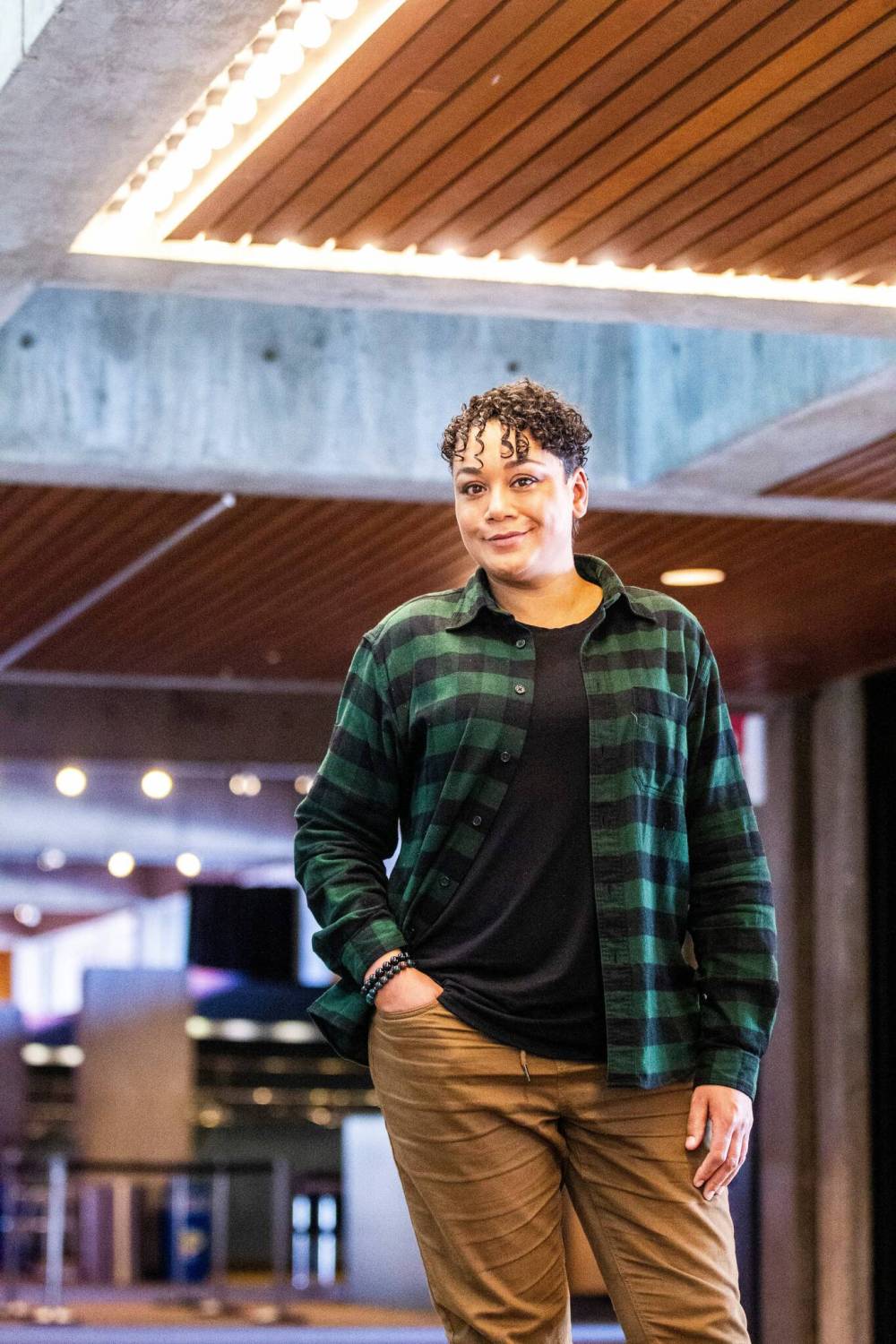
MIKAELA MACKENZIE / WINNIPEG FREE PRESS
‘Ultimately it’s about making sure that we’re doing Alice Childress’ words justice, doing her characters justice, and making sure the Black artists in the room connect to the piece and have the support they need,’ Trouble in Mind director Cherissa Richards says of the playwright’s legacy.
It isn’t as though Richards is new to the theatre game: a 20-year acting veteran, she graduated from the University of Winnipeg’s theatre program, the National Theatre School, and York University. She’s acted in the Shaw Festival, and participated in the Stratford Festival’s directors’ program.
“I know my way through the rules and the mores of the classical theatre industry, and I’m also of a certain age that I have seen the world before, when directors were abusive and rooms were a lot more oppressive compared to where we are today, where rooms are taking care of each other and a bit more open to people of colour being invited in to create art,” she says. “When I first started out, no matter which company I was in, I was usually the only Black artist.”
That old world is where Alice Childress lived. Born in 1916 in South Carolina, Childress was a pioneering creative artist. She wrote six novels, produced 13 plays, including adaptations of the writing of Langston Hughes, and was a social commentator, writing a recurring column in the activist-artist Paul Robeson’s publication, Freedom. A member of the groundbreaking American Negro Theatre company, Childress was a luminary of Sidney Poitier, Harry Belafonte, and Lorraine Hansberry, whose A Raisin in the Sun became in 1959 the first play written by a Black woman to debut on Broadway.
That historical tidbit likely should have been affixed to Trouble in Mind, a show which Richards says is, at its core, “about a Black woman’s struggle to navigate her way through the theatre industry and discover her own autonomy.”
But censorship said otherwise: after a successful run off-Broadway, producers asked Childress to change her ending to placate white audiences on the Great White Way. Childress refused to compromise her art. Instead, she put her head down and continued to work on whatever came next. The Red Scare was aswirl, and Childress faced the dangling pen of the black list.
Now, many decades later, Trouble in Mind, an incisive behind-the-curtain look at a theatre troupe in Harlem, is experiencing a long-awaited renaissance.
The show premiered on Broadway in November 2021 and closed last January. It was nominated for four Tony Awards, with productions by the National Theatre in London, England, and at the Shaw Festival following that stateside success. The New York Times hailed it as “a masterpiece of astonishing power.”
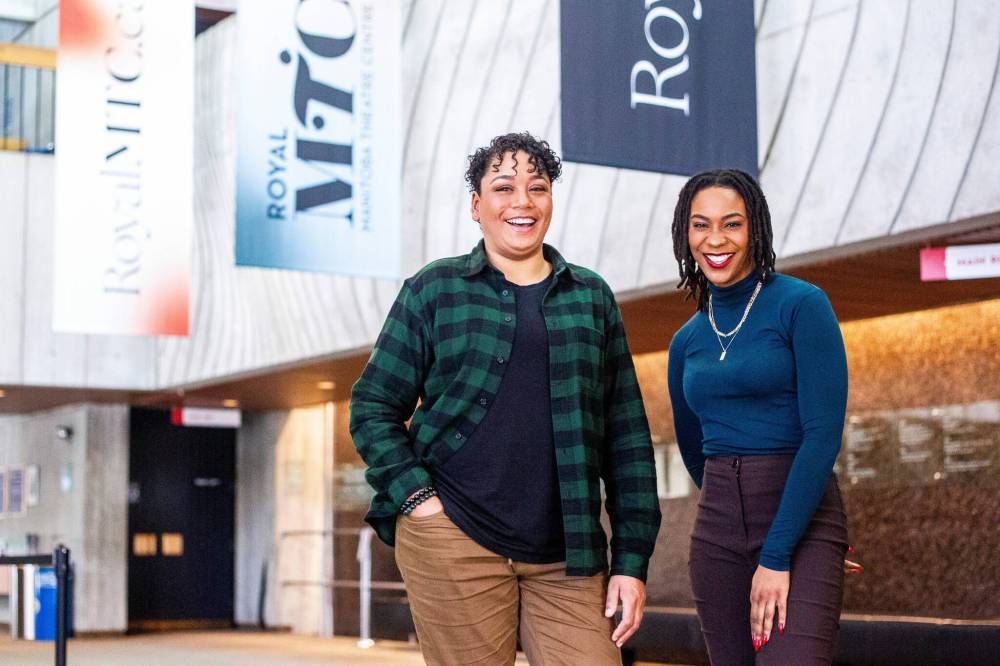
MIKAELA MACKENZIE / WINNIPEG FREE PRESS
‘I just feel so seen and so understood,’ says Trouble in Mind actor Reena Jolly, right, with director Cherissa Richards. ‘There are certain things I don’t even need to say out loud.’
When it plays at the MTC, it will represent for most local audience members their first brush with Childress, whose work influenced Pulitzer winners August Wilson and Lynn Nottage.
One of the show’s stars was already well aware of Childress’ work.
“I’m very passionate about knowing Black playwrights, and especially Black women playwrights,” says Reena Jolly, a Winnipeg-raised actor and National Theatre School graduate who plays Millie, a complex, frivolous and feisty actor.
Prior to Trouble in Mind, Jolly, 26, could count on one fingerless hand the amount of times she’d worked with a Black woman as director.
“I’ve always wanted to do a play written by a Black woman, and to be directed by a Black woman, and here, that’s the case. Our assistant director (Melissa Langdon) is also a Black woman,” Jolly says. “I just feel so seen and so understood. There are certain things I don’t even need to say out loud. I’ve been wishing and praying for this for so long.”

The majority of the show’s crew are people of colour and women: Sarah Uwadiae is costume designer, Tré Cotten is dialect coach, Ashley Au is sound designer, Lisa Russell, Paige Lewis and Devon Helm are stage manager, assistant stage manager, and apprentice, respectively. Kate George is the apprentice costume designer.
To Richards, the on- and off-stage stories of Trouble in Mind reflect both how far society has come and how little progress has been made when Childress, who died in 1994, was producing her work.
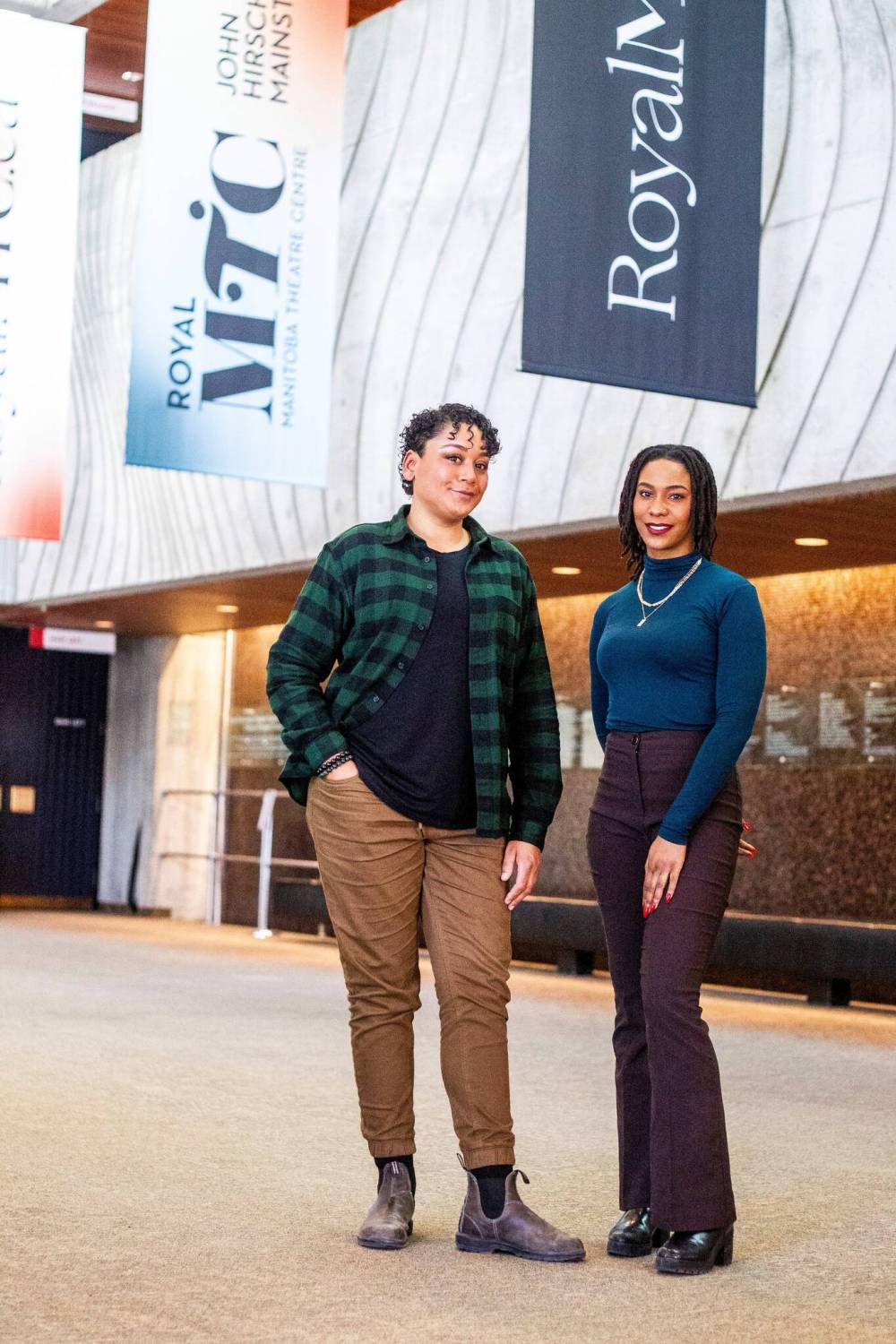
MIKAELA MACKENZIE / WINNIPEG FREE PRESS
Trouble in Mind, directed by Cherissa Richards (left), and starring Reena Jolly, is a behind-the-curtain look at a theatre troupe in Harlem.
“It’s so rare that we have Black stories told in our theatres and in our media,” says Richards. “We stand on the shoulders of great Black artists who have come before us. And it is a pressure to carry on that legacy. But ultimately it’s about making sure that we’re doing Alice Childress’ words justice, doing her characters justice, and making sure the Black artists in the room connect to the piece and have the support they need.”
“It’s beautiful to be able to create art as a Black person,” she adds. “I stole this from (theatre director) Philip Akin: all the shows I direct are Black, by the inherent nature that I am a Black woman.”
ben.waldman@winnipegfreepress.com
If you value coverage of Manitoba’s arts scene, help us do more.
Your contribution of $10, $25 or more will allow the Free Press to deepen our reporting on theatre, dance, music and galleries while also ensuring the broadest possible audience can access our arts journalism.
BECOME AN ARTS JOURNALISM SUPPORTER
Click here to learn more about the project.
Ben Waldman is a National Newspaper Award-nominated reporter on the Arts & Life desk at the Free Press. Born and raised in Winnipeg, Ben completed three internships with the Free Press while earning his degree at Ryerson University’s (now Toronto Metropolitan University’s) School of Journalism before joining the newsroom full-time in 2019. Read more about Ben.
Every piece of reporting Ben produces is reviewed by an editing team before it is posted online or published in print — part of the Free Press‘s tradition, since 1872, of producing reliable independent journalism. Read more about Free Press’s history and mandate, and learn how our newsroom operates.
Our newsroom depends on a growing audience of readers to power our journalism. If you are not a paid reader, please consider becoming a subscriber.
Our newsroom depends on its audience of readers to power our journalism. Thank you for your support.
Theatre preview
Trouble in Mind
● Royal Manitoba Theatre Centre,
● John Hirsch Mainstage
● Feb. 15 to March 11
If you value coverage of Manitoba’s arts scene, help us do more.
Your contribution of $10, $25 or more will allow the Free Press to deepen our reporting on theatre, dance, music and galleries while also ensuring the broadest possible audience can access our arts journalism.
BECOME AN ARTS JOURNALISM SUPPORTER
Click here to learn more about the project.
Ben Waldman is a National Newspaper Award-nominated reporter on the Arts & Life desk at the Free Press. Born and raised in Winnipeg, Ben completed three internships with the Free Press while earning his degree at Ryerson University’s (now Toronto Metropolitan University’s) School of Journalism before joining the newsroom full-time in 2019. Read more about Ben.
Every piece of reporting Ben produces is reviewed by an editing team before it is posted online or published in print — part of the Free Press‘s tradition, since 1872, of producing reliable independent journalism. Read more about Free Press’s history and mandate, and learn how our newsroom operates.
Our newsroom depends on a growing audience of readers to power our journalism. If you are not a paid reader, please consider becoming a subscriber.
Our newsroom depends on its audience of readers to power our journalism. Thank you for your support.

Advertisement Advertise With Us
Advertisement Advertise With Us