

Volatility makes for strange market
Welcome to a twilight zone where bad news is good news for still-bullish investors, hanging on to hope of a soft landing
Advertisement
Read this article for free:
or
Already have an account? Log in here »
To continue reading, please subscribe:

Digital Subscription
One year of digital access for only $205*
- Enjoy unlimited reading on winnipegfreepress.com
- Read the E-Edition, our digital replica newspaper
- Access News Break, our award-winning app
- Play interactive puzzles
*First annual payment billed as $205.00 + GST for one year. This annual subscription will automatically renew at $233.00 + GST every 52 weeks (10% off the regular annual price of $259.35). Offer available to new and qualified returning subscribers only. Cancel any time.
To continue reading, please subscribe:
Add Free Press access to your Brandon Sun subscription for only an additional
$1 for the first 4 weeks*
- Enjoy unlimited reading on winnipegfreepress.com
- Read the E-Edition, our digital replica newspaper
- Access News Break, our award-winning app
- Play interactive puzzles
*Your next Brandon Sun subscription payment will increase by $1.00 and you will be charged $17.95 plus GST for four weeks. After four weeks, your payment will increase to $24.95 plus GST every four weeks.
Read unlimited articles for free today:
or
Already have an account? Log in here »
Hey there, time traveller!
This article was published 25/03/2023 (1246 days ago), so information in it may no longer be current.
What’s up is down, and what’s down is up. This sums up today’s investment climate.
While the stock market never is sensible—at least in the short-term—it’s more absurd than ever.
One sign of just how weird things have gotten is the recent failure of Silicon Valley Bank (SVP)—the second largest bank failure in U.S. history.
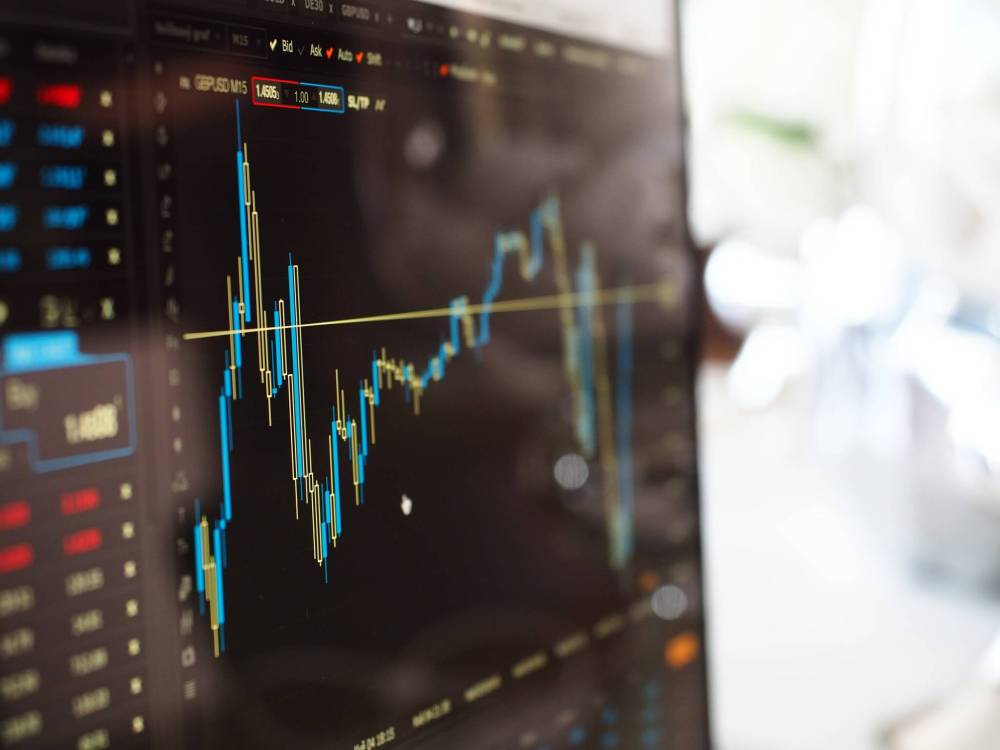
energepic.com / pexels
If the recent stock market crash and surge ‘sounds like bizarro land, it kind of is.’
Most investors had never heard of SVP until about two weeks ago when it experienced a 1929-style run on its deposit after venture capital investors funding technology startups—typically the most risk-loving of all investors—got spooked and urged companies they funded to move their assets out of the bank.
That largely all happened on a Friday in early March.
Then, over the weekend, the U.S. government raced to secure SVP clients’ assets, and assure markets, businesses and consumers to prevent a more widespread problem for the banking system.
And what happened the following Monday?
The stock market surged. Two days later, European bank Credit Suisse teetered on insolvency, and the stock market nosedived. The next day, stocks rallied.
If it sounds like bizarro land, it kind of is.
“It’s just absurd, where economic news points to weakness, and the markets go up,” says Hardev Bains, portfolio manager with Lionridge Capital Management Inc.
“And they go up because investors believe interest rates are going to ease, but the problem with that thinking is if interest rates ease, it’s because the economy is slowing down—and how is that good for companies?”
Of course, the stock market being pushed around by irrationality—greed and fear—is nothing new. Yet even the experts consider conditions particularly oddball.
“’Conflicting’ is maybe the best description,” says Brent Joyce, chief investment strategist with BMO Private Investment Counsel Inc.
“Those conflicting signals we are seeing are a reminder that we are in very different times.”
He points to the unique inflationary pressures stemming from the pandemic exacerbated by low interest rates and governments handing out money to support struggling businesses and households. Top that with the war in Ukraine, and we have seen the fastest, steepest rise in interest rates in decades.
Now, we’re at a crossroads where nothing seems normal and no one is sure what comes next.
“In a normal business cycle, the economy runs hot and people and businesses have gorged on credit,” Joyce says. “That’s not the case today.”
Many companies that aren’t in technology are still hiring and reporting profits while consumers still spend in the face of high inflation because they still have savings to spend, he adds.
“Normally, taking away the punchbowl” —low interest rates—ends the party, Joyce adds, but not this time.
Investors remain bullish because many expect the punchbowl to return, even though falling interest rates would only occur if economic conditions turned sour, typically bad news for stock prices.
Many are myopically focused on inflation right now, hoping it will fall and put an end to rate hikes, leading to a return of bull market conditions—no matter how unlikely.
“The good news is that most of the data point to inflation cooling, but its actual is anybody’s guess,” says Craig Basinger, chief market strategist for Purpose Investments.
“And the bigger question is: what happens to the economy?”
Debate over the last several months has revolved around whether higher rates will lead to slowing economic growth, but not a recession—called the ‘soft landing’—or that they will lead to a modest recession.
RUTH BONNEVILLE / WINNIPEG FREE PRESS files
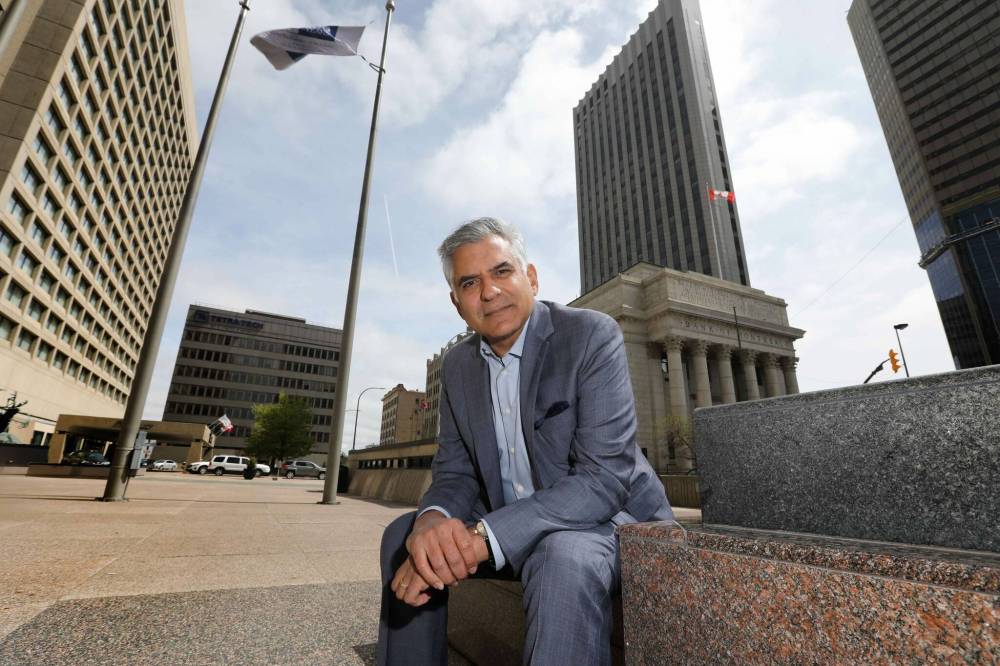
Hardev Bains, president of Lionridge Capital, says the markets go up because investors believe interest rates are going to ease.
But the spate of bank failures has led to speculation that a deeper than expected downturn could be coming, Basinger says.
All the same, many investors remain undaunted and, perhaps, delusional.
“Sure, greed and fear drives markets, but it’s not just fear of losses; it’s fear of missing out,” Bains says.
He adds this partly explains why investors are jumping back into the market in droves at the slightest hint interest rate hikes will stop.
While the outcome of central banks’ efforts tame inflation will only be clear in retrospect, risk of recession is on the rise.
Basinger points to a negative yield curve in the bond market—long considered a predictor of recessions.
What’s more, central banks’ forecasting models now predict a higher than 50 per cent chance a recession is coming in the near future, he adds.
“If we somehow avoid a recession, that’s fantastic, but the bigger travesty is if you ignore these risks and remain optimistic,” he says. “You could be making a costly mistake.”
What’s a clear-eyed investor to do, then?
“A balanced portfolio is likely the best place to be,” Joyce says.
In fact, a portfolio with a 50/50 split of bonds and stocks hasn’t looked so good in more than a decade because interest rates have increased significantly from their historical lows.
“That means bonds are more likely to play their traditional role in the portfolio again,” Basinger says.

That role being: “when stocks go down, bonds go up in value, and vice versa.”
Basinger adds the normal relationship was broken in 2022 amid high inflation and fast rising rates when both asset classes fell in value at the same time.
But their inverse relationship appears to be restored again, he adds.
So, while no one knows if there will be a soft landing and no recession, “a garden variety” recession or “an unintended consequence jumping out of the closet” spurring a 2008-style meltdown, a balanced portfolio is likely the best all-terrain vehicle for the times, Joyce says.
“That’s because all of those aforementioned scenarios are either relatively benign to good for balanced investors.”