Idaho governor signs firing squad execution bill into law

Advertisement

Advertise with us

BOISE, Idaho (AP) — Republican Gov. Brad Little signed a bill allowing execution by firing squad, making Idaho the latest state to turn to older methods of capital punishment amid a nationwide shortage of lethal-injection drugs.

Read this article for free:


or

Already have an account? Log in here »

To continue reading, please subscribe:

Subscribe and receive a limited-edition Free Press branded hat or tote.

Digital Subscription

One year of digital access for only $205*

  • Enjoy unlimited reading on winnipegfreepress.com
  • Read the E-Edition, our digital replica newspaper
  • Access News Break, our award-winning app
  • Play interactive puzzles

*First annual payment billed as $205.00 + GST for one year. This annual subscription will automatically renew at $233.00 + GST every 52 weeks (10% off the regular annual price of $259.35). Offer available to new and qualified returning subscribers only. Cancel any time.

To continue reading, please subscribe:

Add Free Press access to your Brandon Sun subscription for only an additional

$1 for the first 4 weeks*

  • Enjoy unlimited reading on winnipegfreepress.com
  • Read the E-Edition, our digital replica newspaper
  • Access News Break, our award-winning app
  • Play interactive puzzles
Start now

*Your next Brandon Sun subscription payment will increase by $1.00 and you will be charged $17.95 plus GST for four weeks. After four weeks, your payment will increase to $24.95 plus GST every four weeks.

Hey there, time traveller!
This article was published 25/03/2023 (1301 days ago), so information in it may no longer be current.

BOISE, Idaho (AP) — Republican Gov. Brad Little signed a bill allowing execution by firing squad, making Idaho the latest state to turn to older methods of capital punishment amid a nationwide shortage of lethal-injection drugs.

The Legislature passed the measure March 20 with a veto-proof majority. Under it, firing squads will be used only if the state cannot obtain the drugs needed for lethal injections.

Pharmaceutical companies increasingly have barred executioners from using their drugs, saying they were meant to save lives. One Idaho death row inmate has already had his execution postponed repeatedly because of drug scarcity.
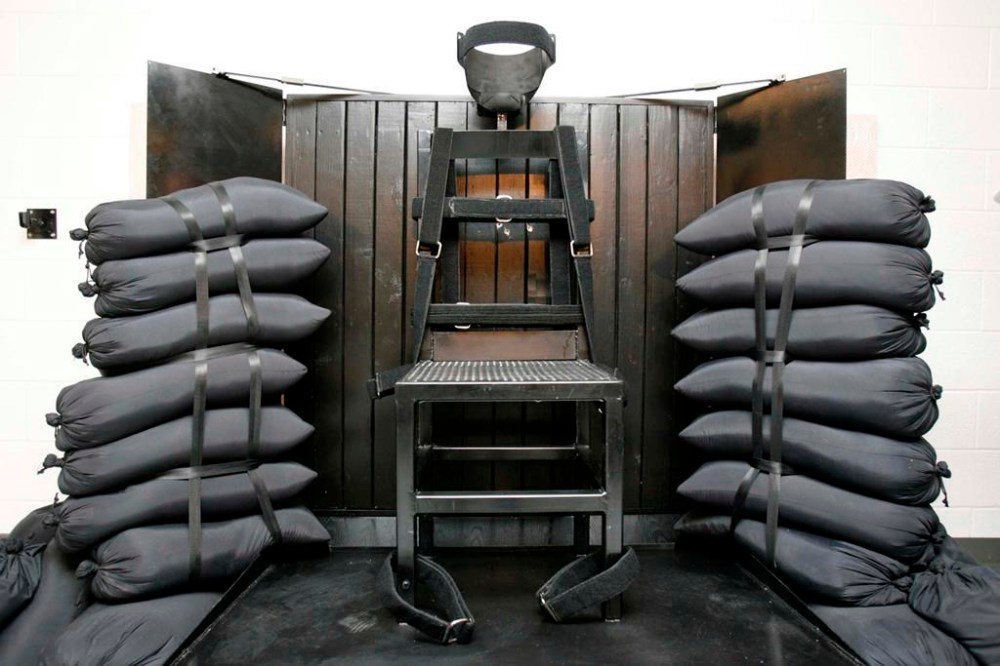
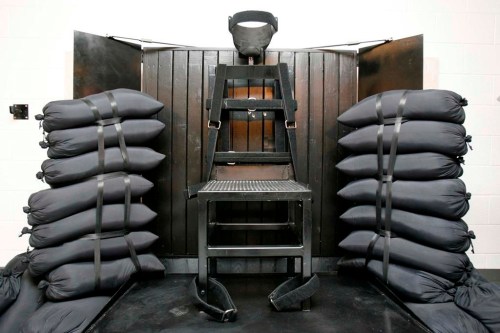
FILE - A chair sits in the execution chamber at the Utah State Prison on June 18, 2010, after Ronnie Lee Gardner was executed by firing squad in Draper, Utah. Idaho lawmakers passed a bill on March 20, 2023, that would authorize the use of firing squads if the state is unable to obtain drugs required for its lethal injection program. The bill will head to the desk of Idaho Gov. Brad Little next. (Trent Nelson/The Salt Lake Tribune via AP, Pool, File)

The shortage has prompted other states in recent years to revive older methods of execution. Only Mississippi, Utah, Oklahoma and South Carolina have laws allowing firing squads if other execution methods are unavailable, according to the Death Penalty Information Center. South Carolina’s law is on hold pending the outcome of a legal challenge.

Some states began refurbishing electric chairs as standbys for when lethal drugs are unavailable. Others have considered — and, at times, used — largely untested execution methods. In 2018, Nevada executed Carey Dean Moore with a never-before-tried drug combination that included the powerful synthetic opioid fentanyl. Alabama has built a system for executing people using nitrogen gas to induce hypoxia, but it has not yet been used.

“While I am signing this bill, it is important to point out that fulfilling justice can and must be done by minimizing stress on corrections personnel,” Little wrote in a transmittal letter after signing the bill. “For the people on death row, a jury convicted them of their crimes, and they were lawfully sentenced to death. It is the responsibility of the state of Idaho to follow the law and ensure that lawful criminal sentences are carried out.”

During a historic round of 13 executions in the final months of Donald Trump’s presidency, the federal government opted for the sedative pentobarbital as a replacement for lethal drugs used in the 2000s. It issued a protocol allowing firing squads for federal executions if necessary, but that method was not used.

Some lawyers for federal inmates who were eventually put to death argued in court that firing squads actually would be quicker and less painful than pentobarbital, which they said causes a sensation akin to drowning.

However, in a 2019 filing, U.S. lawyers cited an expert as saying someone shot by firing squad can remain conscious for 10 seconds and that it would be “severely painful, especially related to shattering of bone and damage to the spinal cord.”

President Joe Biden’s attorney general, Merrick Garland, ordered a temporary pause on federal executions in 2021 while the Justice Department reviewed protocols. Garland did not say how long the moratorium will last.

Idaho Sen. Doug Ricks, a Republican who co-sponsored that state’s firing squad bill, told his fellow senators Monday (3/20) that the state’s difficulty in finding lethal injection drugs could continue “indefinitely,” that he believes death by firing squad is “humane,” and that the bill would help ensure the rule of law is carried out.

But Sen. Dan Foreman, also a Republican, called firing-squad executions “beneath the dignity of the state of Idaho.” They would traumatize the executioners, the witnesses and the people who clean up afterward, he said.
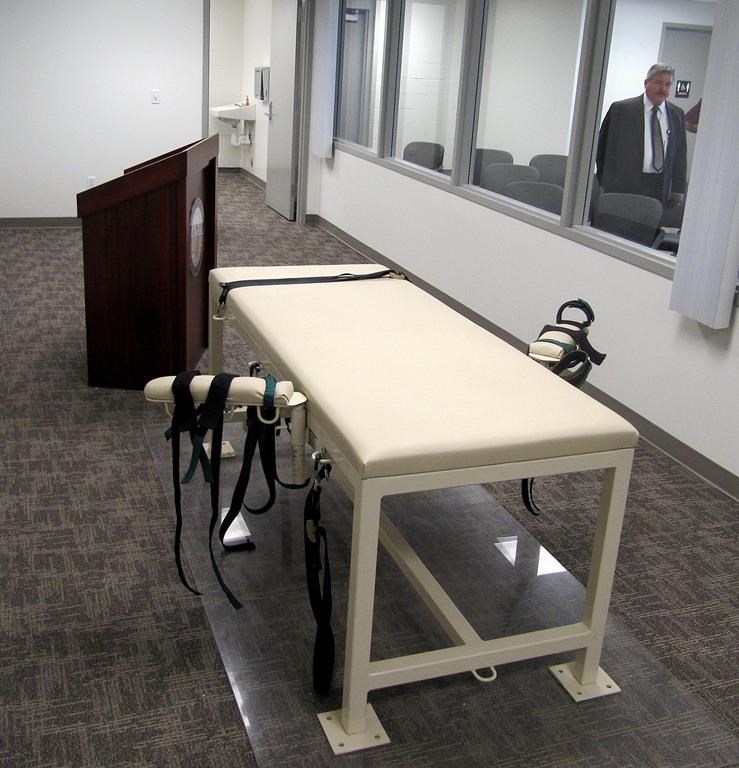
FILE - The execution chamber at the Idaho Maximum Security Institution is shown as Security Institution Warden Randy Blades look on in Boise, Idaho on Oct. 20, 2011. A bill that would allow Idaho to kill condemned inmates by firing squad is headed to the governor's desk after passing the Legislature with a veto-proof majority. Firing squads will only be used if the state cannot obtain the drugs needed for lethal injections. (AP Photo/Jessie L. Bonner, File)

The bill originated with Republican Rep. Bruce Skaug, prompted in part by the state’s inability to execute Gerald Pizzuto Jr. late last year. Pizzuto, who now has terminal cancer and other debilitating illnesses, has spent more than three decades on death row for his role in the 1985 slayings of two gold prospectors.

The Idaho Department of Correction estimates it will cost around $750,000 to build or retrofit a death chamber for firing squad executions.

Agency Director Jeff Tewalt has said he would be reluctant to ask his staffers to participate in a firing squad.

Both Tewalt and his former co-worker Kevin Kempf played a key role in obtaining the drugs used in the 2012 execution of Richard Albert Leavitt, flying to Tacoma, Washington, with more than $15,000 in cash to buy them from a pharmacist. The trip was kept secret by the department but revealed in court documents after University of Idaho professor Aliza Cover sued for the information under a public records act.

Biden pledged during his campaign to work at ending the death penalty nationwide, but he has remained silent on the issue as president. Critics say his hands-off approach risked sending a message that he’s OK with states adopting alternative execution methods.

Report Error Submit a Tip

More Stories

Former Bisons quarterback valued by Elks

Taylor Allen 5 minute read Preview

Former Bisons quarterback valued by Elks

Taylor Allen 5 minute read Yesterday at 8:44 PM CDT

EDMONTON — Des Catellier may have been a young quarterback for the Manitoba Bisons, but Cody Fajardo saw the makings of a future coach.

It was 2019, when Fajardo was with the Saskatchewan Roughriders and Catellier attended training camp with the team as part of the CFL QB Internship Program.

“He was one of the only U Sports guys that really came in and knew the whole playbook,” Fajardo, now the starting pivot for the Edmonton Elks, told the Free Press on Thursday.

“He could go in and rep just about any play on offence.”

Read
Yesterday at 8:44 PM CDT

Police HQ inquiry final report will be released next week: Kinew

Chris Kitching 4 minute read Preview

Police HQ inquiry final report will be released next week: Kinew

Chris Kitching 4 minute read Yesterday at 6:37 PM CDT

The final report of the public inquiry into the Winnipeg Police Service headquarters will be released next week, days before voters elect a mayor and city council, Premier Wab Kinew announced Thursday.

Read
Yesterday at 6:37 PM CDT

Temporary foreign worker at crossroads without job, alleges immigration consultant misconduct

Gabrielle Piché 6 minute read Preview

Temporary foreign worker at crossroads without job, alleges immigration consultant misconduct

Gabrielle Piché 6 minute read Yesterday at 8:13 PM CDT

A temporary foreign worker says he was ensnared in an illegal system fraught with under-the-table payments, fake credentials and a firing.

“I was participating in a illegal process,” Liang Fang said. “But actually, I (didn’t) know it’s illegal before.”

Fang, 43, travelled to Winnipeg from Beijing in March. He came with a job offer to work at a Winnipeg restaurant as a marketing specialist.

However, by his account, he became a waiter. It was the latest change in a lengthy immigration process.

Read
Yesterday at 8:13 PM CDT

Idaho governor signs firing squad execution bill into law

The Associated Press 5 minute read Preview

Idaho governor signs firing squad execution bill into law

The Associated Press 5 minute read Saturday, Mar. 25, 2023

BOISE, Idaho (AP) — Republican Gov. Brad Little signed a bill allowing execution by firing squad, making Idaho the latest state to turn to older methods of capital punishment amid a nationwide shortage of lethal-injection drugs.

The Legislature passed the measure March 20 with a veto-proof majority. Under it, firing squads will be used only if the state cannot obtain the drugs needed for lethal injections.

Pharmaceutical companies increasingly have barred executioners from using their drugs, saying they were meant to save lives. One Idaho death row inmate has already had his execution postponed repeatedly because of drug scarcity.

The shortage has prompted other states in recent years to revive older methods of execution. Only Mississippi, Utah, Oklahoma and South Carolina have laws allowing firing squads if other execution methods are unavailable, according to the Death Penalty Information Center. South Carolina’s law is on hold pending the outcome of a legal challenge.

Read
Saturday, Mar. 25, 2023

Hit the brakes on driving lessons from mate

Maureen Scurfield 4 minute read Yesterday at 2:00 AM CDT

DEAR MISS LONELYHEARTS: I’ve been trying to learn to drive in busy traffic. My boyfriend said he would teach me, but he gets too playfully amorous while I’m trying to drive his new car in busier areas like downtown. He thinks it’s a big joke, but when I yelled that he was distracting me, he said, “Good.”

So I pulled over, slammed on the brakes and got out, thinking he would get back into the driver’s seat and drive us home, but he didn’t budge. He was being a real jerk.

I got back in, drove us to my place in silence, left the keys in the ignition and went inside and locked my door. Now we’re not talking and neither one of us is apologizing. What do you think?

— Still Mad, St. James

Chief says minister offered money to remove highway checkstop

Kelly-Anne Riess 5 minute read Preview

Chief says minister offered money to remove highway checkstop

Kelly-Anne Riess 5 minute read Wednesday, Oct. 14, 2026

The chief of the Bloodvein River First Nation says a Manitoba cabinet minister offered up to $250,000 for economic development as he was trying to persuade her to remove a highway checkstop that has outraged hunters.

Read
Wednesday, Oct. 14, 2026