Judge’s ruling undercuts US health law’s preventive care

Advertisement

Advertise with us

AUSTIN, Texas (AP) — A federal judge in Texas who previously ruled to dismantle the Affordable Care Act struck down a narrower but key part of the nation's health law Thursday that requires most insurers to cover preventive services that include screenings for cancer, diabetes and mental health.

Read this article for free:


or

Already have an account? Log in here »

To continue reading, please subscribe:

Subscribe and receive a limited-edition Free Press branded hat or tote.

Digital Subscription

One year of digital access for only $205*

  • Enjoy unlimited reading on winnipegfreepress.com
  • Read the E-Edition, our digital replica newspaper
  • Access News Break, our award-winning app
  • Play interactive puzzles

*First annual payment billed as $205.00 + GST for one year. This annual subscription will automatically renew at $233.00 + GST every 52 weeks (10% off the regular annual price of $259.35). Offer available to new and qualified returning subscribers only. Cancel any time.

To continue reading, please subscribe:

Add Free Press access to your Brandon Sun subscription for only an additional

$1 for the first 4 weeks*

  • Enjoy unlimited reading on winnipegfreepress.com
  • Read the E-Edition, our digital replica newspaper
  • Access News Break, our award-winning app
  • Play interactive puzzles
Start now

*Your next Brandon Sun subscription payment will increase by $1.00 and you will be charged $17.95 plus GST for four weeks. After four weeks, your payment will increase to $24.95 plus GST every four weeks.

Hey there, time traveller!
This article was published 30/03/2023 (1279 days ago), so information in it may no longer be current.

AUSTIN, Texas (AP) — A federal judge in Texas who previously ruled to dismantle the Affordable Care Act struck down a narrower but key part of the nation’s health law Thursday that requires most insurers to cover preventive services that include screenings for cancer, diabetes and mental health.

Other no-cost services, including HIV screenings, are also impacted under the ruling by U.S. District Judge Reed O’Connor that opponents say will jeopardize preventive care for millions of Americans.

Experts cautioned that insurers are unlikely to stop any coverage immediately. The Biden administration was expected to appeal and seek a stay of the ruling.
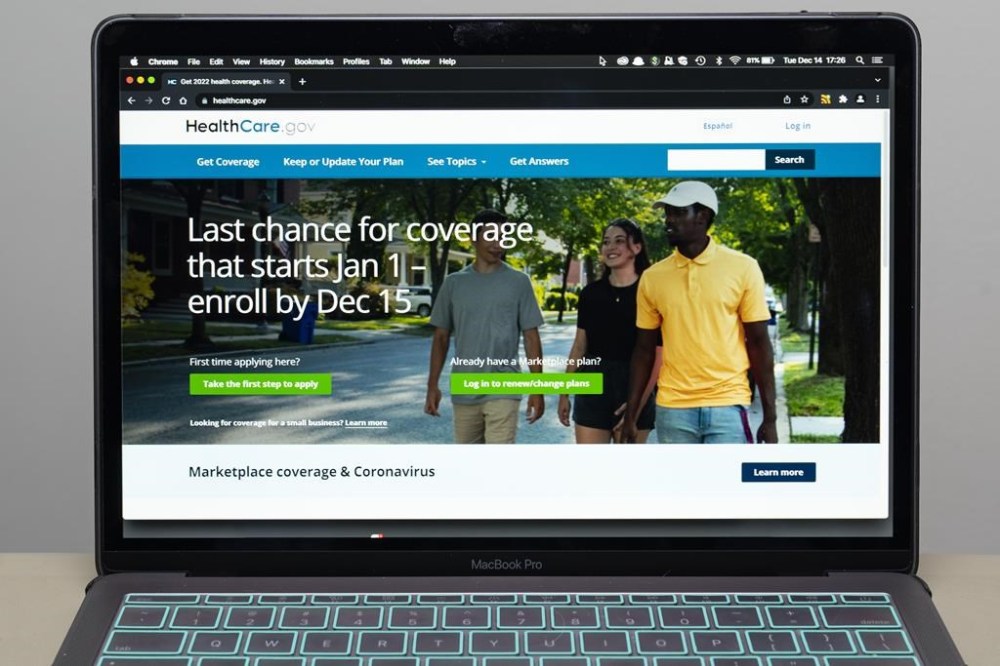
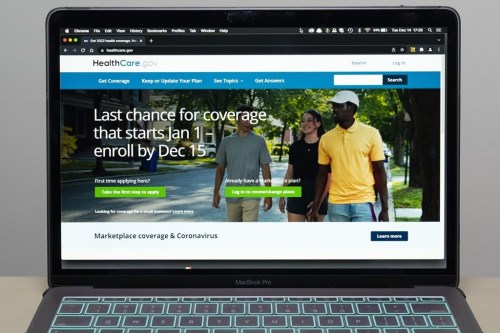
FILE - The healthcare.gov website is seen on Dec. 14, 2021, in Fort Washington, Md. A federal judge in Texas who previously ruled to dismantle the Affordable Care Act struck down a narrower but key part of the nation's health law Thursday, March 30, 2023, in a decision that opponents say could jeopardize preventive screenings for millions of Americans. (AP Photo/Alex Brandon, File)

“This is not the potential fatal blow to the ACA like previous court cases, but it would limit a very popular benefit that tens of millions of people use,” said Larry Levitt, executive vice president for health policy at the Kaiser Family Foundation.

The decision comes more than four years after O’Connor, a nominee of former President George W. Bush, ruled that the entire health care law also known as “Obamacare” was unconstitutional. The U.S. Supreme Court overturned that ruling.

This time O’Conner blocked only the requirement that most insurers cover a range of preventive care — including screenings for multiple types of cancer — siding with plaintiffs who include a conservative activist in Texas and a Christian dentist who opposed mandatory coverage for contraception and an HIV prevention treatment on religious grounds.

The requirements for coverage are driven by recommendations by the U.S. Preventive Services Task Force, which is made up of volunteers. O’Connor ruled that enforcing the recommendations was “unlawful” and a violation of the Constitution’s Appointment Clause, which lays out how government officials can be appointed.

Dr. Michael Barry, chairman of the federal task force, said in a statement following the ruling that people with low incomes have been able to get services they need as care has expanded over the past decade because of the law.

“Fundamentally, people across the country deserve the opportunity to receive these important preventive services that have been proven to help them live longer and healthier lives,” Barry said.

White House Press Secretary Karine Jean-Pierre said the Department of Justice and the Department of Health and Human Services were reviewing the ruling, but called the case “yet another attack” on the health care law that has been in place for 13 years and survived multiple legal challenges.

The Biden administration previously told the court that the outcome of the case “could create extraordinary upheaval in the United States’ public health system.” More than 20 states, mostly controlled by Democrats, had urged O’Connor against a sweeping ruling that would do away with the preventive care coverage requirement entirely.

The ruling applies to recommendations made by the task force after March 2010, when the Affordable Care Act was enacted. Some of the nation’s largest medical groups came out against the lawsuit, warning that insurers in the future could impose cost-sharing on patients for screenings that are now fully covered.

Levitt said if O’Connor’s ruling is allowed to stand, insurers are likely to look at changes in coverage beginning in the next calendar year, since existing contracts are already in effect.

Although the ruling impacts a broad spectrum of preventive care, it does not wipe out coverage for all preventive screenings. For instance, experts said the decision would not overturn coverage for preventive women’s health services that were approved outside the task force.

Some cancer screenings approved before 2010 would also not be affected, including screenings for cervical and colorectal cancer, said Alina Salganicoff, senior vice president and director for women’s health policy at the Kaiser foundation. But she said screenings for lung and skin cancer, which were more recently approved, could be affected.

In September, O’Connor ruled that required coverage of the HIV prevention treatment known as PrEP, which is a pill taken daily to prevent infection, violated the plaintiffs’ religious beliefs. That decision also undercut the broader system that determines which preventive drugs are covered in the U.S., ruling that a federal task force that recommends coverage of preventive treatments is unconstitutional.

Employers’ religious objections have been a sticking point in past challenges to former President Barack Obama’s health care law, including over contraception.

The lawsuit is among the attempts by conservatives to chip away at the Affordable Care Act — or wipe it out entirely — since it was signed into law in 2010. The attorney who filed the suit was an architect of the Texas abortion law that was the nation’s strictest before the Supreme Court overturned Roe v. Wade in June and allowed states to ban the procedure.

___

Associated Press reporters Amanda Seitz and Seung Min Kim in Washington contributed to this report.

Report Error Submit a Tip

More Stories

Discrediting independent media is the game plan

Editorial 4 minute read Preview

Discrediting independent media is the game plan

Editorial 4 minute read Yesterday at 2:00 AM CDT

United States President Donald Trump’s decision to bar several news organizations from White House briefings is, thanks to a court decision, teetering on the edge of collapse.

Read
Yesterday at 2:00 AM CDT

Letters, Sept. 29

7 minute read Preview

Letters, Sept. 29

7 minute read Updated: 8:18 AM CDT

I would like to commend Scott Forbes for his cogent, sensible, and well-documented article on Manitoba Hydro’s misguided, and some might say, incompetent approach to Manitoba’s hydro needs, and plans to fulfill them (Time for 21st century leadership at MB Hydro, Think Tank, Sept. 24).

Read
Updated: 8:18 AM CDT

First Manitoba-U.K. Defence Summit begins

Free Press staff 1 minute read 2:00 AM CDT

United Kingdom delegates from the aerospace and defence sector are visiting Winnipeg this week for the first Manitoba-U.K. Defence Summit.

Industry executives will discuss trade, investment and collaboration with their Manitoba counterparts, according to a Manitoba Aerospace & Defence news release.

The group started with a conference at the Manitoba Club on Monday. Today, United Kingdom leaders will visit Boeing Winnipeg, StandardAero and Magellan Aerospace, the news release says.

The summit is being led by the Canada-Manitoba Defence Alliance, which the provincial government launched earlier this month.

Judge’s ruling undercuts US health law’s preventive care

Paul J. Weber, The Associated Press 5 minute read Preview

Judge’s ruling undercuts US health law’s preventive care

Paul J. Weber, The Associated Press 5 minute read Thursday, Mar. 30, 2023

AUSTIN, Texas (AP) — A federal judge in Texas who previously ruled to dismantle the Affordable Care Act struck down a narrower but key part of the nation's health law Thursday that requires most insurers to cover preventive services that include screenings for cancer, diabetes and mental health.

Other no-cost services, including HIV screenings, are also impacted under the ruling by U.S. District Judge Reed O'Connor that opponents say will jeopardize preventive care for millions of Americans.

Experts cautioned that insurers are unlikely to stop any coverage immediately. The Biden administration was expected to appeal and seek a stay of the ruling.

“This is not the potential fatal blow to the ACA like previous court cases, but it would limit a very popular benefit that tens of millions of people use,” said Larry Levitt, executive vice president for health policy at the Kaiser Family Foundation.

Read
Thursday, Mar. 30, 2023

Jets pick up netminder as relatively new 23-man roster announced

Mike McIntyre 7 minute read Preview

Jets pick up netminder as relatively new 23-man roster announced

Mike McIntyre 7 minute read Updated: Yesterday at 9:25 PM CDT

Let’s get the caveats out of the way: Nothing is set in stone, nor written in permanent ink, and what you see right now could change in the blink of an eye.

With that being said, allow us to introduce you to the 2026-27 Winnipeg Jets — where change is very much in the air.

The 23-man roster submitted to the NHL offices by Monday’s 4 p.m. deadline includes seven players who were not on the team at this time last year. In fact, there could be as many as 10 new faces in the opening-night lineup on Friday against Boston when you factor in three regulars didn’t start the 2025-26 campaign due to injury.

That’s a lot of turnover, which isn’t surprising for a team that finished 26th overall in the standings and was — to most fans and pundits — too old and too slow.

Read
Updated: Yesterday at 9:25 PM CDT

Wab Kinew as ‘communicator in chief’

Paul G. Thomas 6 minute read Preview

Wab Kinew as ‘communicator in chief’

Paul G. Thomas 6 minute read Yesterday at 2:00 AM CDT

Premier Wab Kinew and his party have been riding high in the polls longer than normal for a government one year or less away from its first re-election contest. One reason is his ubiquitous, dominating communications presence as NDP leader and premier.

The argument here is that Kinew has supplemented his prerogatives as premier and party leader (such as appointing cabinet ministers and approving party nominations) with the skilful use of communications to advance his policy agenda, boost his personal popularity and maintain the competitive advantage of his party over the opposition Progressive Conservatives.

Communications has always been a significant part of politics and policy making. However, in the contemporary political and media environments, communications considerations have moved from the background to the foreground of decision-making by political parties, including when they are performing in the role of government. Campaigning and governing now overlap in what has been described as a permanent election campaign.

Political parties use communications strategies for several purposes: to establish an image of the leader which makes a positive emotional connection with voters; to promote a coherent message and to keep party members on message; and to gain favourable media coverage for its policies and other actions on almost a daily basis.

Read
Yesterday at 2:00 AM CDT