Vatican disavows decrees linked to seizure of Native lands
Advertisement
Read this article for free:
or
Already have an account? Log in here »
To continue reading, please subscribe:

Digital Subscription
One year of digital access for only $205*
- Enjoy unlimited reading on winnipegfreepress.com
- Read the E-Edition, our digital replica newspaper
- Access News Break, our award-winning app
- Play interactive puzzles
*First annual payment billed as $205.00 + GST for one year. This annual subscription will automatically renew at $233.00 + GST every 52 weeks (10% off the regular annual price of $259.35). Offer available to new and qualified returning subscribers only. Cancel any time.
To continue reading, please subscribe:
Add Free Press access to your Brandon Sun subscription for only an additional
$1 for the first 4 weeks*
- Enjoy unlimited reading on winnipegfreepress.com
- Read the E-Edition, our digital replica newspaper
- Access News Break, our award-winning app
- Play interactive puzzles
*Your next Brandon Sun subscription payment will increase by $1.00 and you will be charged $17.95 plus GST for four weeks. After four weeks, your payment will increase to $24.95 plus GST every four weeks.
Read unlimited articles for free today:
or
Already have an account? Log in here »
Hey there, time traveller!
This article was published 30/03/2023 (1291 days ago), so information in it may no longer be current.
Responding to Indigenous demands, the Vatican has formally repudiated the “Doctrine of Discovery” — papal documents from the 15th century that legitimized the colonial-era seizure of Native lands.
The repudiation will have great symbolic importance. Its immediate practical impact may be limited, though some some Indigenous activists hope it will heighten pressure on government authorities in Canada and the United States to reconsider property laws that arose from the doctrine.
Here’s a look at some of reaction to the Vatican statement and the background underlying it.
__
WHAT DID THE VATICAN DO?
Its statement said the 15th century papal decrees “did not adequately reflect the equal dignity and rights of Indigenous peoples” and have never been considered expressions of the Catholic faith. In effect, it marked a historic recognition of the Vatican’s own complicity in colonial-era abuses committed by European powers.
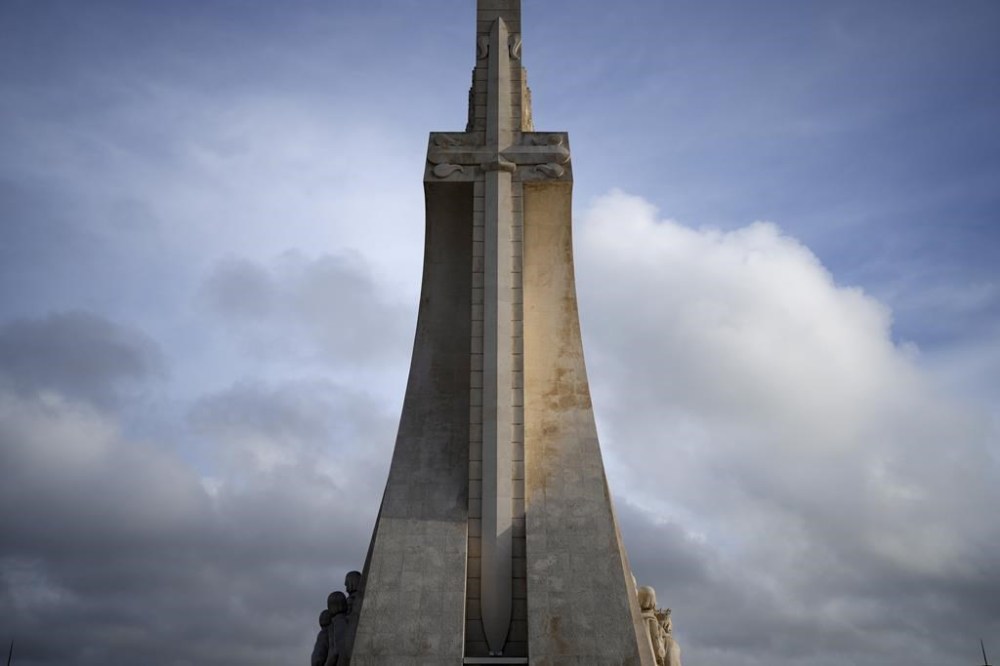
The statement was a response to decades of Indigenous demands for the Vatican to formally rescind the papal bulls that provided the Portuguese and Spanish kingdoms the religious backing to expand their territories in Africa and the Americas for the sake of spreading Christianity.
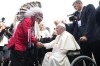
During Pope Francis’ 2022 visit to Canada, where he apologized to Indigenous peoples for the residential school system that forcibly removed Native children from their homes, he was met with demands for a formal repudiation of the papal bulls.
REACTION:
The Vatican statement was hailed as “wonderful” by Phil Fontaine, a former national chief of the Assembly of First Nations in Canada who was part of a delegation that met with Francis at the Vatican before the trip and then accompanied him throughout. He said it was now up to government authorities in the U.S. and Canada to revise property laws that cite the doctrine.
Michelle Schenandoah of the Oneida Nation, also part of the Indigenous delegation that met with Francis, called the statement “another step in the right direction.”
“But I do think it has to go further,” she said in a interview from Syracuse, New York, where she is a professor of Indigenous law at Syracuse University’s College of Law.
“It’s not just about lands, but it’s about people and culture and taking accountability for genocide that has been committed against Indigenous peoples in the Americas.”
Archbishop Donald Bolenof of Regina, Saskatchewan, said the Vatican statement “is not an end point.”
“It’s a little step along the way,” he said. “Relationships on a local level are really where we need to make progress.
Ananya Chakravarti, associate professor of history at Georgetown University, said the statement would be meaningful to Catholics in South Asia. It was under Francis that Sri Lanka got its first saint, Joseph Vaz, who was born and raised in Goa, a former Portuguese colony, she said.
HISTORY:
Though the “Doctrine of Discovery” was written hundreds of years ago, it has remained an important legal concept in Canada, as noted by the Canadian Museum for Human Rights:
“Both French and English colonial powers in what would later be known as Canada used the Doctrine of Discovery to claim Indigenous lands and force their cultural and religious beliefs on Indigenous peoples,” says a museum document. “It denies the validity of longstanding systems of Indigenous governance and sovereignty.”
“The racist assumption of superiority and dominance embodied in the Doctrine of Discovery underpins many aspects of Canada’s colonial history,” said the museum, citing as an example the system of boarding schools for Indigenous Canadians that led to widespread abuses.
BOARDING SCHOOLS:
Catholic as well as Protestant churches collaborated with the U.S. and Canadian governments in operating residential schools where generations of children were severed from their families, cultures, languages and religions and pressured to assimilate into the dominant white, Christian culture with its European heritage and languages.
Survivors of the Catholic schools in both countries have described cases of horrific abuse and neglect at the schools, many of which were unsanitary and fire traps, according to recent government fact-finding reports in both countries. Religious orders have also apologized for their roles in it.
In Canada, a 2015 Truth and Reconciliation Commission report identified 139 schools, the majority-Catholic-run, where about 150,000 students were sent in the 19th and 20th centuries.
At least 84 boarding schools in the U.S. were run by Catholics and their religious orders, according to a report by the National Native American Boarding School Healing Coalition. Protestants had a similar number, while the majority were government-run.
The Vatican statement “is a huge thing for me,” said Basil Brave Heart, who lives on the Pine Ridge Reservation in South Dakota and was a boarding student in the 1940s at Holy Rosary Mission, the school known today as Red Cloud Indian School.
The Doctrine of Discovery, he said, was used to justify the boarding schools and the taking of Indigenous people’s lands under the belief that white, Christian culture was superior.
“To me it was the doctrine that caused an unbelievable amount of mental harm” to boarding school students, he said. “They took our language away; we were not allowed to practice any of our ceremonies.”
REPARATIONS:
Over recent years, as Catholic leaders became more forthcoming with apologies for historic mistreatment of Indigenous and Black people, there have been numerous demands for the church to make reparations.
The Vatican has left decisions on this matter to be made on a decentralized basis, and responses have varied.
In Canada — as part of a lawsuit settlement involving the government, churches and approximately 90,000 boarding school survivors — the Canadian Conference of Catholic Bishops has set a target of collecting 30 million Canadian dollars over five years for reparations.
The U.S. Conference of Catholic Bishops has not embraced the term “reparations” in its official policies, and has left decisions on financial settlements to individual institutions, not to the U.S. church as a whole.
In 2021, the U.S. branch of the Jesuits pledged to raise $100 million for a reconciliation initiative in partnership with descendants of people once enslaved by the Catholic order. Separately, Georgetown University, which was founded by the Jesuits, pledged an extensive fund-raising campaign to benefit descendants of people enslaved by the order.
ARTWORKS:
The Vatican’s Anima Mundi Ethnological Museum houses tens of thousands of artifacts and art made by Indigenous peoples from around the world, much of it sent to Rome by Catholic missionaries for a 1925 exhibition in the Vatican gardens.
The Vatican says the feathered headdresses, carved walrus tusks, masks and embroidered animal skins were gifts to Pope Pius XI, who wanted to celebrate the Church’s global reach, its missionaries and the lives of the Indigenous peoples they evangelized.

But Indigenous groups from Canada, who saw a few items in the collection when they traveled to the Vatican last year to meet with Francis, question how some of the works were actually acquired. Some are insisting that the artworks be returned to Canada.
___
Associated Press reporters Nicole Winfield, Rob Gillies, Peter Smith and Deepa Bharath contributed.
___
Associated Press religion coverage receives support through the AP’s collaboration with The Conversation US, with funding from Lilly Endowment Inc. The AP is solely responsible for this content.
Related Articles
Pope’s statement remarkable but means little
Advertisement Advertise With Us
Advertisement Advertise With Us
The Free Press acknowledges the financial support it receives from members of the city’s faith community, which makes our coverage of religion possible.