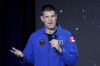
NASA, CSA name Jeremy Hansen to be first Canadian to encircle the moon
Advertisement
Read this article for free:
or
Already have an account? Log in here »
To continue reading, please subscribe:
Monthly Digital Subscription
$0 for the first 4 weeks*
- Enjoy unlimited reading on winnipegfreepress.com
- Read the E-Edition, our digital replica newspaper
- Access News Break, our award-winning app
- Play interactive puzzles
*No charge for 4 weeks then price increases to the regular rate of $19.00 plus GST every four weeks. Offer available to new and qualified returning subscribers only. Cancel any time.
Monthly Digital Subscription
$4.75/week*
- Enjoy unlimited reading on winnipegfreepress.com
- Read the E-Edition, our digital replica newspaper
- Access News Break, our award-winning app
- Play interactive puzzles
*Billed as $19 plus GST every four weeks. Cancel any time.
To continue reading, please subscribe:
Add Free Press access to your Brandon Sun subscription for only an additional
$1 for the first 4 weeks*
*Your next subscription payment will increase by $1.00 and you will be charged $16.99 plus GST for four weeks. After four weeks, your payment will increase to $23.99 plus GST every four weeks.
Read unlimited articles for free today:
or
Already have an account? Log in here »
Hey there, time traveller!
This article was published 03/04/2023 (989 days ago), so information in it may no longer be current.
HOUSTON – A square-jawed fighter pilot from southwestern Ontario donned the mantle of Canada’s newest space hero Monday as his country joined the United States in a bid to usher in a new era of daring global adventures beyond the moon and the stars.
Col. Jeremy Hansen, a CF-18 pilot from London, Ont., emerged from a crowd of cheering fellow astronauts, a Maple Leaf patch on the shoulder of his flight suit, to officially join the crew of four that will helm Artemis II, the first trip to lunar space in 52 years.
“It’s not lost on any of us that the United States could choose to go back to the moon by themselves,” Hansen, 47, told the gathering inside a sweltering hangar at Ellington Field, a joint military facility and flight operations base in Houston.

Instead, the U.S. made a “deliberate choice” decades ago to build a team of experts, engineers, adventurers and dreamers from all over the world — a display of true leadership, he said, and a global mindset that no one can do it all by themselves.
“At the end of it all, I am left in awe of being reminded what strong leadership — setting big goals with a passion to collaborate and a can-do attitude — can achieve,” Hansen said.
“We’re going to the moon together. Let’s go.”
Monday’s spectacle was a long way from the smoky rooms, slide-rules and short white shirt sleeves of past moon missions, an orchestrated rock-show effort to rekindle the excitement that space exploration engendered in the 1960s.
To a soaring, cinematic soundtrack, slickly produced “sizzle reels” offered a Hollywood vision of NASA’s history of space exploration and what Artemis II might look like when it finally takes off, which is currently scheduled to happen in November 2024.
A group of science-minded schoolchildren, American flags in hand, whooped and hollered and waved from the side of the stage, a living embodiment of the mission’s target audience — as well as a handy reference point for some of the soaring rhetoric.
“Our friends in Canada, thank you for being allies for life, thank you for being friends that have stood with us in bad times and in good times,” said Texas congresswoman Sheila Jackson Lee.
“The children of America,” she said, gesturing to the kids, “are symbols of what is great about America and Canada working together.”
The other three astronauts on the Artemis II mission are all American: mission commander Reid Wiseman, pilot Victor Glover and mission specialist Christina Hammock Koch.
“It’s difficult to pick just four from a group that by its very definition attracts the best and the brightest that humanity has to offer,” said Norm Knight, chief of NASA’s flight director office.
Knight said the astronauts will be the “forerunners as humanity looks to find its place among the stars.”
Artemis II will be the first crewed mission to the moon since the final Apollo mission took flight in 1972. After orbiting Earth, the crew will rocket hundreds of thousands of kilometres for a figure-8 around the moon before their momentum brings them home.
It will make Canada and the U.S. the only two countries to ever venture into deep space — the region beyond the dark side of the moon.
“I’m very, very excited to see that a Canadian has been chosen to actually go to the moon. It’s a major event for us,” said Prime Minister Justin Trudeau, giving credit to Hansen and calling him an “exceptional individual” who “will do all Canadians proud.”
The mission is a precursor test to ensure all systems are go for the next phase of Artemis: to put a man and woman on the moon as early as 2025, an effort in service of the ultimate goal of eventually dispatching astronauts to Mars.

In an interview, Hansen expressed gratitude for all of the Canadian space explorers who have gone before him and helped to blaze a trail — not only into space, but also into the often closed ranks of U.S. aeronautics.
“When I showed up, it was already clear we were standing on the shoulders of the people who came before,” he said, citing Marc Garneau and Roberta Bondar, the first Canadian man and woman to go to space, as inspiration.
“We are very much in the mindset of, ‘We need all hands on deck right now.’ We can’t afford to separate and divide the corps out. We need everyone to contribute.”
Federal Industry Minister François-Philippe Champagne, who was on stage for Monday’s announcement, could barely contain his excitement — especially as he donned a custom-made version of NASA’s trademark sky-blue flight jacket.
“We’re going to the moon, and this time Canada’s front and centre,” Champagne said. “I hope it helps Canadians to dream big. Go Canada — this is our moment to shine.”
Research back on the ground in Canada is helping to develop a new lunar utility vehicle for future missions on the surface of the moon, as well as to develop new ways to produce food with limited resources in the forbidding environment of deep space, he added.

“This is about possibilities, this is about seizing the opportunities of the space economy from health and food security, to climate change and much more.”
In the “Deep Space Food Challenge,” launched in 2021, participants must develop ways to produce food in harsh environments with few resources — think Matt Damon in “The Martian” — that will one day be necessary to sustain life.
Those challenges will only become more difficult as Artemis moves into its later stages, which include a long-term presence on the moon and ultimately voyaging to Mars.
“As one scientist only recently said, ‘The science of today is the economy of tomorrow,'” Champagne said. “By increasing the complexity, that’s why we push the boundaries of science and innovation.”
This report by The Canadian Press was first published April 3, 2023.