

Indigenous friendship centre to rise again in Winnipeg

Advertisement
Read this article for free:
or
Already have an account? Log in here »
To continue reading, please subscribe:
Digital Subscription
One year of digital access for only $1.44 a week*
- Enjoy unlimited reading on winnipegfreepress.com
- Read the E-Edition, our digital replica newspaper
- Access News Break, our award-winning app
- Play interactive puzzles
*Billed as $5.77 plus GST every four weeks. After 52 weeks, price increases to the regular rate of $19.95 plus GST every four weeks. Offer available to new and qualified returning subscribers only. Cancel any time.
To continue reading, please subscribe:
Add Free Press access to your Brandon Sun subscription for only an additional
$1 for the first 4 weeks*
- Enjoy unlimited reading on winnipegfreepress.com
- Read the E-Edition, our digital replica newspaper
- Access News Break, our award-winning app
- Play interactive puzzles
*Your next Brandon Sun subscription payment will increase by $1.00 and you will be charged $17.95 plus GST for four weeks. After four weeks, your payment will increase to $24.95 plus GST every four weeks.
Read unlimited articles for free today:
or
Already have an account? Log in here »
Hey there, time traveller!
This article was published 06/04/2023 (1289 days ago), so information in it may no longer be current.
It’s the first step to bringing back an important community organization for Indigenous people in Winnipeg.
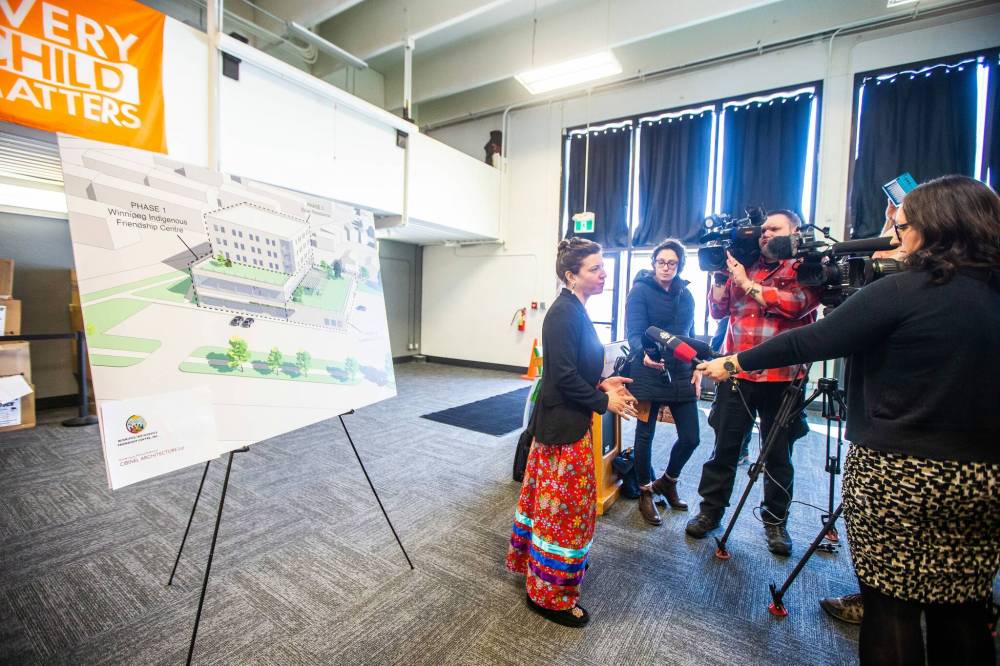
The Winnipeg Indigenous Friendship Centre will be built at 45 Robinson St., in the same lot as its predecessor, the Winnipeg Indian and Métis Friendship Centre. Plans for the new centre, which include a drop-in space, community centre, bingo hall and residence for Indigenous elders, were unveiled at Ma Mawi Wi Chi Itata Centre Thursday.
“Everyone came together and we said, ‘How do we bring this back, in a different way, in a good way,’” said Rachel Sansregret, chief executive officer of the Winnipeg Indigenous Friendship Centre.
MIKAELA MACKENZIE / WINNIPEG FREE PRESS
Plans for the new centre, which include a drop-in space, community centre, bingo hall and residence for Indigenous elders, were unveiled at Ma Mawi Wi Chi Itata Centre Thursday.
“For the community, as a supportive hub, as a place where youth are coming to receive food after school, where elders can get supports, where families can celebrate their culture.”
The original centre closed in 2018 after the Manitoba Association of Friendship Centres suspended funding, citing unfinished funding applications a the lack of a fully operational board. The building was damaged by fire in October 2022.
Before it closed, it had operated for nearly 60 years and was viewed as a critical resource. It had served as a welcome space for everyone from First Nations people adjusting to life in Winnipeg, to youth playing sports and learning how to dance powwow. In the 1990s, when it was the most popular, 30,000 people visited annually.
The friendship centre model, which uses community programming to serve Indigenous people in urban areas, is used by more than 100 centres across Canada.
Several groups, including Ma Mawi Wi Chi Itata Centre, Winnipeg Indigenous Executive Circle and Indigenous Vision for the North End, began discussing how to bring back the friendship centre in 2019.
“Our urban community has long expressed how much they missed the friendship centre here in Winnipeg as a place to gather, and a place to access a supportive hub of resources,” Ma Mawi Chi Itata Centre executive director Tammy Christensen said.
By December, the Winnipeg Indigenous Friendship Centre had become incorporated as a federally registered charity with a re-established board.
MIKAELA MACKENZIE / WINNIPEG FREE PRESS
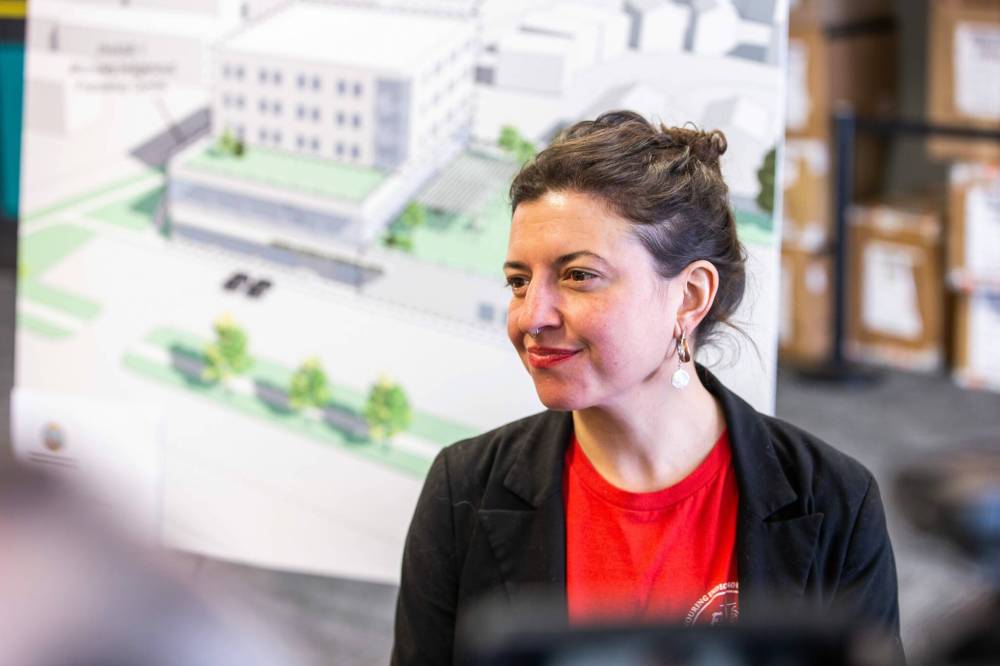
The goal is to have a space that is open 24 hours a day for those who need it, said Rachel Sansregret, CEO of the Winnipeg Indigenous Friendship Centre.
“We have re-established our governance with great care, to ensure that it is structured in a way that the tragedy that befell the previous centre will in no way ever possibly be able to happen to the Winnipeg Indigenous Friendship Centre.
“We feel very confident that with this collection of strong and kind-hearted Indigenous leaders, that we will be able to move forward in a good way,” she said.
The group has purchased the land at 45 Robinson St., and demolition of the condemned building will begin later this month. They need $12 million to construct the first phase of the building, which would be the base friendship centre. Construction won’t begin until funding is secured, and it would take around two years for construction to be completed.
The elder residence, bingo hall and community area would be added later. The goal, Sansregret said, is to have a space that is open 24 hours a day for those who need it.
“We know that many of the elders in our community, and we learned even more about this over COVID, the rates of isolation, the challenges with people accessing programming, food security resources,” she said. “So you could come directly down into the centre and not even have to go outside to be able to access resources.”
Aboriginal Council of Winnipeg president Damon Johnston, who is secretary of the centre’s board of directors, said the board will look at opportunities to create more friendship centres in the city.

“Friendship centres are still incredibly important to our community. They provide a venue for our children and youth to come together with elders, which is very important,” he said.
MIKAELA MACKENZIE / WINNIPEG FREE PRESS
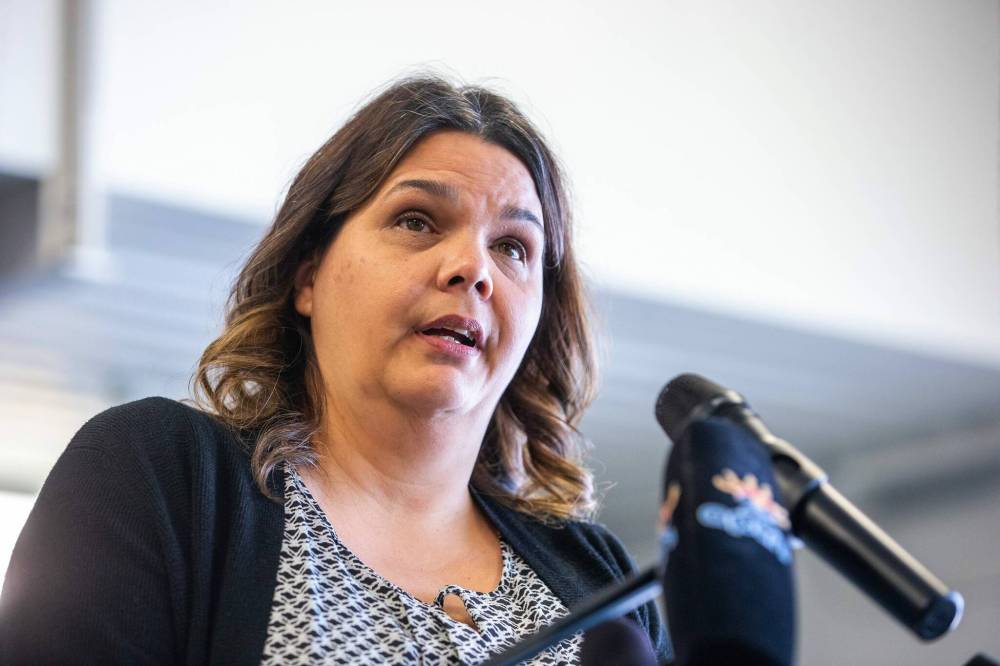
“Our urban community has long expressed how much they missed the friendship centre here in Winnipeg as a place to gather, and a place to access a supportive hub of resources,” Ma Mawi Chi Itata Centre executive director Tammy Christensen said.
Meetings are planned with municipal leadership, he said, suggesting they would work with True North to add one downtown should True North buy Portage Place.
“I think we’ll work hard to bring up a better understanding of a friendship centre in a large city,” he said. “Because it is a very different environment. We’re serving 102,000 Indigenous persons. That’s massive. There’s no way we can have the capacity to meet it.”
Winnipeg has the largest urban Indigenous population in Canada. The Winnipeg Indian and Métis Friendship Centre was the first friendship centre in Canada to be officially incorporated.
malak.abas@freepress.mb.ca
Malak Abas is a city reporter at the Free Press. Born and raised in Winnipeg’s North End, she led the campus paper at the University of Manitoba before joining the Free Press in 2020. Read more about Malak.
Every piece of reporting Malak produces is reviewed by an editing team before it is posted online or published in print — part of the Free Press‘s tradition, since 1872, of producing reliable independent journalism. Read more about Free Press’s history and mandate, and learn how our newsroom operates.
Our newsroom depends on a growing audience of readers to power our journalism. If you are not a paid reader, please consider becoming a subscriber.
Our newsroom depends on its audience of readers to power our journalism. Thank you for your support.
Malak Abas is a city reporter at the Free Press. Born and raised in Winnipeg’s North End, she led the campus paper at the University of Manitoba before joining the Free Press in 2020. Read more about Malak.
Every piece of reporting Malak produces is reviewed by an editing team before it is posted online or published in print — part of the Free Press‘s tradition, since 1872, of producing reliable independent journalism. Read more about Free Press’s history and mandate, and learn how our newsroom operates.
Our newsroom depends on a growing audience of readers to power our journalism. If you are not a paid reader, please consider becoming a subscriber.
Our newsroom depends on its audience of readers to power our journalism. Thank you for your support.
Advertisement Advertise With Us
Advertisement Advertise With Us