What might cuts to dwindling Colorado River mean for states?
Advertisement
Read this article for free:
or
Already have an account? Log in here »
To continue reading, please subscribe:

Digital Subscription
One year of digital access for only $205*
- Enjoy unlimited reading on winnipegfreepress.com
- Read the E-Edition, our digital replica newspaper
- Access News Break, our award-winning app
- Play interactive puzzles
*First annual payment billed as $205.00 + GST for one year. This annual subscription will automatically renew at $233.00 + GST every 52 weeks (10% off the regular annual price of $259.35). Offer available to new and qualified returning subscribers only. Cancel any time.
To continue reading, please subscribe:
Add Free Press access to your Brandon Sun subscription for only an additional
$1 for the first 4 weeks*
- Enjoy unlimited reading on winnipegfreepress.com
- Read the E-Edition, our digital replica newspaper
- Access News Break, our award-winning app
- Play interactive puzzles
*Your next Brandon Sun subscription payment will increase by $1.00 and you will be charged $17.95 plus GST for four weeks. After four weeks, your payment will increase to $24.95 plus GST every four weeks.
Read unlimited articles for free today:
or
Already have an account? Log in here »
Hey there, time traveller!
This article was published 14/04/2023 (1244 days ago), so information in it may no longer be current.
WASHINGTON (AP) — The Biden administration floated two ideas this week to reduce water usage from the dwindling Colorado River, which supplies 40 million people.
The 1,450-mile (2,334-kilometer) river is a lifeline for seven U.S. states, dozens of Native American tribes, and two states in Mexico. It irrigates nearly 5.5 million acres (about 2.2 million hectares) of farmland in the U.S. and Mexico and generates hydroelectric power used across the West.
In recent decades, drought, climate change and an imbalance between the river’s flows and how much water users are promised has forced federal officials to consider new steps.
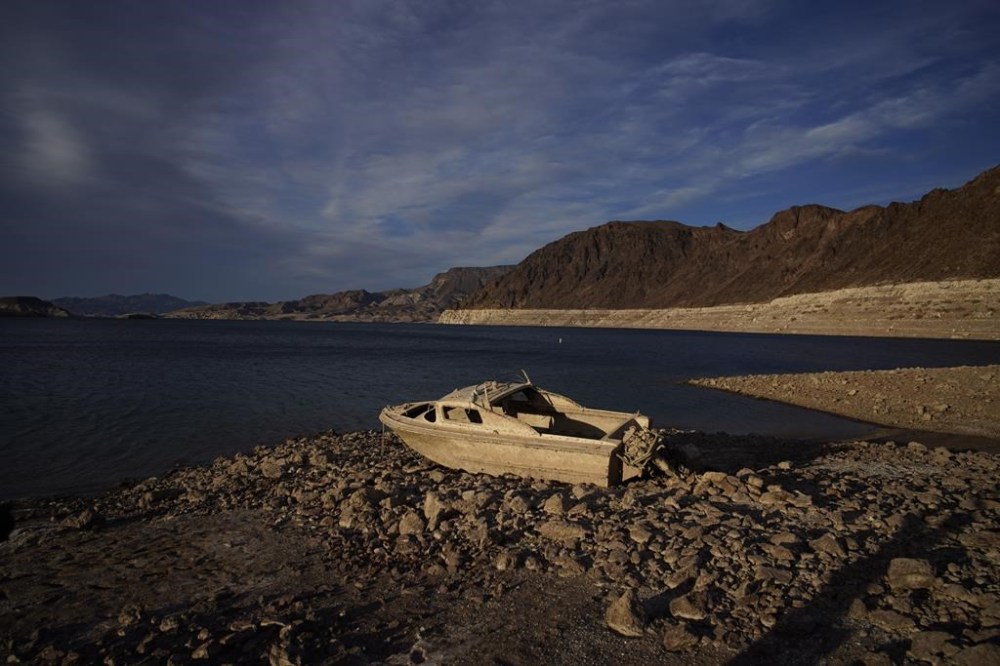
Tuesday’s analysis from the Interior Department considers two ways to force cuts in the water supply for Arizona, Nevada and California: use the existing water priority system or the same percentage across the board. California and some tribes with senior rights to water benefit more under the first option. Arizona and Nevada, largely with junior rights, don’t feel as much pain under the second.
Federal officials haven’t taken a stance.
WHAT PROMPTED THE ANALYSIS?
The U.S. Bureau of Reclamation, under the Interior Department, made a bombshell announcement last June as levels in the Colorado River’s key reservoirs dropped to historic lows. Federal officials said water use in the basin would have to be cut by 15% to 30%.
States scrambled to meet consensus, tensions rose and, ultimately, no deal was reached. But the challenges on the river persisted, and federal officials said they’d need to consider changing the operations at Hoover Dam that holds back Lake Mead and Glen Canyon Dam, which controls Lake Powell. The reservoirs on the Colorado River are the largest built in the U.S.
States regrouped and came up with competing ideas in January for reducing use. California proposed a plan separate from the other six states — Arizona, Nevada, New Mexico, Colorado, Wyoming and Utah.
The proposals released Tuesday built on some of those ideas and rejected others.
HOW WOULD EACH PLAN AFFECT CALIFORNIA?
California is entitled to 4.4 million acre feet of water annually, more than any other single state in the Colorado River basin. California’s rights also are among the most secure.
Shares of water for California, Arizona, Nevada and Mexico come from Lake Mead.
Under current rules, California doesn’t lose any water until Lake Mead falls below 1,045 feet (318 meters) — about a foot lower than it is now. Even under the worst-case scenario, California would fare better than its neighbors in the Lower Basin.
The priority-based proposal would benefit cities and farm districts in California like the Imperial Valley. It’s a vast farming region in the southeast part of the state that grows a significant amount of the nation’s winter vegetables. The valley would lose no additional water under this proposal based on its senior rights.
California is far worse off if cuts are spread more evenly. As Lake Mead dips lower, it would have to cut more water, eventually up to about one-fifth of its allocation.
Its farming regions would be hard-hit, likely meaning growers would leave some fields unplanted. Cities like Los Angeles and San Diego have other sources of water, but a loss of river water could spur conservation rules that limit activities like watering grass.
WHAT ABOUT ARIZONA?
Arizona is in a tough spot regardless of what proposal moves forward because much of its water has a junior status in the priority system.
The state’s water users are entitled to 2.8 million acre feet of Colorado River water annually. Native American tribes along the Colorado River and farmers near Yuma in southwestern Arizona hold priority over cities.
The Central Arizona Project, which manages a canal system that delivers water to metropolitan Phoenix and Tucson, oversees roughly 1.6 million of those acre feet. It already has absorbed two rounds of mandatory cuts and would be hard-hit under the priority-based proposal.
If the cuts are spread based on the priority system, Arizona would be at risk of losing nearly two-thirds of its total river water in 2024. Under the proportional system that requires California to contribute more, Arizona would lose about one-third.
Under both options, some Arizona water users could have their allocations cut to zero if Lake Mead falls low enough to risk hydropower production.
It’s not clear exactly how either plan would affect farmers and cities. The Colorado River isn’t the only source of water for Arizona’s most populous areas. Many have been banking water underground for years.
WHAT ABOUT NEVADA?
Nevada has the smallest amount of Colorado River in the Lower Basin, 300,000 acre feet, that serves metropolitan Las Vegas.
Water recycling and other measures in southern Nevada have safeguarded the water supply. The state doesn’t use its full allocation. It would face some relatively small cuts, but it’s unclear how deeper cuts would affect residents.

WHAT ABOUT THE UPPER BASIN?
None of the plans would affect water deliveries to Colorado, Utah, New Mexico or Wyoming.
The four states get water directly from the river and, in most years, do not use the full 7.5 million acre feet appropriated to the Upper Basin.
WHY DOES THE ANALYSIS MATTER?
The analysis provides water users some fresh starting points in negotiations over cuts.
“The question will become ‘how bad that pain is and who it falls on,’” said Jay Weiner, an attorney for the Fort Yuma Quechan Indian Tribe.
The tribe along the Arizona-California border has senior rights to water and has opposed sidestepping the priority system, as has California and its irrigation districts.
Bill Hasencamp, manager of Colorado River resources for the Metropolitan Water District of Southern California, says the two proposals will spur renewed efforts to reach consensus over the next 45 days. That goal has been elusive for nearly a year.
WOULD DOING NOTHING RISK DISASTER?
Yes.
Doing nothing raises the risk that Lake Powell and Lake Mead drop so low that hydropower from their dams is threatened. Power production has already been affected with low lake levels. Voluntary water conservation can help. Precipitation, runoff from the Rocky Mountains and temperature also play a role.
The priority-based proposal would protect Lake Powell’s water levels — but could result in lower capacity at Hoover Dam. Sharing percentage-based cuts would help stabilize power production at both dams.
Everyone agrees that relying on the existing rules and guidelines that expire in 2026 is not a real option.
WHAT HAPPENS NEXT?
States, tribes and other water users have until May 30 to comment. Federal officials are expected to announce a formal decision this summer. If states and tribes don’t reach consensus, that deadline could be delayed.
Meanwhile, representatives from the U.S. and Mexico will meet in the coming weeks and months to discuss Mexico’s role. The treaties governing Mexico’s voluntary water savings are separate from any agreements reached between U.S. states and Native American tribes.
Federal officials will announce how much water is available for 2024 in mid-August, along with any reductions in the Lower Basin states and Mexico.
___
This story corrects that Glen Canyon Dam controls Lake Powell, not Lake Mead, in paragraph 8.
___
The Associated Press receives support from the Walton Family Foundation for coverage of water and environmental policy. The AP is solely responsible for all content. For all of AP’s environmental coverage, visit https://apnews.com/hub/climate-and-environment