Report: Climate change, disease imperil North American bats
Advertisement
Read this article for free:
or
Already have an account? Log in here »
To continue reading, please subscribe:

Digital Subscription
One year of digital access for only $205*
- Enjoy unlimited reading on winnipegfreepress.com
- Read the E-Edition, our digital replica newspaper
- Access News Break, our award-winning app
- Play interactive puzzles
*First annual payment billed as $205.00 + GST for one year. This annual subscription will automatically renew at $233.00 + GST every 52 weeks (10% off the regular annual price of $259.35). Offer available to new and qualified returning subscribers only. Cancel any time.
To continue reading, please subscribe:
Add Free Press access to your Brandon Sun subscription for only an additional
$1 for the first 4 weeks*
- Enjoy unlimited reading on winnipegfreepress.com
- Read the E-Edition, our digital replica newspaper
- Access News Break, our award-winning app
- Play interactive puzzles
*Your next Brandon Sun subscription payment will increase by $1.00 and you will be charged $17.95 plus GST for four weeks. After four weeks, your payment will increase to $24.95 plus GST every four weeks.
Read unlimited articles for free today:
or
Already have an account? Log in here »
Hey there, time traveller!
This article was published 17/04/2023 (1211 days ago), so information in it may no longer be current.
TRAVERSE CITY, Mich. (AP) — More than half of North America’s bat species are likely to diminish significantly as climate change, disease and habitat loss take their toll, scientists warned Monday.
A report by experts from the U.S., Canada and Mexico said 81 of the continent’s 154 known bat types “are at risk of severe population decline” in the next 15 years.
The “state of the bats” report was published by the North American Bat Conservation Alliance, a consortium of government agencies and private organizations.
“They need our help to survive,” said Winifred Frick, chief scientist at Bat Conservation International, one of the participating groups. “We face a biodiversity crisis globally and bats play a very important role in healthy ecosystems needed to protect our planet.”
Bats give U.S. agriculture a $3.7 billion annual boost by gobbling crop-destroying insects, according to the U.S. Geological Survey. Some are plant pollinators. Bats also serve as prey for other animals, including hawks, owls and weasels.
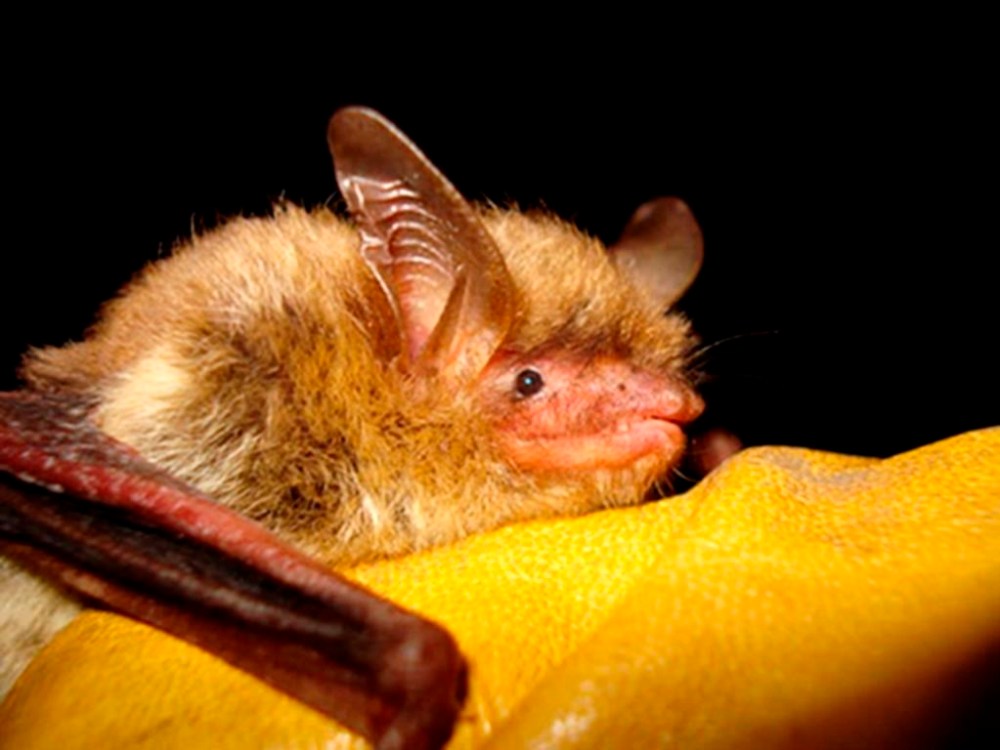
Millions have died since 2006 from a fungal disease called white-nose syndrome, which attacks bats when hibernating and creates fuzzy spots on their muzzles and wings. It causes them to wake early from hibernation and sometimes fly outside. They can burn up winter fat stores and eventually starve.
Eight U.S. bat species are listed as endangered, or on the brink of extinction.
The federal Fish and Wildlife Service designated the northern long-eared bat as endangered last year and has proposed listing for the tricolored bat. The little brown bat is being evaluated for potential listing. White-nose syndrome is the primary killer for each of the species.
More than 150 agencies, nonprofits and universities are collaborating in the fight against the disease, said Jeremy Coleman, a wildlife biologist who coordinates the service’s participation and a co-author of the report.
Among methods under development are vaccines, anti-fungal sprays and ultraviolet light treatments for hibernation spots.
“We have a number of tools that are showing great promise,” Coleman said. “There are very few precedents for managing a wildlife disease, particularly one so devastating and pervasive.”
The report said the bats also are imperiled by forest fragmentation — logging and urban sprawl in Canada, wildfire suppression in the U.S. and livestock ranching in Mexico. Many bats live in older trees during summer.
People sometimes disturb hibernating bats in winter by exploring caves and abandoned mines.
Climate change is expected to intensify the challenges, causing more extreme storms and temperature swings. The report said 82% of the continent’s species are at risk from global warming’s effects.
More than 1,500 bats were rescued in December after going into hypothermic shock during a sudden freeze in Houston, where they lost their grip and fell from roosting spots beneath bridges.
Drought and increasingly arid conditions will leave bats with less drinking water, killing some and preventing others from reproducing, the report said. As surface waters dry up, there are fewer places to fly over in search of aquatic insects.
Ironically, wind turbines — a leading source of renewable energy that can help slow climate change — pose another problem for bats. An estimated 500,000, representing 45 species, die each year in collisions with the structures, the report said.
But those figures were based on 2021 calculations, said Frick, an associate research professor in ecology at the University of California at Santa Cruz in addition to her position with Bat Conservation International. So many turbines have been constructed since then that the latest estimate is 880,000 deaths.
Her organization is collaborating with manufacturers and others in searching for solutions, including acoustic devices that would cause bats to steer clear of turbines. Reducing blade rotation speeds — particularly during fall mating season, when bats are particularly active — would help, Frick said.
Cori Lausen, director of bat conservation with Wildlife Conservation Society Canada, who did not participate in compiling the report, said it provided a solid overview of North American bats’ plight. But some types it described as “apparently secure” based on their current status have grim prospects, she said.
“The government process is a slow one, deciding when to list a species and when not to. If anything, this report is a little conservative,” Lausen said. “Many of these bats should not be listed as OK.”
___
Follow John Flesher on Twitter: www.twitter.com/JohnFlesher.
___
Associated Press climate and environmental coverage receives support from several private foundations. See more about AP’s climate initiative here. The AP is solely responsible for all content.