Ari Aster doesn’t want to talk about his new movie right now
Advertisement
Read this article for free:
or
Already have an account? Log in here »
To continue reading, please subscribe:
Digital Subscription
One year of digital access for only $1.44 a week*
- Enjoy unlimited reading on winnipegfreepress.com
- Read the E-Edition, our digital replica newspaper
- Access News Break, our award-winning app
- Play interactive puzzles
*Billed as $5.77 plus GST every four weeks. After 52 weeks, price increases to the regular rate of $19.95 plus GST every four weeks. Offer available to new and qualified returning subscribers only. Cancel any time.
To continue reading, please subscribe:
Add Free Press access to your Brandon Sun subscription for only an additional
$1 for the first 4 weeks*
- Enjoy unlimited reading on winnipegfreepress.com
- Read the E-Edition, our digital replica newspaper
- Access News Break, our award-winning app
- Play interactive puzzles
*Your next Brandon Sun subscription payment will increase by $1.00 and you will be charged $17.95 plus GST for four weeks. After four weeks, your payment will increase to $24.95 plus GST every four weeks.
Read unlimited articles for free today:
or
Already have an account? Log in here »
Hey there, time traveller!
This article was published 18/04/2023 (1284 days ago), so information in it may no longer be current.
LOS ANGELES (AP) — Ari Aster really doesn’t want to talk about “Beau Is Afraid.”
“This is so not the right thing,” he laughed anxiously during a recent press day for his new film. “I shouldn’t be talking about this movie for another 10 years.”
But, alas, the insatiable publicity machine demands Aster feed it something now, undeterred by the director’s protestations, as his three-hour epic of biblical proportions hits theaters on Friday.
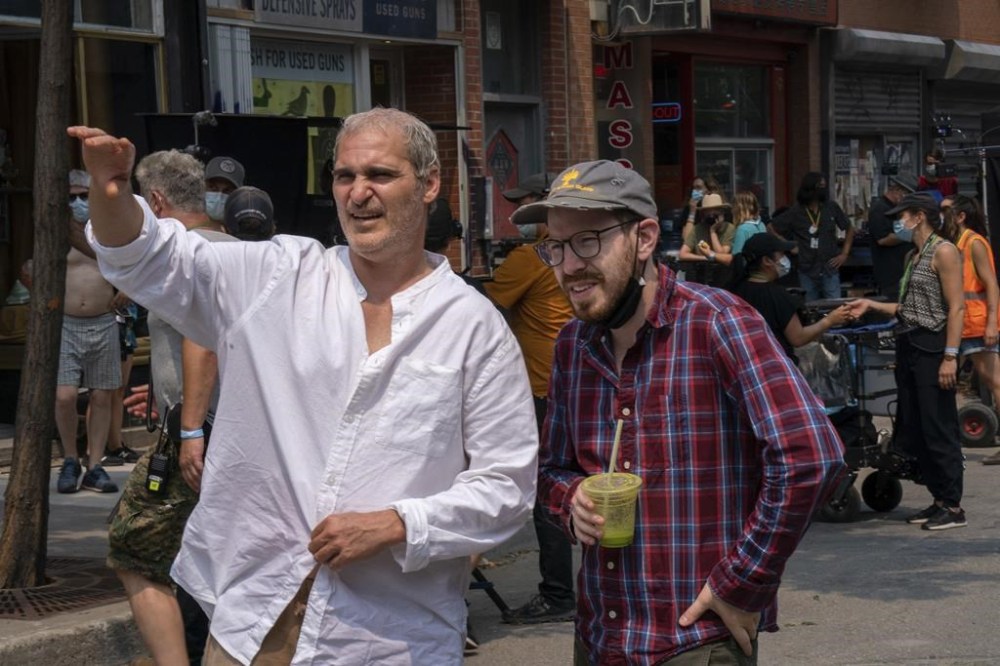
“I wish I could just recede as far as possible and have the film just live on its own without any baggage that I’m inadvertently saddling onto it,” he said, aware of the awkward position his reticence puts an interviewer in. “I just want to throw up even hearing myself right now,” he added sheepishly.
Aster’s point is a sympathetic one. “Beau Is Afraid” really is one of those movies best seen with minimal prior knowledge of what you are walking into, aside from the fact that it is three hours of chaos, anxiety and terror.
The movie, a version of which Aster wrote shortly after graduating from the American Film Institute, is clearly a personal project. And while “Beau Is Afraid” is his most labyrinthine feature to date, Aster maintains he ultimately wants people to enjoy it.
“I made something for an audience. I hope that it is exciting and fun and, you know, makes people feel things,” he said, although he acknowledged that he is “prepared for people not knowing quite what to make of it.”
Critics and journalists have thrown out the names of every erudite-sounding auteur they can think in their attempts to describe this movie’s influences: Voltaire, Kafka, Charlie Kaufman, David Lynch. But, taken together, what do those comparisons even communicate about the movie besides that it is absurd?
Without giving more away than what is in the trailer, which itself does a poor job of capturing the kind of movie it advertises, “Beau Is Afraid” follows its sympathetic title character (Joaquin Phoenix) on a desperate journey to get to his mother’s house.
It is billed as Aster’s third horror feature, following the successes of “Hereditary” and “Midsommar,” both widely recognized as movies that elevated the current state of the genre. Although decidedly less scary than Aster’s first two films, “Beau Is Afraid” does feel like the final frontier in the director’s conquest of scary movies.
While “Hereditary” was a chilling supernatural story of the demonic, “Midsommar” swung the pendulum the other way, following anthropology students who find themselves in a nightmare devoid of the paranormal and instead driven by human-created terrors.
“Beau Is Afraid” then feels like it lands somewhere in the middle, making it impossible to know whether the fear-inducing aspects of the film are real or in Beau’s head, demonstrating the ways in which we are at the mercy of our fragile brains. Even if the monsters Beau encounters are not an accurate reflection of his metaphysical reality, does that make them any less real?
Aster said he does not put that much thought into the categories his movies fit into, and that the genres ultimately ascribed to them have little to no bearing on his creative process.

“I try to stave them off as far as I can. And then in the end, the boxes they’re put into are boxes that they naturally land in because you have to market the film,” he said. “Over time, it ends up as this thing that is more or less different from whatever was made or whatever the spirit was that it was made in, because that’s the necessary next step.”
As a testament to how averse Aster is to boxes, the director recently revealed that horror wasn’t his first choice when he set out to make his feature directorial debut, much to the dismay of scary movie lovers across the internet.
“Somebody asked me, ‘So, you’re a horror filmmaker?’ And I, for some reason, bristled at that because I knew I wanted to make other kinds of films,” he recalled.
In hindsight, he revealed, those comments may have been an overcorrection.
“Some people thought I was rejecting horror or that I felt superior to it, which is incorrect,” Aster said. “You know, I love the genre. I’m a horror filmmaker, whatever.”