First pill for fecal transplants wins FDA approval

Advertisement

Advertise with us

WASHINGTON (AP) — U.S. health officials on Wednesday approved the first pill made from healthy bacteria found in human waste to fight dangerous gut infections — an easier way of performing so-called fecal transplants.

Read this article for free:


By clicking the button above, an account will be created and you will begin to receive some of our recommended newsletters. You may opt out of any newsletter by visiting your Email and Communication Preferences page or by clicking "unsubscribe" at the bottom of any email.

or

Already have an account? Log in here »

To continue reading, please subscribe:

Digital Subscription

One year of digital access for only $1.44 a week*

  • Enjoy unlimited reading on winnipegfreepress.com
  • Read the E-Edition, our digital replica newspaper
  • Access News Break, our award-winning app
  • Play interactive puzzles

*Billed as $5.77 plus GST every four weeks. After 52 weeks, price increases to the regular rate of $19.95 plus GST every four weeks. Offer available to new and qualified returning subscribers only. Cancel any time.

To continue reading, please subscribe:

Add Free Press access to your Brandon Sun subscription for only an additional

$1 for the first 4 weeks*

  • Enjoy unlimited reading on winnipegfreepress.com
  • Read the E-Edition, our digital replica newspaper
  • Access News Break, our award-winning app
  • Play interactive puzzles
Start now

*Your next Brandon Sun subscription payment will increase by $1.00 and you will be charged $17.95 plus GST for four weeks. After four weeks, your payment will increase to $24.95 plus GST every four weeks.

Hey there, time traveller!
This article was published 26/04/2023 (1273 days ago), so information in it may no longer be current.

WASHINGTON (AP) — U.S. health officials on Wednesday approved the first pill made from healthy bacteria found in human waste to fight dangerous gut infections — an easier way of performing so-called fecal transplants.

The new treatment from Seres Therapeutics provides a simpler, rigorously tested version of stool-based procedures that some medical specialists have used for more than a decade to help patients.

The Food and Drug Administration cleared the capsules for adults 18 and older who face risks from repeat infections with Clostridium difficile, a bacteria that can cause severe nausea, cramping and diarrhea.
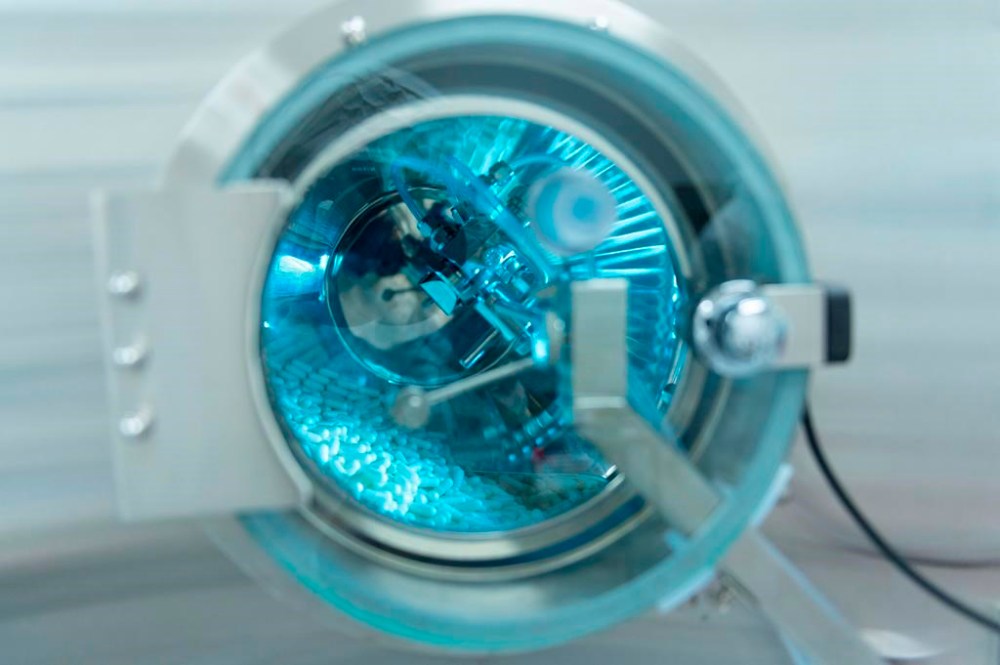
This photo provided by Seres Therapeutics shows manufacturing equipment for oral microbiome therapeutic capsules in the company's Cambridge, Mass., facility in May 2022. On Wednesday, April 26, 2023, U.S. health officials approved the first pill made from healthy bacteria found in human waste to fight dangerous gut infections — an easier way of performing so-called fecal transplants. (Genevieve de Manio/Seres Therapeutics via AP)

C. diff is particularly dangerous when it reoccurs, leading to between 15,000 and 30,000 deaths per year. It can be killed with antibiotics but they also destroy good bacteria that live in the gut, leaving it more susceptible to future infections. The new capsules are approved for patients who have already received antibiotic treatment.

More than 10 years ago, some doctors began reporting success with fecal transplants — using stool from a healthy donor — to restore the gut’s healthy balance and prevent reinfections.

The FDA approved the first pharmaceutical-grade version of the treatment last year from a rival drugmaker, Ferring Pharmaceuticals. But that company’s product — like most of the original procedures — must be delivered via the rectum.

Cambridge Massachusetts-based Seres will market its drug as a less invasive option. The treatment will be sold under the brand name Vowst and comes as a regimen of four daily capsules taken for three consecutive days.

Both of the recent FDA approvals are the product of years of pharmaceutical industry research into the microbiome, the community of bacteria, viruses and fungi that live in the gut.

Currently most fecal transplants are provided by a network of stool banks that have popped up at medical institutions and hospitals across the country.

While the availability of new FDA-approved options is expected to decrease demand for donations from stool banks, some plan to stay open.

OpenBiome, the largest stool bank in the U.S., said it will keep serving patients who aren’t eligible for the FDA-approved products, such as children and adults with treatment-resistant cases. It has supplied more than 65,000 stool samples for C. diff patients since 2013.

“OpenBiome is committed to maintaining safe access to ‘fecal transplantation’ for these patients as a vital last line of defense,” said Dr. Majdi Osman, the group’s medical chief.

OpenBiome’s standard stool treatment costs less than $1,700 and is typically delivered as a frozen solution within days of ordering. Seres did not disclose the price it will charge for its capsules in a statement Wednesday evening.

“We want to make the commercial experience for physicians and patients as easy as possible,” said Eric Shaff, the company’s chief executive officer, in an interview ahead of the announcement. “Ease of administration — in our view — is one of the aspects of the value we’re delivering.”

Seres will co-market the treatment with Swiss food giant Nestle, which will also split the profits. Seres will receive a $125 million milestone payment from Nestle in connection with the FDA approval.

Overseeing the fledgling industry of U.S. stool banks has created regulatory headaches for the FDA, which doesn’t traditionally police homemade products and procedures used in doctor’s offices. In the early days of the trend, the FDA warned consumers about the risks of potential infections from the fecal transplants, as some people sought out questionable “do it yourself” methods from videos and websites.

Seres executives say their manufacturing process relies on the same techniques and equipment used to purify blood products and other biologic therapies.
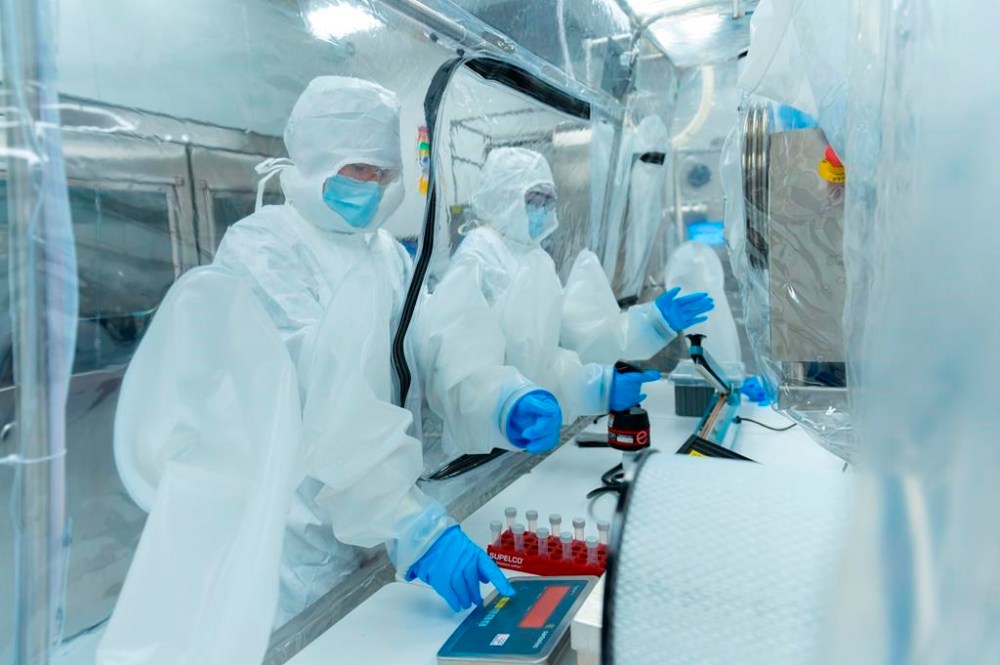
In this photo provided by Seres Therapeutics, technicians use an anaerobic chamber to prepare oral microbiome drugs for clinical studies in the company's Cambridge, Mass., facility in May 2022. On Wednesday, April 26, 2023, U.S. health officials approved the first pill made from healthy bacteria found in human waste to fight dangerous gut infections — an easier way of performing so-called fecal transplants. (Genevieve de Manio/Seres Therapeutics via AP)

The company starts with stool provided by a small group of donors who are screened for various health risks and conditions. Their stool is likewise tested for dozens of potential viruses, infections and parasites.

The company then processes the samples to remove the waste, isolate the healthy bacteria and kill any other lingering organisms. Thousands of capsules can be made from each stool sample, making it a more efficient process than current fecal transplants, according to the company.

The FDA warned in its approval announcement that the drug “may carry a risk of transmitting infectious agents. It is also possible for Vowst to contain food allergens,” the agency noted.

The FDA approved the treatment based on a 180-patient study in which nearly 88% of patients taking the capsules did not experience reinfection after 8 weeks, compared with 60% of those who received dummy pills.

Common side effects included abdominal swelling, constipation and diarrhea.

___

This story has been corrected to show that Eric Shaff is the chief executive officer of Seres Therapeutics, not its chief financial officer.

___

Follow Matthew Perrone on Twitter: @AP_FDAwriter ___

The Associated Press Health and Science Department receives support from the Howard Hughes Medical Institute’s Science and Educational Media Group. The AP is solely responsible for all content.
Report Error Submit a Tip

More Stories

Shilo resource centre on alert to help base families affected by deadly training incident in Alberta

Kelly-Anne Riess 3 minute read Preview

Shilo resource centre on alert to help base families affected by deadly training incident in Alberta

Kelly-Anne Riess 3 minute read 5:38 PM CDT

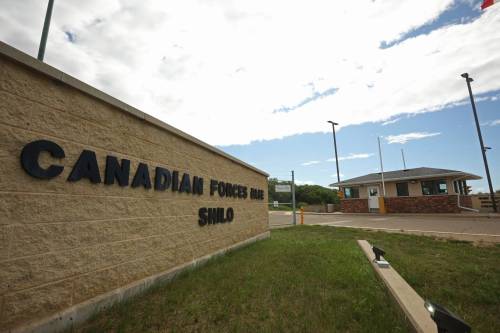
Military officials were unable to say Monday whether any soldiers from Canadian Forces Base Shilo were among the four dead and 39 injured Saturday when a fast-moving grass fire engulfed a training area at a base in Alberta.

A spokesperson for the Department of National Defence in Ottawa told the Free Press Monday they did not know yet if anyone from Shilo was participating in the exercises at CFB Wainwright, about 200 kilometres southeast of Edmonton, when the fire tore through the area.

The Shilo Military Family Resource Centre, located about 30 kilometres Southeast of Brandon, was offering counselling and other assistance to families of soldiers stationed there.

“We understand that this tragedy may also be deeply felt by members and families here at CFB Shilo,” the MFRC said in a statement posted to Facebook. “Across the Canadian Armed Forces, our communities are connected through shared experiences, friendships, service and sacrifice.”

Read
5:38 PM CDT

Accused used fuel-filled bottle to set blaze that killed two, court hears

Dean Pritchard 4 minute read Preview

Accused used fuel-filled bottle to set blaze that killed two, court hears

Dean Pritchard 4 minute read 5:27 PM CDT

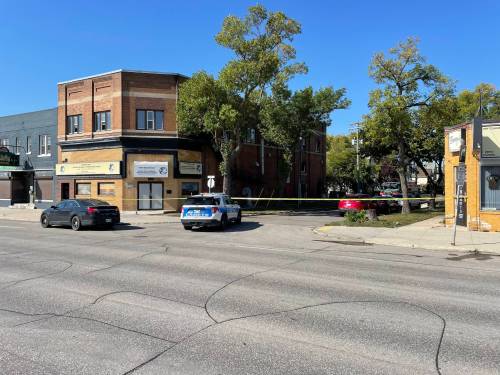
Alex Courchene failed once to set a North End church ablaze, then returned a day later and tried again, starting a fire that killed two people living in an upstairs apartment suite, a jury was told Monday.

Read
5:27 PM CDT

Detox centre ready but staffing challenges persist

Scott Billeck 6 minute read Preview

Detox centre ready but staffing challenges persist

Scott Billeck 6 minute read 2:01 AM CDT

Peter McMullen’s decade-long struggle with addiction gives him insight into the challenges Lighthouse Mission hopes to address with a new Main Street detox facility focused on connecting people with longer-term treatment.

McMullen, executive director of Lighthouse Mission, knows how difficult it can be to navigate Winnipeg’s addiction treatment system, particularly when someone is ready to seek help but the services they need aren’t immediately available.

Now, after years of planning and a lengthy renovation of two century-old buildings, the downtown organization is preparing to open a 10-bed detox facility at 667 and 669 Main St., with five beds each for men and women.

The facility could begin accepting clients as early as November, provided Lighthouse Mission can overcome one final hurdle: recruiting enough staff to operate it.

Read
2:01 AM CDT

Katz ‘violated public trust,’ Sheegl lacked ‘moral compass,’ police HQ inquiry commissioner concludes

Joyanne Pursaga 8 minute read Preview

Katz ‘violated public trust,’ Sheegl lacked ‘moral compass,’ police HQ inquiry commissioner concludes

Joyanne Pursaga 8 minute read Updated: 7:29 PM CDT

The final report from the public inquiry into the scandal-plagued Winnipeg Police Service headquarters construction project concludes that former mayor Sam Katz and former city CAO Phil Sheegl broke public trust and engaged in unethical conduct.

And the report, released Monday by inquiry commissioner Garth Smorang, says the cost of the project — transforming a downtown Canada Post office tower and warehouse into the police HQ — soared, in part, because main contractor Caspian Projects overcharged the city by more than $40 million in expenses.

The project’s initial $135-million initial price tag rose to about $209 million in the end. The city purchased the complex in 2009; construction was completed in 2016.

Smorang’s report concludes Katz “violated the public trust” and council code of conduct, and Sheegl suffered from a “complete lack of a moral compass.”

Read
Updated: 7:29 PM CDT

Consumer apprehension grows as US retailers adopt AI-assisted pricing tools

Dee-ann Durbin And Anne D'innocenzio, The Associated Press 7 minute read Preview

Consumer apprehension grows as US retailers adopt AI-assisted pricing tools

Dee-ann Durbin And Anne D'innocenzio, The Associated Press 7 minute read Updated: 6:00 PM CDT

U.S. consumers aren't just frustrated with high prices. They're angry and confused about the increasingly high-tech ways that restaurant chains and major retailers are setting those prices.

Digital price tags are rapidly replacing paper ones in grocery aisles. Artificial intelligence tools help businesses decide what to charge by predicting how customers might respond. Terms like “dynamic pricing” and “surveillance pricing” are stirring anxiety on social media, where users wonder if different people are getting different prices for the same product.

Americans have grown accustomed to changing prices when booking flights, hotel rooms and rides, but the prospect of everyday spending shaped by algorithms they don’t understand and personal data they may not realize they’re sharing has touched a nerve.

“There are major tensions happening right now between who’s really going to have the power with some of these algorithms and usage of bots and AI: the companies or the shopper,” said Katie Thomas, who leads an internal consumer behavior think tank at the management consulting firm Kearney.

Read
Updated: 6:00 PM CDT

Bayer Canada begins construction on new R&D facility in St. B

Gabrielle Piché 4 minute read Preview

Bayer Canada begins construction on new R&D facility in St. B

Gabrielle Piché 4 minute read Friday, Oct. 16, 2026

Instead of canola on Friday, there was sod.

But in two years’ time, by current estimates, the bare plot of land in a St. Boniface industrial park will hold canola samples and seeds for testing.

Bayer Canada officially broke ground on a 60,000-square-foot research and development facility Friday morning.

“It’s about bringing new and better innovation to farmers,” said Kacy Perry, Bayer Crop Science Canada’s country division head.

Read
Friday, Oct. 16, 2026