Struggle for Métis rights was in Goulet’s blood
Advertisement
Read this article for free:
or
Already have an account? Log in here »
To continue reading, please subscribe:

Digital Subscription
One year of digital access for only $205*
- Enjoy unlimited reading on winnipegfreepress.com
- Read the E-Edition, our digital replica newspaper
- Access News Break, our award-winning app
- Play interactive puzzles
*First annual payment billed as $205.00 + GST for one year. This annual subscription will automatically renew at $233.00 + GST every 52 weeks (10% off the regular annual price of $259.35). Offer available to new and qualified returning subscribers only. Cancel any time.
To continue reading, please subscribe:
Add Free Press access to your Brandon Sun subscription for only an additional
$1 for the first 4 weeks*
- Enjoy unlimited reading on winnipegfreepress.com
- Read the E-Edition, our digital replica newspaper
- Access News Break, our award-winning app
- Play interactive puzzles
*Your next Brandon Sun subscription payment will increase by $1.00 and you will be charged $17.95 plus GST for four weeks. After four weeks, your payment will increase to $24.95 plus GST every four weeks.
Read unlimited articles for free today:
or
Already have an account? Log in here »
Hey there, time traveller!
This article was published 13/05/2023 (1233 days ago), so information in it may no longer be current.
As hosts of the One Great History podcast, Sabrina Janke and Alex Judge love exploring Winnipeg’s past. With Winnipeg’s sesquicentennial approaching, the two have produced a 16-episode podcast series that explores the city’s colourful history.

The series is presented through the lens of 15 historical figures, focusing on critical events surrounding their lives and their impact on Winnipeg. Elzéar Goulet is the focus of the third instalment. The series will conclude Nov. 9, the day when Winnipeg became a city 150 years ago. Summaries from each podcast will be republished in the Free Press. The podcast can be found on Apple Podcasts, Spotify and through the One Great History website — onegreathistory.wordpress.com
The drive to fight for Métis rights was in Elzéar Goulet’s bones. His maternal grandfather, John Siveright, had fought in the Battle of Seven Oaks. His father had been part of a campaign to ensure hunting and trading rights in the 1840s. So when there were whispers the Hudson’s Bay Company was preparing to sell the whole of Red River — without consultation — to the newly formed country of Canada, it would surprise no one that Goulet quickly aligned himself with Louis Riel and the French Métis resistance. A hardy man who had spent the previous 10 years as a mail carrier trekking three times a week from Pembina to Red River, Goulet became second-in-command of the Métis militia.
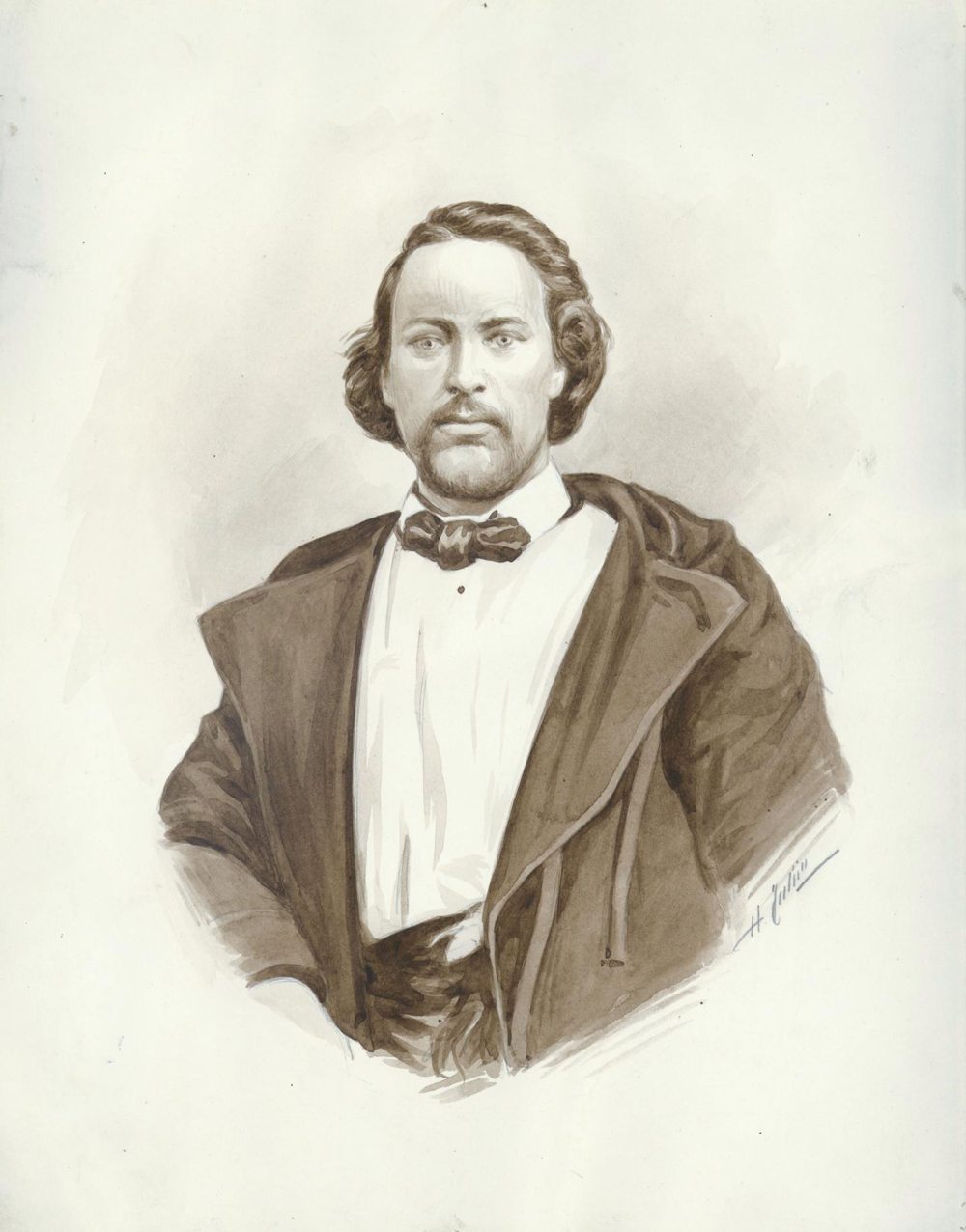
Though a less prominent figure than Riel, Goulet was there throughout the Red River Resistance: when they patrolled for surveyors, when they built la barrière to keep out the new lieutenant governor, when they seized Fort Garry, and when they arrested a group of Canadians attempting to overthrow Riel. Witnesses say he was called “Captain” within the walls of the fort. Perhaps most significantly, Goulet was there when Thomas Scott, a brash young Irish Protestant who had vowed to kill Riel, was condemned to death. A member of the court martial that had passed the sentence, Goulet also escorted Scott to his execution by firing squad. According to some rumours, he even aided in the secretive disposal of Scott’s body through the ice of the frigid Red River.
Despite all this, the most lasting impact of Elzéar Goulet may have been the tragedies that followed in the wake of his death.
In September of 1870, Goulet was one of the few remaining members of Louis Riel’s provisional government in Red River. Though the provisional government’s delegates had successfully negotiated the Manitoba Act, the death of Scott had whipped up a storm in Ontario. The Wolseley Expedition, which came to Red River that summer, supposedly to establish rule of law and to help in the transition of power, had been joined by hundreds of Ontario volunteers. They were enraged at what they saw as a cold-blooded murder. Many Métis saw what was coming and fled, but Goulet stood steadfast at his land across the river in St. Boniface.
On Sept. 12, an acquaintance named Cunningham assured Goulet he had nothing to fear on the other side of the river. Cunningham did not know he was sending Goulet to his death. The following day, Goulet went to a saloon near Fort Garry. He was spotted there by James Farquarson, the father-in-law of Red River’s foremost anti-Métis rabblerouser, John Schultz. Farquarson called upon soldiers in the pub to grab Goulet and to kill him. Fleeing through a side door, Goulet ran down what is now Lombard Avenue, pursued by a group of men. Fearing for his life, Goulet jumped into the Red River and attempted to swim across to St. Boniface as the men threw rocks at him. Goulet did not make it across the river — whether struck by a stone or a heart attack, he soon lost consciousness and drowned
The inquest into the death of Goulet was disastrous: witnesses refused to co-operate, no clerks could be found and the magistrates presiding were inexperienced and diffident. Though the colonial office in London recommended Goulet’s pursuers be prosecuted, no one was ever held accountable for his death.
Goulet’s death confirmed to the Métis that they were no longer safe in Winnipeg. It also confirmed to the soldiers of the Wolseley Expedition that they could do as they pleased without consequence. With little to do and no authority willing to rein them in, the soldiers spent the following years enacting what the New York Times called a “reign of terror” over the community of Red River. An anonymous French-speaker wrote in 1871: “Our country people cannot visit Winnipeg without being insulted, if not personally abused, by the soldier mob. They defy all law and authority, civil and military.”
The French Métis were at particular risk, and often faced unprompted beatings. The daughter of Goulet was sexually assaulted, as were many other Indigenous and Métis women. And seemingly just as often, the violence was indiscriminate: the American consul to Fort Garry, James Wickes Taylor, wrote in 1871 of being beaten with a stick by a drunken Wolseley soldier.
The reign of terror would continue for years. By the time Winnipeg was incorporated, many Métis had moved westward, both to follow the bison and to find somewhere safe to live. While we celebrate Louis Riel today as Manitoba’s first premier, the next part of the story is often forgotten: that the landscape and populace of Winnipeg were changed irreversibly by the violence of the Wolseley Expedition and, more to the point, by the wilful failure of John A. Macdonald’s government to protect Manitobans who did not look, sound or worship like they did.