Critical care
Personal stories, key innovations highlight desperate fight against polio
Advertisement
Read this article for free:
or
Already have an account? Log in here »
To continue reading, please subscribe:

Digital Subscription
One year of digital access for only $205*
- Enjoy unlimited reading on winnipegfreepress.com
- Read the E-Edition, our digital replica newspaper
- Access News Break, our award-winning app
- Play interactive puzzles
*First annual payment billed as $205.00 + GST for one year. This annual subscription will automatically renew at $233.00 + GST every 52 weeks (10% off the regular annual price of $259.35). Offer available to new and qualified returning subscribers only. Cancel any time.
To continue reading, please subscribe:
Add Free Press access to your Brandon Sun subscription for only an additional
$1 for the first 4 weeks*
- Enjoy unlimited reading on winnipegfreepress.com
- Read the E-Edition, our digital replica newspaper
- Access News Break, our award-winning app
- Play interactive puzzles
*Your next Brandon Sun subscription payment will increase by $1.00 and you will be charged $17.95 plus GST for four weeks. After four weeks, your payment will increase to $24.95 plus GST every four weeks.
Read unlimited articles for free today:
or
Already have an account? Log in here »
Hey there, time traveller!
This article was published 13/05/2023 (1230 days ago), so information in it may no longer be current.
A significant outcome of the COVID-19 pandemic was the rapid advancement in the development of mRNA (messenger ribonucleic acid) vaccines — lab-made vaccines that teach the body to make a protein that will trigger an immune response to a virus, instead of using the virus itself, as previous generations of vaccines did. Progress on mRNA vaccines accelerated promising clinical trials of vaccines that may prevent various cancers — including pancreatic cancer, colorectal cancer and melanoma — sooner rather than later.
This investment in science was similar during the polio epidemics of the 1940s and 1950s, when communities were devastated on a seemingly random basis, leaving thousands of young people paralyzed for life, some dead. In the wake of these epidemics, which ended with the development of the Salk vaccine in 1955 and the Sabin vaccine in 1962, the understanding of immunology, respirology and physical therapy galloped ahead — knowledge that has saved lives and bettered lives in untold numbers since.
Polio was a summer disease in North America, but in Northern Europe, it hit hard in the fall. In Denmark, where The Autumn Ghost debut author Hannah Wunsch focuses her research, children filled the wards of Copenhagen’s Blegdam Hospital during the worst epidemic in 1952, struggling for breath. Denmark, still beleaguered and cash-strapped from the Second World War, had only one iron lung in that facility to keep patients breathing. Those afflicted with bulbar polio — the variety that affects the neurons in the brain stem — suffocated and died.
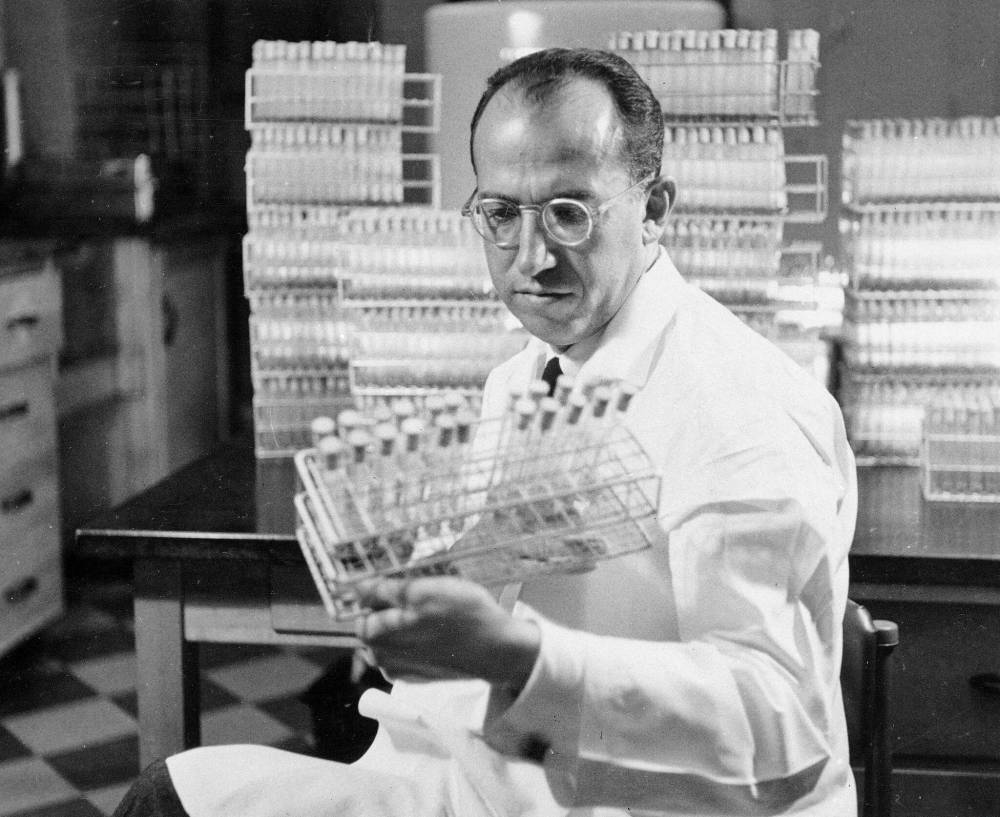
The Associated Press files
In this 1954 photo, Dr. Jonas Salk, developer of the polio vaccine, holds a rack of test tubes in his lab in Pittsburgh, Pa.
In her informative and clearly written account, Wunsch details how Danish doctors drew on research and experience in Scandinavia and found a markedly different way to keep patients alive through positive pressure ventilation, the opposite process provided by the iron lung, which one doctor described as “tomb-like… a more wicked machine I have never seen.”
Anesthetist Dr. Bjorn Ibsen concluded that patients’ lungs needed to be filled from within. In a Herculean effort, hundreds of medical and nursing student volunteers hand pumped filtered air through tracheostomies 24-hours a day, until patients gained enough strength to breathe independently. The death rate of children in respiratory distress plummeted from 87 per cent to 37 per cent in only a few months. Considering today’s complicated medical technology, it’s humbling to realize that logic, rubber bags and apparatus found in garages were the tools that defeated certain death.
It’s also eye-opening to realize that anesthesia as a specialty didn’t exist until the 1950s. Until then, surgeons were in charge of putting their patients under, each using unmonitored methods and their choice of drugs, from curare to barbiturates. Blood gasses — the vital measurement of oxygen, carbon dioxide and PH levels in the blood — weren’t analyzed for patient safety.
Wunsch, herself a critical care specialist at Sunnybrook Health Science Centre in Toronto and a professor of anesthesiology and critical care at the University of Toronto, follows the personal journeys of the doctors confronted by this frightening national emergency, their personal issues and the politics of what it took to get anesthesia recognized and incorporated into modern medical practice. Similarly, intensive care units further evolved from the extraordinary experience of the polio epidemics.
Wunsch includes stories of children whose prognosis was dire and how they went on to lead productive lives because caring people “stepped up, knowing that each patient’s life was literally in their hands. Their courage and determination remain an inspiration seventy years later.”

Supplied photo
Hannah Wunsch

The Autumn Ghost is worth reading for its scientific and social history and an appreciation of the sacrifice and ingenuity of our health care providers, then and now. Its lessons should inform our attitudes toward medicine and societal norms going forward.
Harriet Zaidman is a writer in Winnipeg. Her young adult novel, Second Chances, set during the polio epidemics of the 1950s, won the 2022 Geoffrey Bilson Award for Historical Fiction for Young People.
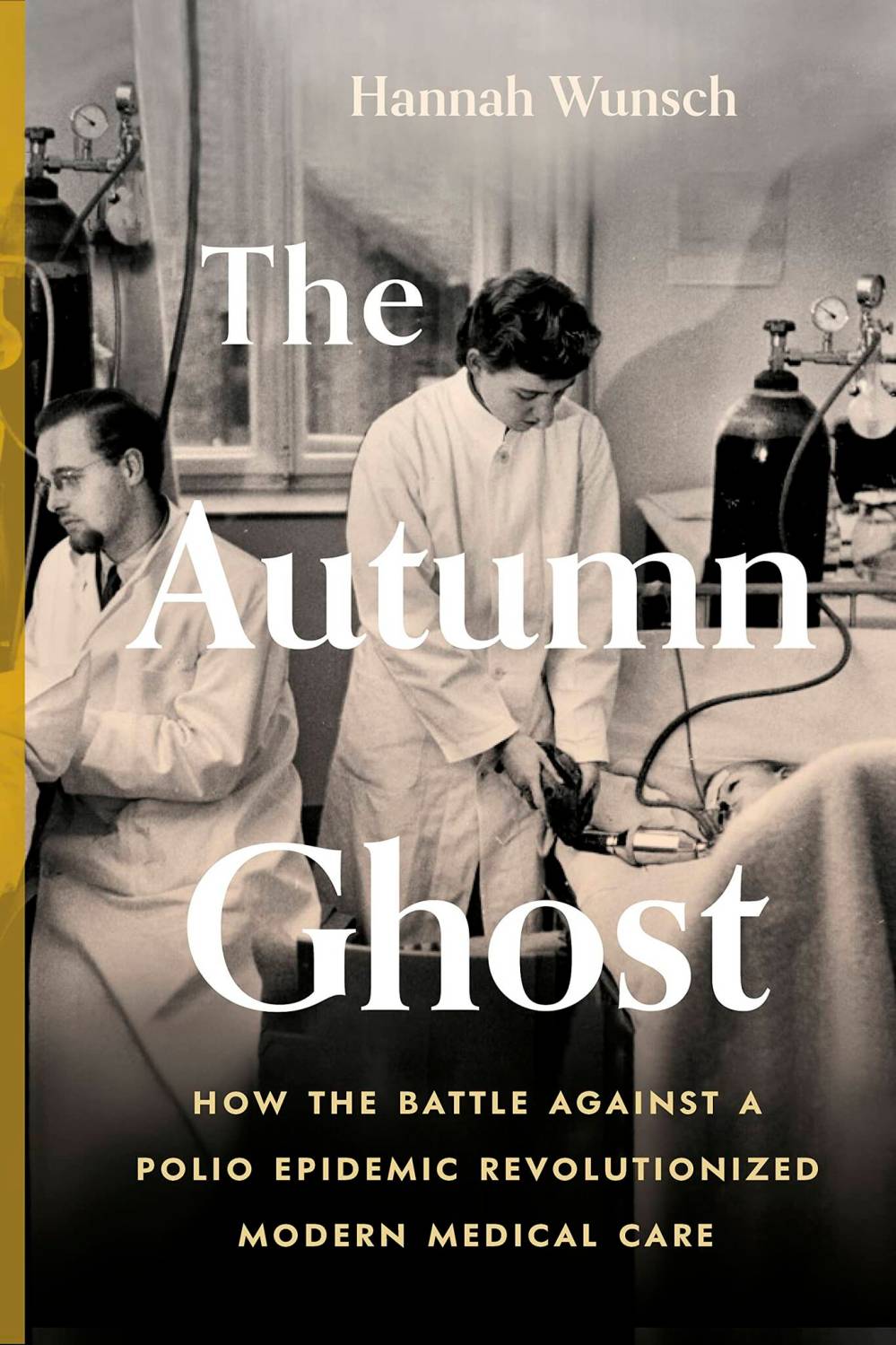
The Autumn Ghost
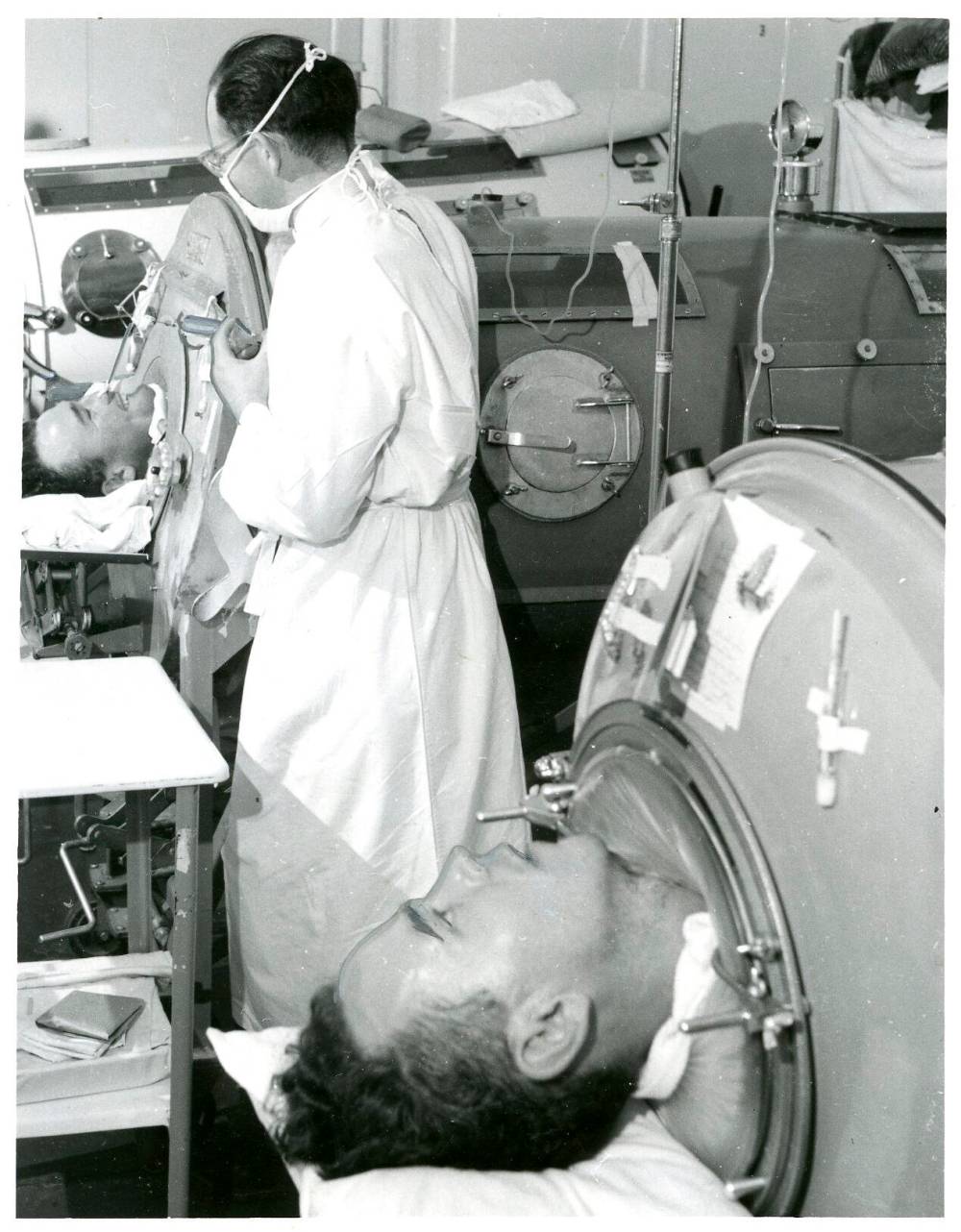
Winnipeg Free Press files
In this 1952 photo, polio victims are lie in iron lungs at Winnipeg’s King George Hospital.