Leaf on hot seat after heat-induced closure
Read this article for free:
or
Already have an account? Log in here »
To continue reading, please subscribe:

Digital Subscription
One year of digital access for only $205*
- Enjoy unlimited reading on winnipegfreepress.com
- Read the E-Edition, our digital replica newspaper
- Access News Break, our award-winning app
- Play interactive puzzles
*First annual payment billed as $205.00 + GST for one year. This annual subscription will automatically renew at $233.00 + GST every 52 weeks (10% off the regular annual price of $259.35). Offer available to new and qualified returning subscribers only. Cancel any time.
To continue reading, please subscribe:
Add Free Press access to your Brandon Sun subscription for only an additional
$1 for the first 4 weeks*
- Enjoy unlimited reading on winnipegfreepress.com
- Read the E-Edition, our digital replica newspaper
- Access News Break, our award-winning app
- Play interactive puzzles
*Your next Brandon Sun subscription payment will increase by $1.00 and you will be charged $17.95 plus GST for four weeks. After four weeks, your payment will increase to $24.95 plus GST every four weeks.
Read unlimited articles for free today:
or
Already have an account? Log in here »
Hey there, time traveller!
This article was published 05/06/2023 (1199 days ago), so information in it may no longer be current.
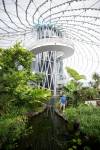
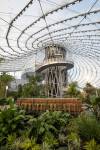
If it’s too hot, Winnipeggers seeking time among tropical plants at the new glass-encased Leaf may be left outside, looking in.
The $130-million horticultural attraction, which opened in Assiniboine Park in December, was forced to close for a few hours Sunday, when exterior sun and heat caused temperatures inside the purposefully hot facility to skyrocket.
At noon June 3, one of the heat sensors inside the centre — built with glass exterior walls and a roof made of translucent ethylene-tetrafluoroethylene (plastic) — showed 43 C.
Environment and Climate Change Canada reported the city’s temperature at 31.5 C, at that time, with a humidex of 39.
An email sent to people who pre-purchased or booked admission tickets for Sunday stated: “Due to high heat, the biomes at the Leaf have been temporarily closed for the safety and comfort of staff, volunteers and visitors. We hope to re-open later today, if/when the temperatures return to a safe level.”

The Leaf re-opened after about three hours, after rain began falling and temperatures dropped.
Thomas Rempel-Ong, a Winnipegger who has an annual membership for the Leaf and nearby Assiniboine Park Zoo, was there Sunday with his family.
He said he was dumbfounded the brand-new building could not handle the heat of a day weeks short of actual summer.
“It seems like the facility can’t keep people cool, at a temperature we consistently reach every single summer?” Rempel-Ong said Monday.
“So we as Canadians spent millions of dollars subsidizing the construction of this facility? Plus, people now have to pay for admission versus the previous conservatory, which was free to enter.
“Sounds like somebody was negligent in their duty when drafting the plan for this building… What would happen if school kids or seniors came down with heat stroke while visiting the Leaf?”
Laura Cabak, a spokeswoman for Assiniboine Park Conservancy, which oversees the Leaf and zoo, confirmed the facility closed its doors at about 11:45 a.m.
After rain cooled everything down, it was able to re-open at about 2:45 p.m. The facility closes seven days a week at 9 p.m.
“Our ability to cool the biomes is limited by the outside air temperature,” Cabak said, adding there is air conditioning only for the restaurant, office and event spaces, and butterfly biome.
“As we are in our first year of operations, we are still learning how the building responds to changing weather conditions and how best to manage that using the available environmental control systems. These systems include evaporative cooling — (for) example, misting — and natural fresh air ventilation.”
Cabak said one of the facility’s temperature sensors, in the Mediterranean biome, showed a temperature reading of 43 C. However, all other sensors had a peak average of 33.7 C.
“As we are in our first year of operations, we are still learning how the building responds to changing weather conditions.”–Laura Cabak
“We are reviewing our protocols and will continue to make adjustments to manage the temperatures within the biomes to the best of our ability and minimize the impact on visitation, but will close if necessary out of concern for the health and safety of staff, volunteers and visitors,” she said.
Carla Hrycyna, co-owner of St. Mary’s Nursery and Garden Centre in Winnipeg, is no stranger to hot summer days and a greenhouse.
“We are well-ventilated and a lot of our buildings have wide-open roofs,” Hrycyna said Monday.
“When we get to extreme temperatures, we put fans on and we get out there… We also have the area vented overnight to get the cooler air. It’s still very, very hot, but we find most people only go out there for short periods on hot days.”
Molly McCracken, a volunteer with grassroots group No User Fees at Diversity Gardens, which was critical about having admission fees at a facility built with tax dollars, said the heat-related closure was “unfortunate.”
“There was a large amount of public money that went into the building and it has to be said whether the building is right for this climate.”–Molly McCracken
“There was a large amount of public money that went into the building and it has to be said whether the building is right for this climate,” McCracken said. “A massive building like this needs to have a climate study done before it is built.”
Monies used to build the Leaf could have been used to keep city libraries and community centres open to cool people off during hot days, she added.
Rempel-Ong said he is lucky because, between his annual pass and living just a few blocks away, he can go to the Leaf whenever it is open. However, tourists or people in other areas of the city might be upset if they find it closed because of high temperatures, he added.
“From the outside, it is a beautiful piece of architecture,” he said. “It is stunning. I’m sure it will be a showstopper.
“But if you’re saying now you didn’t build it for people to be comfortable to be inside in the summer, then somebody should be fired.”
kevin.rollason@freepress.mb.ca

Kevin Rollason
Reporter
Kevin Rollason was a general assignment reporter at the Free Press.
Our newsroom depends on a growing audience of readers to power our journalism. If you are not a paid reader, please consider becoming a subscriber.
Our newsroom depends on its audience of readers to power our journalism. Thank you for your support.
Related Articles
Manitoba heat records fall over scorching weekend